

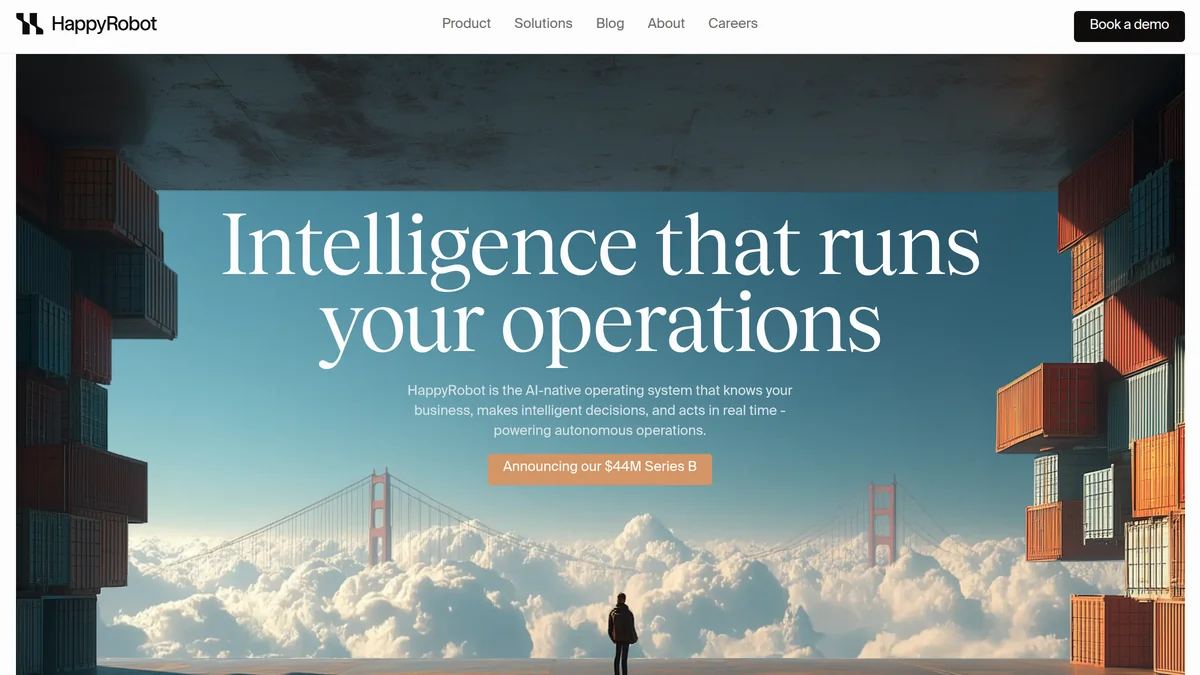
The next wave of AI isn’t just writing emails; it’s making phone calls, chasing down invoices, and scheduling truck appointments. HappyRobot, a San Francisco startup building what it calls a "digital workforce," just raised a $44 million Series B round led by Base10 Partners to automate the kind of chaotic, operational work that still powers most of the global economy.
If you’ve ever wondered how a massive company actually coordinates thousands of shipments, schedules fleets of vehicles, or makes sure it gets paid, the answer is often depressingly low-tech: armies of people in call centers playing endless phone tag, digging through PDFs, and manually updating spreadsheets. It's the gritty, unglamorous coordination that keeps global commerce from grinding to a halt.
HappyRobot wants to replace that chaos with AI-powered “workers” that act like a new kind of teammate. These aren't just chatbots. The company’s platform gives enterprises autonomous agents that can handle end-to-end tasks: negotiating freight rates over the phone with a startlingly human-like voice, scheduling appointments via email, parsing complex shipping documents, and logging data directly into a company’s internal systems like a TMS or ERP.
The goal, according to co-founder and CEO Pablo Palafox, is to free up humans from the drudgery. “Most people don’t realize how much time and money is burned just coordinating operations and sharing information,” Palafox says. “Our goal is for an AI workforce to handle all that manual coordination and execution so people can focus on the strategic work, relationships and exceptions that really drive value.”
Investors are buying it. The $44 million round, which saw participation from existing heavyweights like a16z and YC, follows a $15.6 million Series A from just last year. It’s a sign that venture capital is getting serious about AI applications that move beyond the digital world and into what Base10’s managing partner Adeyemi Ajao calls the “real economy.”