

Visa is making a bold solo play in the burgeoning field of agentic commerce with the launch of its command-line interface (CLI) tool. This move bypasses incumbent startups that have pioneered the space, sparking surprise within the industry.
The new tool, dubbed visa-cli, allows AI agents to securely pay for services directly as they operate, effectively removing the need for developers to manage complex API keys and pre-funded accounts. This enables programmatic access to resources previously gated by manual payment processes.
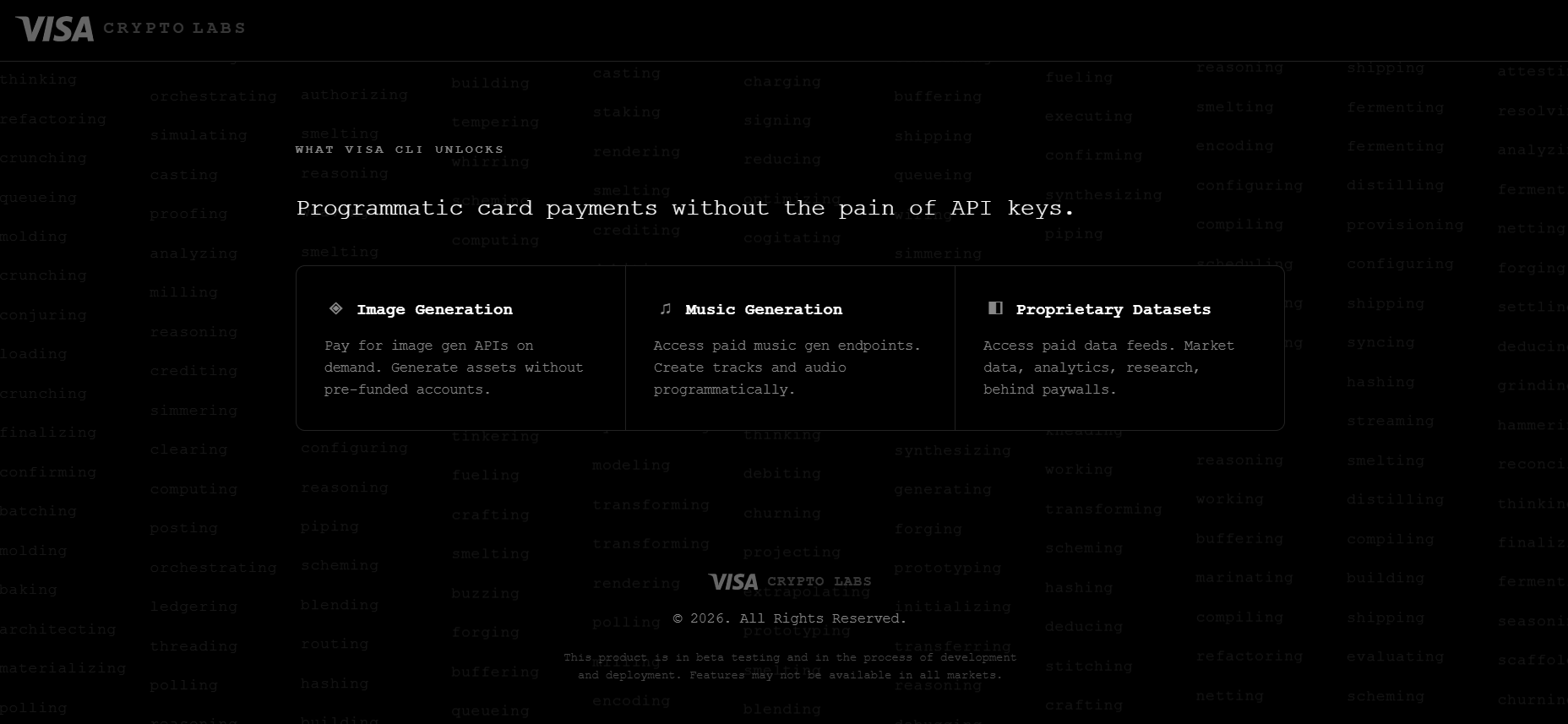
What Visa CLI Unlocks
Visa's offering targets key use cases for AI agents. These include on-demand payments for image and music generation APIs, allowing agents to create assets or media without requiring pre-existing credit or balances. It also facilitates access to proprietary datasets, such as market data and analytics, which are often locked behind paywalls.
This initiative positions Visa as a foundational layer for future automated transactions, enabling agents to consume services and data fluidly. The company emphasizes its commitment to powering the future of command-line commerce.
Jack Forestell, Visa's Chief Product and Strategy Officer, described agentic commerce as the biggest opportunity in payments he's seen in over two decades. He believes it will significantly expand the payments economy by removing friction, increasing transaction density, accelerating digitization, particularly in B2B, and ultimately expanding economic activity.
Forestell highlighted Visa's historical role in building foundational payment technologies amidst increasing complexity and risk. He stated that Visa Intelligent Commerce and the Trusted Agent Protocol are designed to extend these capabilities to the agentic commerce era, leveraging Visa's global reach, security infrastructure, and established trust.
Competitive Landscape Heats Up
Visa's independent launch comes amid heightened competition. Mastercard's $1.8 billion acquisition of BVNK signals a significant strategic investment in the sector. This move pressures rivals like Visa to accelerate their own agentic commerce strategies.
Meanwhile, Stripe has partnered with startup Tempo to release the Machine Payments Protocol (MPP). This open standard enables agents to coordinate programmatic payments, supporting microtransactions and recurring payments. Stripe users can integrate MPP via their PaymentIntents API, accepting payments from agents in stablecoins or fiat, with options for cards and buy now, pay later through Shared Payment Tokens.
MPP is already powering new agentic business models on Stripe. Companies like Browserbase, Postalform, and Prospect Butcher Co. are using it to allow agents to pay per session for browser access, print physical mail, or order food deliveries. Stripe also announced that agents can now programmatically contribute to Stripe Climate.
The protocol is designed to seamlessly integrate with existing Stripe infrastructure, offering businesses familiar features like tax calculation, fraud protection, and reporting for agent-initiated transactions. Stripe aims to build comprehensive financial infrastructure for the emerging agent economy through its Agentic Commerce Suite.
Visa's entry into agentic commerce, alongside Stripe's MPP and Mastercard's strategic acquisitions, underscores the rapid evolution of payments for an increasingly automated world.
