

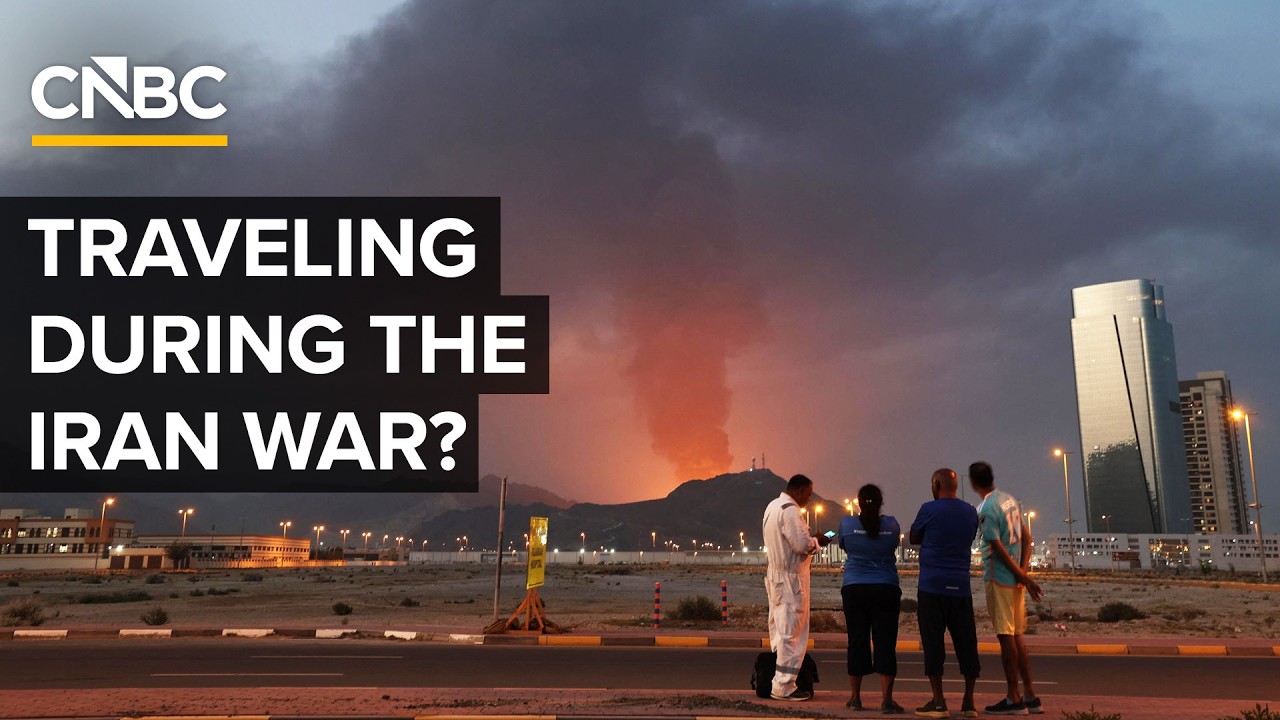
US-Iran Strikes Disrupt Global Air Travel

The US-Iran conflict has led to widespread flight cancellations and travel chaos, impacting major hubs like Dubai and stranding thousands.

Mar 5 at 5:46 PM4 min read
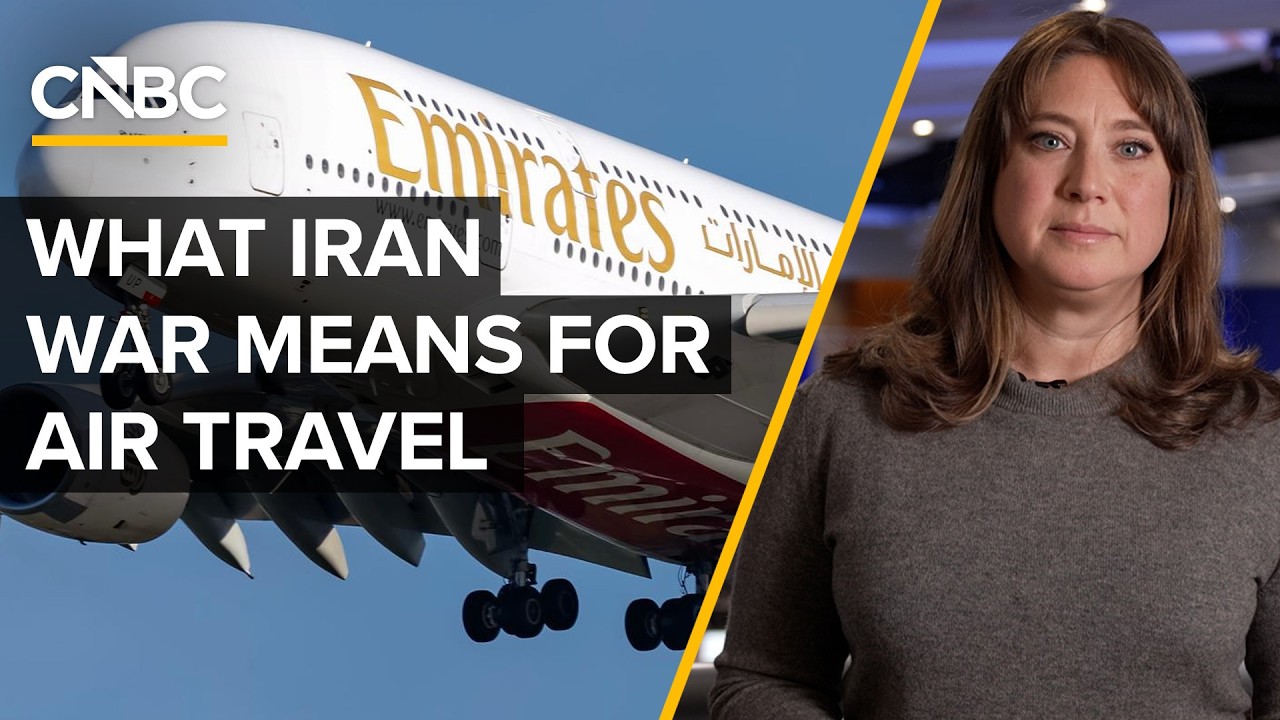
Aerial view of Dubai skyline at sunset with Emirates airplanes at the airport

The recent US and Israeli attacks on Iran have sent ripples through the global aviation sector, leading to widespread flight cancellations and stranding over a million passengers. Leslie Josephs, Airline Reporter for CNBC, and Emma Graham, CNBC's Middle East Bureau Chief, detail the cascading effects of the conflict, particularly on Dubai, a critical international travel hub.
US-Iran Strikes Disrupt Global Air Travel — from CNBC

The Speakers

Leslie Josephs is a seasoned Airline Reporter for CNBC, known for her comprehensive coverage of the aviation industry. Her reporting often delves into the financial and operational challenges faced by airlines and the broader economic implications of air travel disruptions.

Emma Graham serves as the Middle East Bureau Chief for CNBC. Her role involves overseeing the network's coverage of economic and business news from a key geopolitical region, providing on-the-ground insights and analysis.

Widespread Flight Disruptions

The video highlights that hundreds of flights were cancelled due to the geopolitical tensions. Reports indicate that Dubai International Airport, which handled 95.2 million passengers in 2025, experienced a significant impact. The airspace around Iran was closed, forcing airlines to reroute flights, leading to substantial disruptions for travelers worldwide. Emma Graham shared a personal account of an Emirates flight to Dubai being turned around twice due to Iranian missiles, illustrating the immediate danger and uncertainty faced by passengers.

Economic Repercussions for Airlines and Travelers

Dale Buckner, CEO of Global Guardian, emphasized the broader economic consequences. He stated, "If this goes on for a month or five weeks, that will create economic hardship... they slow down business, they disrupt travel, they disrupt the tourism industry." The rerouting of flights necessitates longer flight paths, increased fuel consumption, and potentially higher operational costs for airlines. These costs are likely to be passed on to consumers, leading to increased ticket prices. Buckner also noted that the disruption to trade and business travel could have a significant impact on the economies of countries like the UAE, which rely heavily on international connectivity and tourism.

Evacuations and Repatriation Efforts

The situation has necessitated large-scale evacuation and repatriation efforts. Airlines are scrambling to bring stranded passengers back to their home countries. This includes utilizing large passenger aircraft like the Airbus A380 and potentially private jets to move people out of affected regions. The report mentions that local authorities are working with hotels to extend stays for those displaced, an unprecedented measure indicating the severity of the situation.

The Role of Dubai as a Travel Hub

Dubai International Airport, a vital transit point connecting continents, is at the heart of these disruptions. Its role as a major hub means that any instability in the region has a far-reaching impact. The empty arrival boards at Dubai International Airport served as a stark visual representation of the widespread flight suspensions. The economic ties between the UAE and the US are substantial, with over $1.4 trillion in UAE investment pledged to the US economy over the next decade. Disruptions to this flow of capital and people can have significant consequences.

Uncertainty and Risk Management

Dale Buckner stressed the pervasive sense of uncertainty, stating, "The one word that describes the environment we are in today, right now, is uncertainty." He advised travelers to be prepared for unexpected changes and to proactively communicate with their travel providers. The advice for those looking to travel is to ensure they have comprehensive travel insurance, particularly policies with 'cancel anytime' clauses, as standard insurance may not cover disruptions caused by geopolitical events. Buckner also highlighted the importance of immediate action and risk mitigation, advising, "The sooner you take action, the better off you will be." He further recommended checking visa requirements as these can change rapidly in times of conflict.

Economic Impact on Tourism and Trade

The conflict's impact extends beyond immediate travel disruptions to the broader tourism and hospitality sectors. With flights being rerouted and airspace closures, the perception of the region as a safe and stable destination could be affected. This could lead to a decline in tourism, impacting hotels and other businesses that rely on international visitors. Furthermore, the disruption to air cargo could affect supply chains and the availability of goods, potentially leading to price increases across various sectors.