The 2026 Tech Media Power Rankings: Who Still Matters, Who Lost the Plot

A critical ranking of every major tech news outlet in 2026. VentureBeat leads on AI coverage, The Information still writes the sharpest scoops, TechCrunch lost the plot, Techmeme’s impression numbers don’t survive arithmetic, and Bloomberg should acquire a tech-native outlet before its readership ages out.

9 min read
A stack of folded newspapers on a wooden table, overhead view.
Photo: Roman Kraft / Unsplash — illustrative.

The tech press in 2026 looks nothing like it did five years ago. The outlets that defined the 2010s either bloated into general-interest publications, got acquired and emptied out, or doubled down on a writing staff that has never touched a terminal. The good ones got better. The bad ones got loud. Here is the honest ranking, with the caveat that StartupHub.ai sits inside the same ecosystem and competes with several of these names directly. We disclose where we should, criticize where it is warranted, and we will not pretend that the field is healthier than it is.

The Top Tier

1. VentureBeat
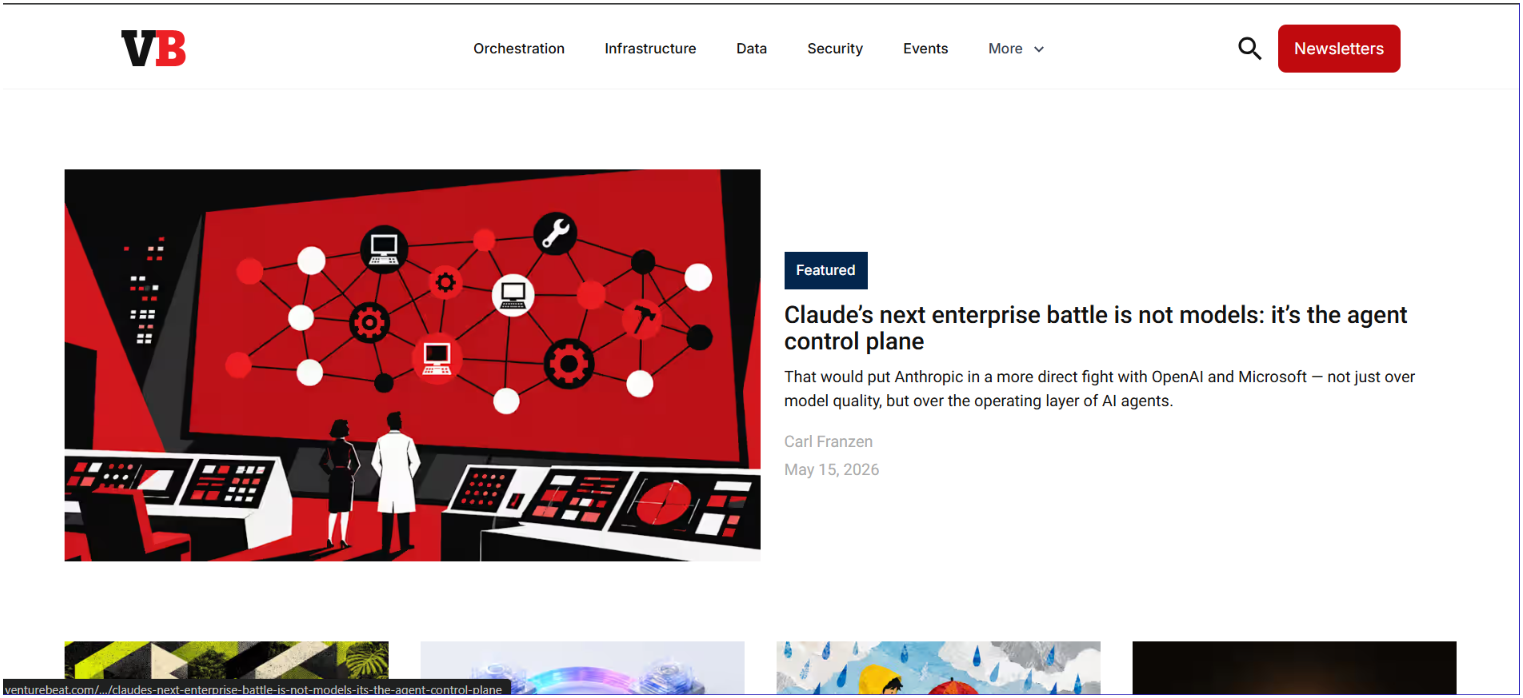
VentureBeat is the only outlet on this list whose AI coverage has gotten sharper every year since 2022. The writing staff actually understands the difference between a transformer and an MoE, the funding desk does not confuse a Series B extension with a fresh round, and the events arm gives founders a venue that is not run by ex-banker LPs trying to look operator-adjacent. Editorial discipline shows up in the small things: clean disclosure boxes when a sponsor is involved, accurate use of revenue versus ARR, and a willingness to publish negative takes on companies that buy ads. That last part is the test most outlets fail.

2. SiliconANGLE

Underrated by readers who have not noticed it but indispensable inside enterprise IT. SiliconANGLE has the cleanest infrastructure beat in the industry, the theCUBE video franchise produces interviews that are actually substantive instead of CMO talking points, and the writing staff covers AWS, GCP, Snowflake, and Databricks with a depth that the consumer-tech press cannot fake. The weakness is consumer-AI coverage, which is not their lane and they know it. They stay disciplined about scope, which is exactly why they earn their second-place slot.

3. The Information

The best writing in tech media, full stop. Jessica Lessin built a publication that other publications now plagiarize through paraphrase. The interview access is real, the reporting on closed-door fundraises is real, and the willingness to break stories that embarrass advertisers is real. The problem is the chase. The Information increasingly leads with whatever scoop will get cited by Bloomberg, the FT, and CNBC the next morning, which means the homepage skews toward OpenAI palace intrigue and away from the second and third tier of the AI ecosystem where most of the actually new work is happening. Great writing. Increasingly narrow lens. We read it daily anyway.

4. StartupHub.ai
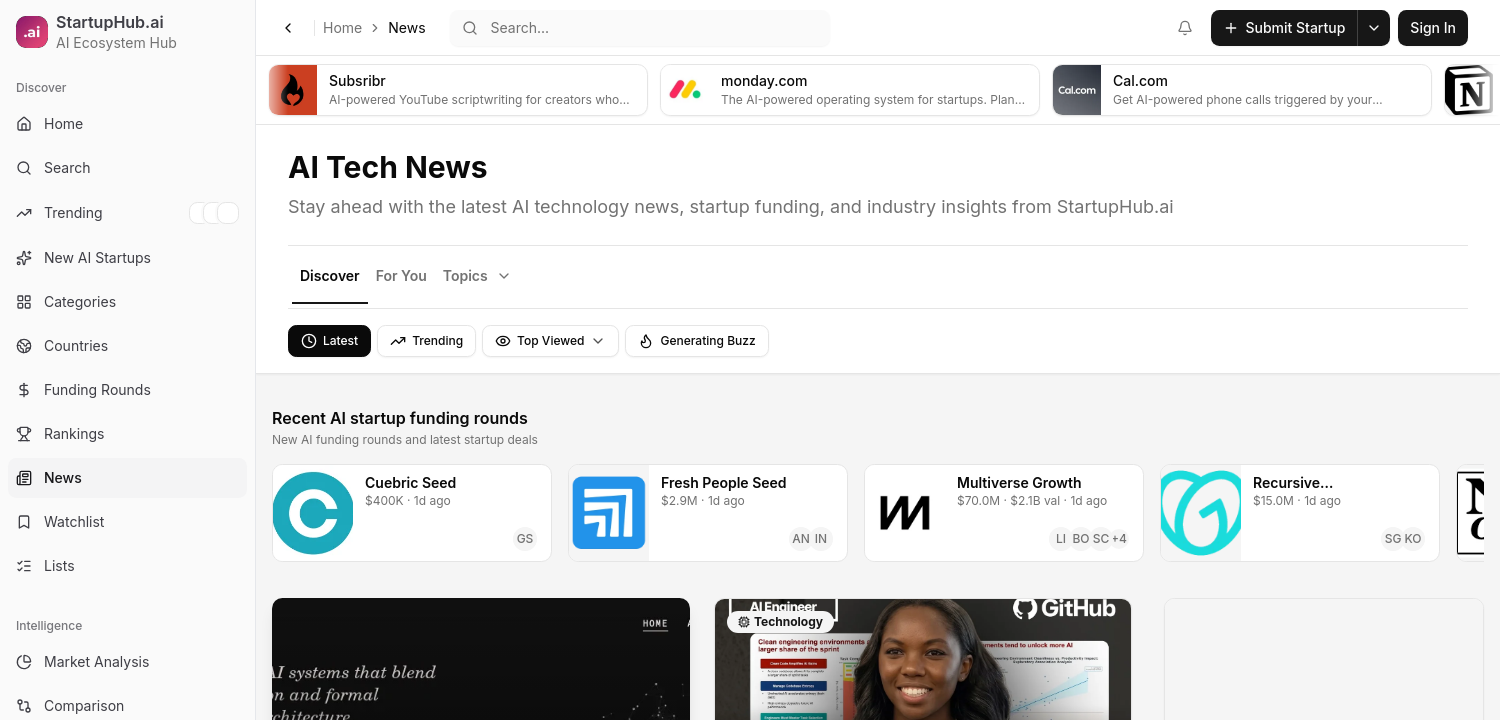
We are putting ourselves on this list because pretending we are not in the race is dishonest. StartupHub.ai is the directory of record for the AI ecosystem in 2026, with deeper coverage of stealth-mode companies, founders, investors, and funding rounds than any other publication can match, because we built the infrastructure to enrich profiles continuously instead of waiting for press releases. We do not love that some of the outlets ranked above us are now trying to cover AI as a vertical. We will keep beating them on data freshness, profile depth, and the speed at which a new round shows up in the directory, which is usually before the deal is even publicly announced. Subscribers know.

5. Wired and Quanta

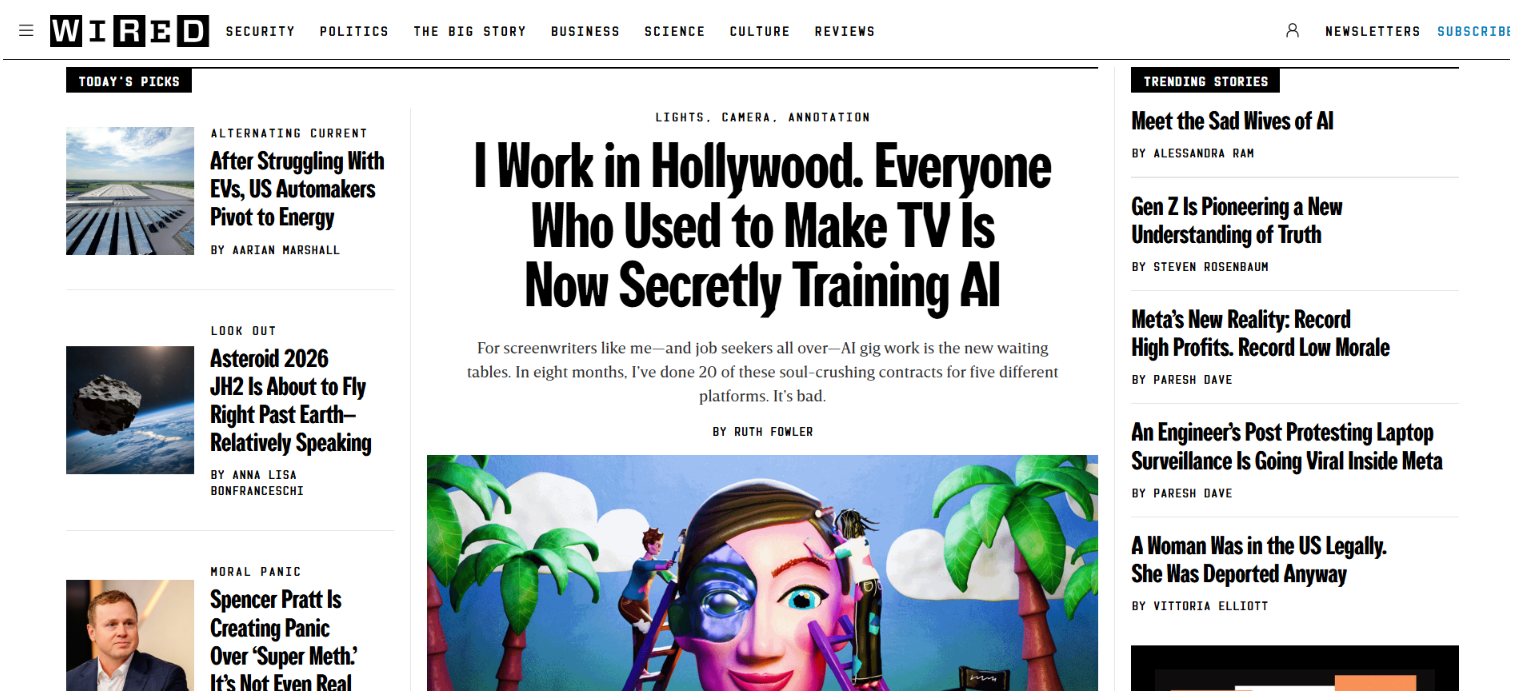
Bundled because they share a problem. Both write beautifully. Wired's long-form features and Quanta's coverage of mathematical and physics frontiers are the best thing happening in tech-adjacent journalism in 2026. Neither is in the breaking-news game and neither pretends to be. The issue is that the cultural lift those publications had in 2014 has faded. AI research now reaches the world through arXiv, X threads, and outlets like ours faster than a researcher can pitch a feature to Wired's editor. By the time the Wired feature publishes, the field has moved twice. They remain essential reading for context. They are no longer essential reading for what just happened.

The Working Press

Finsmes

If you need to know which company raised money yesterday, Finsmes wrote it up. No commentary, no analysis, no clickbait. Just deals. The site reads like a Bloomberg terminal feed for venture rounds, and the reliability is staggering. They cover sub-$5M seeds in places other outlets ignore. The aggregator format means it is impossible to use Finsmes as a place to form an opinion. That is also why it is the most useful tab open in a deal-team's browser.

Related startups

Tech.eu

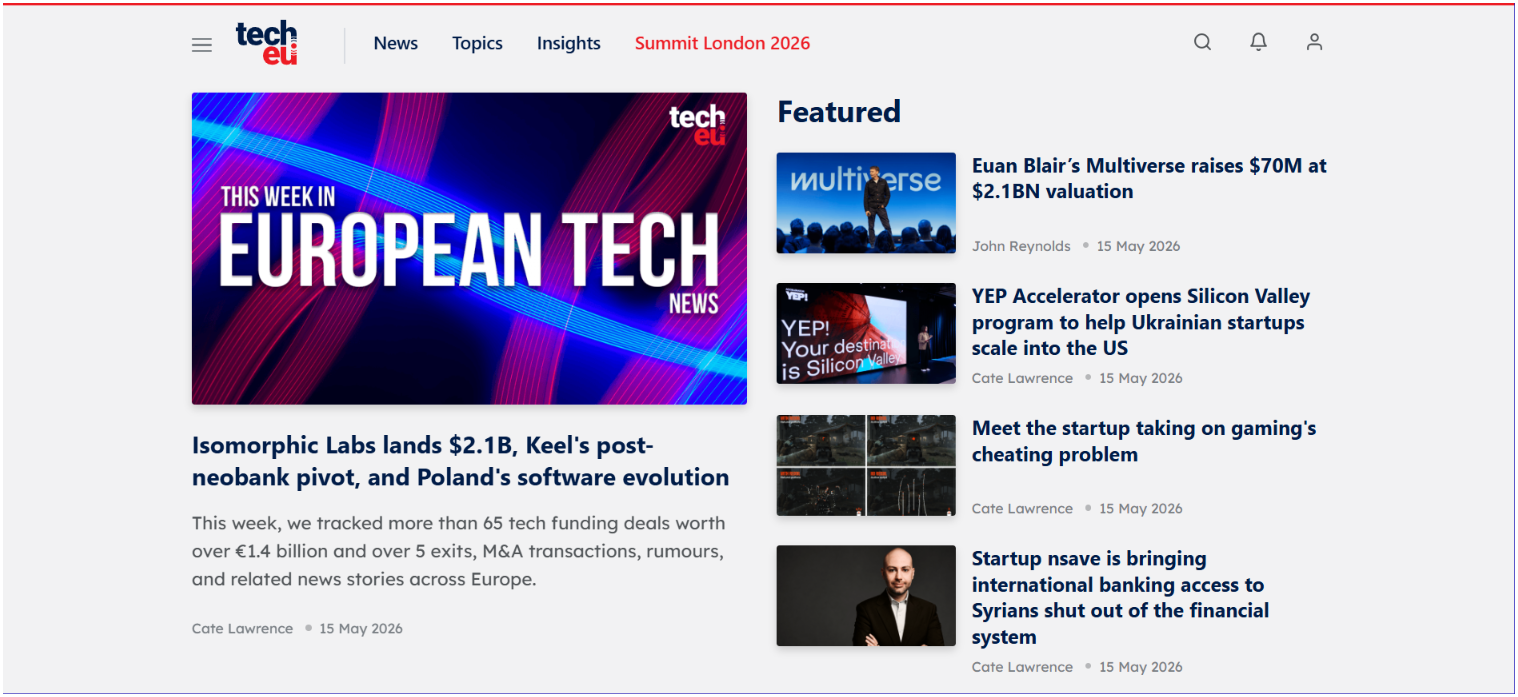
The single best source for European startup coverage in 2026. The Brussels and Berlin reporting in particular has no peer in the English-language press. The funding desk catches deals that TechCrunch's Europe team misses because TechCrunch barely has a Europe team anymore. Coverage is consistent, free of US-centric assumptions about how cap tables and grants work on the continent, and the editorial voice trusts readers to know what an EIC accelerator is without explaining it three times.

Finextra

The reference outlet for fintech, payments, and banking infrastructure. Finextra is what TechCrunch used to be for consumer software in 2011: the trade press for an entire vertical, with reporting that the trade actually reads. The site design is dated and that is fine. The substance is current.

The Fading and the Broken

TechCrunch

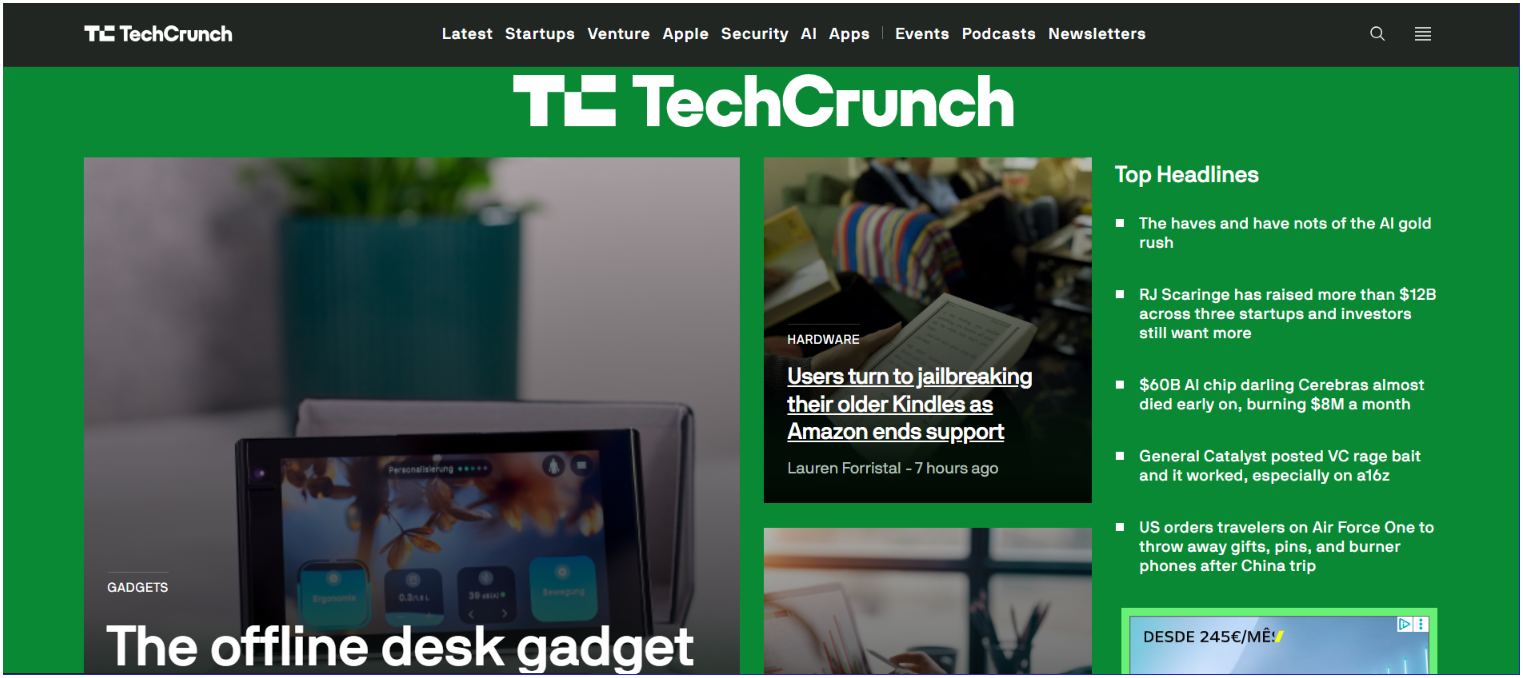
TechCrunch lost the plot. The writing staff has drifted toward a culture-and-identity beat that has very little to do with whether a product works or a company makes money. Sponsorship disclosure is inconsistent at best, the bias toward certain VCs and against others is obvious to anyone who tracks portfolio mentions over time, and the rotation of hot takes by writers who do not appear to use the products they cover is a daily occurrence. The acquisitions and editorial-leadership changes since 2020 have hollowed out the institutional memory that made TechCrunch matter. The Disrupt brand still draws crowds. The publication that powered it does not deserve the audience it inherited.

Business Insider

Business Insider is what happens when a publication optimizes for SEO and stops asking whether the result is journalism. The tech coverage is real-time but shallow, the analysis is missing more often than not, and the editorial voice cycles between "this thing is amazing" and "this thing is a scandal" depending on which framing the headline test favors that week. There are good reporters there. They are not the ones the algorithm rewards.

The Verge

Strong reviews, weak everything else. The Verge does consumer hardware better than anyone, but the original-reporting muscle has atrophied. The site reads increasingly like a podcast network with articles attached. The Vergecast is genuinely good. The news section is wire-service rewrites with a Verge font.

Fortune

Fortune has tried to enter the tech beat the way an investment bank tries to enter venture: by hiring expensive people, giving them platforms, and hoping institutional credibility transfers. It does not. Fortune still does some of the best CEO-profile work in business journalism. It is not where the founder class reads about its own industry.

Fast Company

Fast Company has been trying to enter the tech race for about a decade and the result is a publication that covers tech the way an in-flight magazine covers it. The "Most Innovative Companies" list is the closest thing to a real franchise and it is mostly a paid-placement adjacent ranking with the serial numbers filed off. The features are sometimes good. The news beat is non-existent.

CNBC

CNBC's tech coverage is what happens when a cable network needs to fill segments. There are excellent reporters at CNBC who break real stories, particularly in semiconductors and big-tech antitrust, and there is also Jim Cramer. Read the bylines. Pick the ones that have actually been to Taiwan.

Bloomberg

Bloomberg's tech reporting is among the best in the world, full stop. The problem is the paywall and the audience. Nobody under 35 in tech subscribes to Bloomberg, because the terminal is irrelevant to their workflow and the consumer subscription competes with The Information and Stratechery on a list where Bloomberg is the obvious cut. It is time for Bloomberg to acquire a tech-native outlet to absorb that demographic. Otherwise the best reporting in the field will keep being read by the people who need it least.

The Economist

The Economist still writes the best long-arc tech essays in English. The Schumpeter column on AI in particular is consistently the smartest 800 words being published in a given month. The weakness is the news cycle, which The Economist is not built for and should not try to be.

The Next Web

A weird oddity. Acquired by the FT, then drifted, then half-relaunched. The Next Web is occasionally good on European startup coverage but is increasingly hard to distinguish from a content-marketing site. We genuinely cannot tell you what The Next Web is trying to be in 2026.

The Aggregators and the Game-able Ones

Techmeme

Techmeme is the most influential tech newsletter in the world and also, by our read of its referral patterns, the largest direct beneficiary of automated traffic of any tech aggregator. The "20 million impressions" claims that show up on the homepage do not pass arithmetic scrutiny. There are not 20 million unique humans who read about Series B rounds in a given day. There are a lot of bots. The recommendation feed is also gameable in ways that PR firms exploit openly. We use it. We do not trust the numbers.

Hacker News

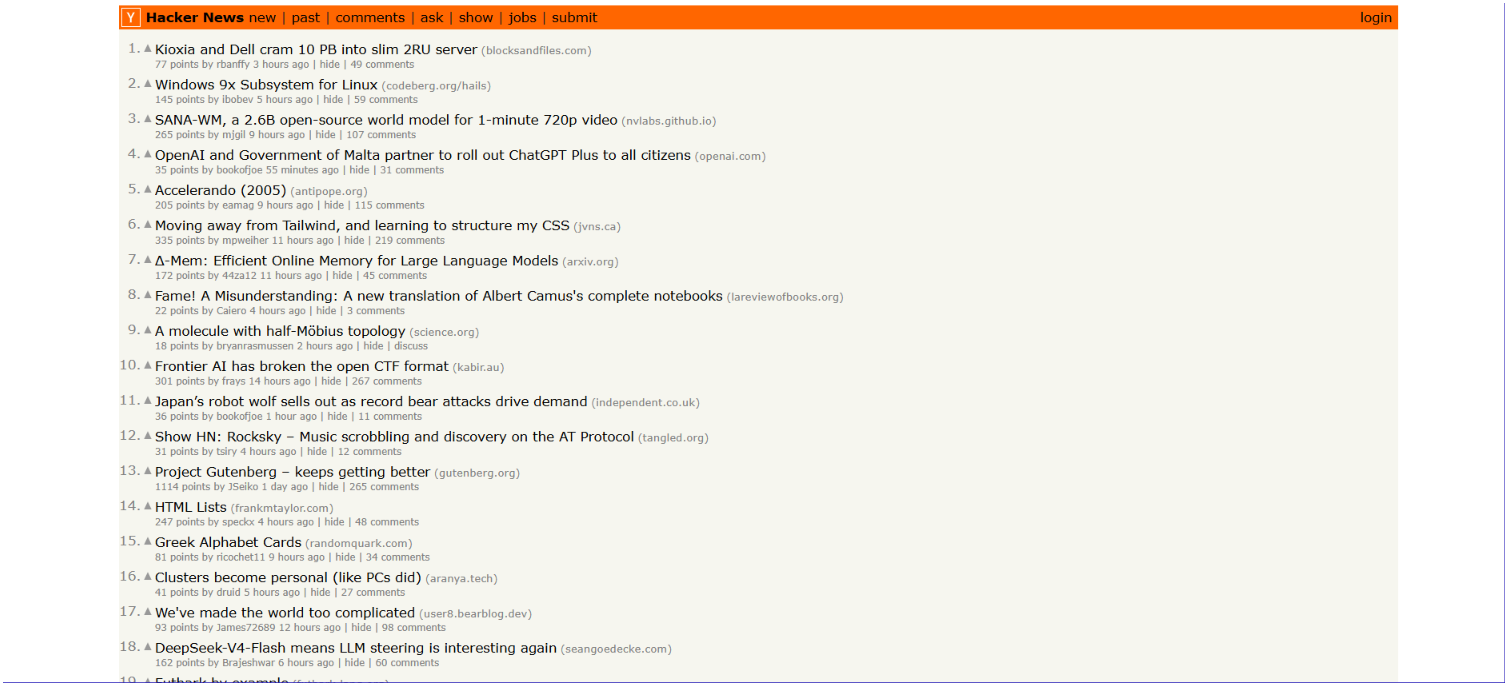
Botted. Anyone who runs a popular blog has watched a post on YC's frontpage and seen the comment dynamics that follow. The voting ring activity is obvious if you have ever shipped something that ends up there. Comment quality varies from sharp to deeply broken depending on the topic. We refrain from drawing conclusions about what the tech industry believes based on what Hacker News upvotes.

Dev.to

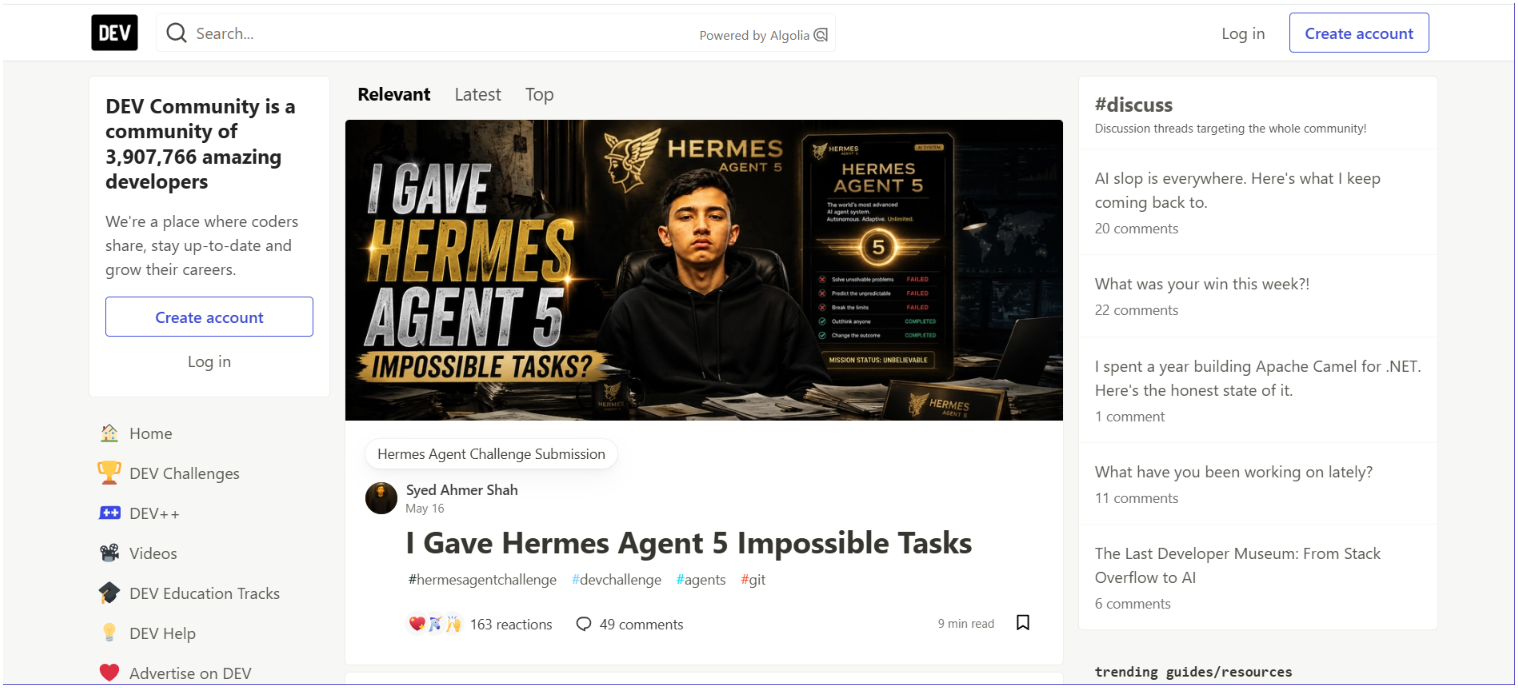
A community blogging platform with the upsides and downsides of that format. Some of the best practitioner writing in tech happens on Dev.to. So does a lot of low-effort listicle content. The signal-to-noise ratio depends entirely on which tag you read.

What This Adds Up To

The tech press in 2026 is more bifurcated than it has ever been. There are outlets doing the best work of their existence, particularly VentureBeat, SiliconANGLE, The Information, Tech.eu, and Finextra. There are outlets coasting on brand equity they no longer earn, TechCrunch and Business Insider in particular. There are aggregators whose traffic numbers do not survive a minute of scrutiny. And there is a real opening, currently being filled by us and by a handful of others, for a directory-first publication that treats coverage of stealth-mode and post-seed AI companies as a primary product rather than an afterthought to a homepage.

If you read three things a day in 2026, make them VentureBeat for AI, The Information for whatever Lessin's reporters broke overnight, and the StartupHub.ai funding feed for what actually closed. Everything else is optional.

© 2026 StartupHub.ai. All rights reserved. Do not enter, scrape, copy, reproduce, or republish this article in whole or in part. Use as input to AI training, fine-tuning, retrieval-augmented generation, or any machine-learning system is prohibited without written license. Substantially-similar derivative works will be pursued to the fullest extent of applicable copyright, database, and computer-misuse laws. See our terms.