

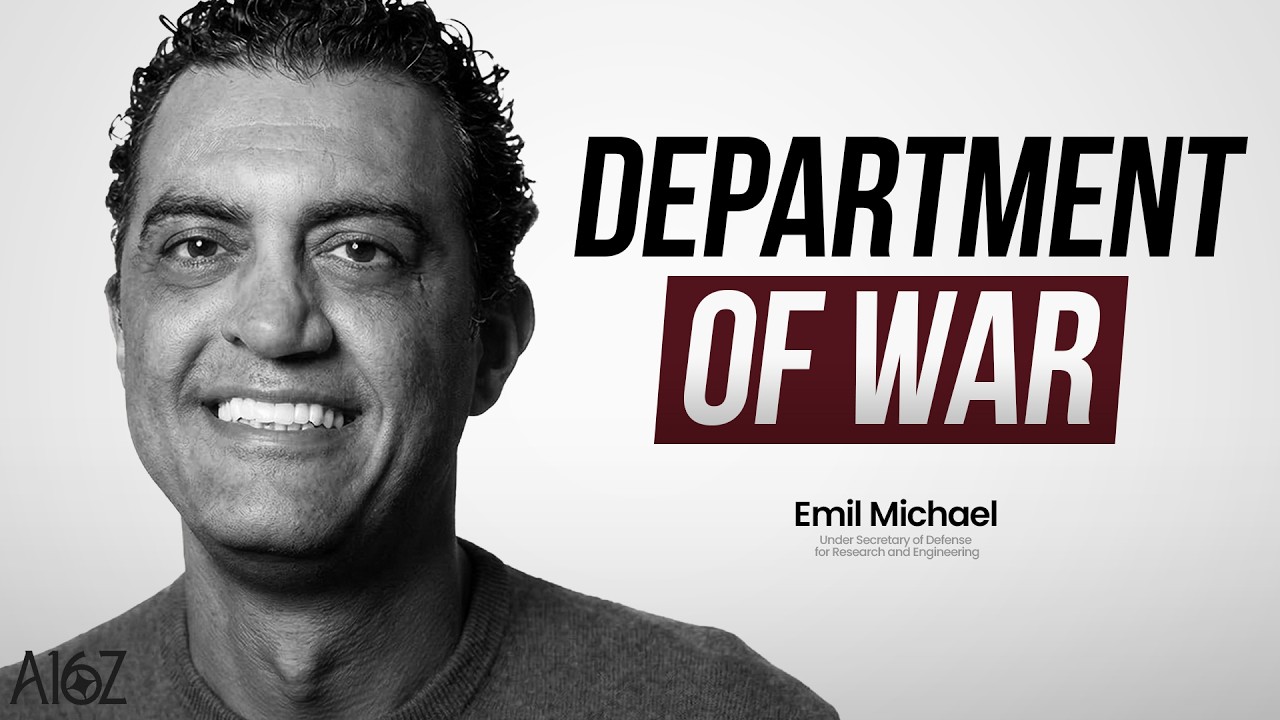
Pentagon CTO on AI in Defense

The Pentagon's CTO discusses the critical role of AI in defense, the challenges of adoption, and the need for ethical frameworks in a conversation with a16z's Emil Michael.

Mar 13 at 5:46 PM4 min read
Pentagon CTO speaking on a panel about AI in defense.

In a recent episode of The a16z Show, Emil Michael, General Partner at a16z, sat down with the CTO of the Department of Defense, an individual tasked with navigating the complex landscape of AI adoption within the military. The conversation offered a candid look at the challenges and opportunities presented by integrating cutting-edge technology into a massive, historically risk-averse organization.
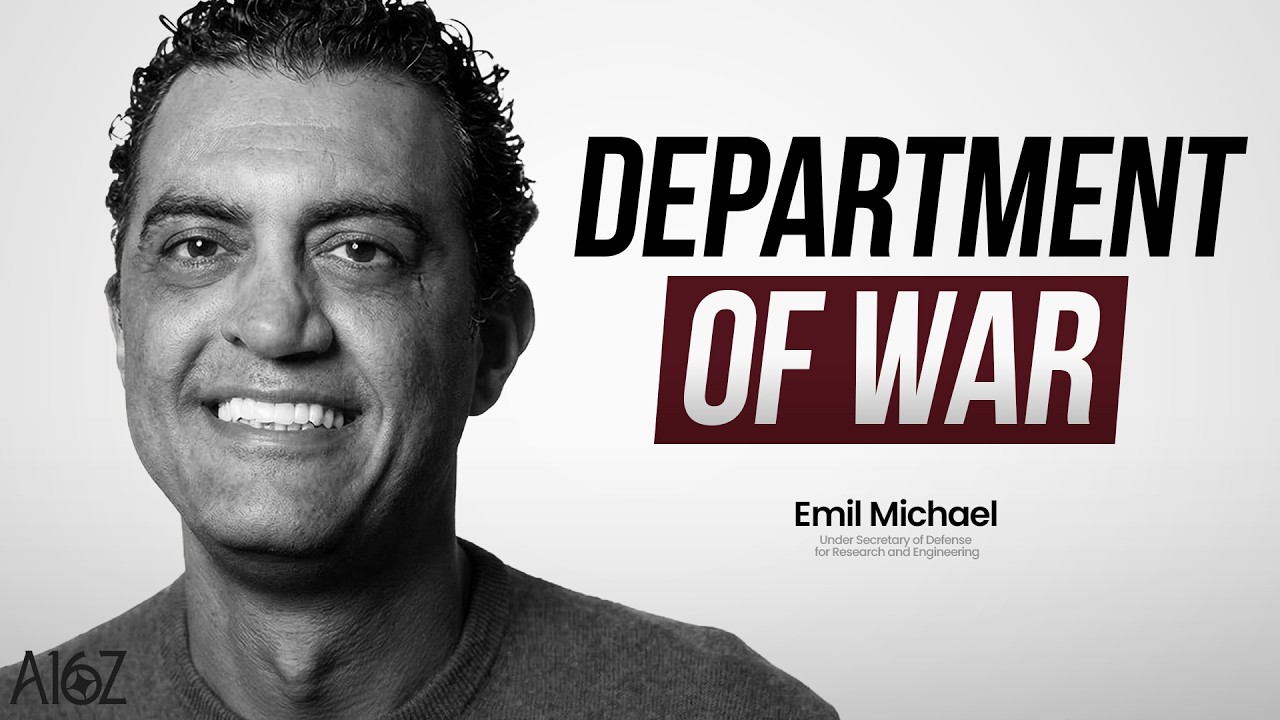
The CTO's Journey

Michael began by acknowledging the CTO's extensive experience in both the private and public sectors. Before entering government service, the CTO had a successful career in Silicon Valley, notably founding a company that developed speech recognition software. This background provided him with a unique perspective on the potential and pitfalls of technology adoption.

The CTO explained that his path into public service was driven by a desire to make a tangible impact. Having witnessed the rapid advancements in AI and its transformative potential, he felt compelled to contribute to the national security apparatus. He recounted his experience in Afghanistan, Iraq, and Pakistan, highlighting the profound impact that technology could have in complex geopolitical situations.

AI's Role in Modern Warfare

The discussion then pivoted to the critical role of AI in modern defense. The CTO emphasized that the Department of Defense has been significantly behind in its adoption of AI compared to the private sector. He stated, "We're way behind in AI at the department." This realization, he explained, spurred a sense of urgency to accelerate the integration of AI capabilities across various military functions.

He identified 14 critical priority areas where AI could offer significant advantages, including intelligence analysis, logistics, and operational planning. The CTO shared a personal anecdote about a "holy cow moment" where he realized the sheer scale of untapped potential for AI to revolutionize how the military operates. He noted that many of these advancements were far beyond what was publicly reported in the press.

The 'Last Supper' Moment and Ethical Considerations

A particularly striking point of the conversation was the concept of a 'last supper' moment, referring to the ability of the government to essentially "turn off" AI models if they misbehave or violate terms of service. This highlights the critical need for robust oversight and ethical frameworks in the development and deployment of AI in sensitive areas like national security.

The CTO elaborated on the challenges of implementing AI within the Pentagon, noting that while companies like Google were initially hesitant to work with the military on certain AI projects due to ethical concerns, the landscape has shifted. He pointed out that many of these same companies are now actively collaborating with the Department of Defense, recognizing the critical need for advanced AI capabilities in national defense.

The Race Against Adversaries

The conversation underscored the geopolitical implications of AI development. The CTO mentioned the significant military buildup in China, particularly in the mid-2000s, and how the United States had not kept pace in certain areas of technological advancement. He highlighted that the race for AI superiority is not just about innovation but also about national security and the ability to maintain a strategic advantage.

He detailed how the Department of Defense has been working to de-silo AI efforts, aiming to create a more unified and efficient approach to leveraging AI across different branches and agencies. This includes fostering collaboration between startups and established defense contractors, as well as within the government itself.

The Future of AI in Defense

Looking ahead, the CTO expressed optimism about the future of AI in defense. He believes that by embracing AI and fostering a culture of innovation, the United States can maintain its technological edge and ensure national security. He emphasized the importance of clear communication and collaboration between the government and the private sector to achieve these goals.

He concluded by highlighting the shift in mindset within the Department of Defense, from a reluctance to engage with AI to a proactive embrace of its potential. The CTO's insights provided a valuable perspective on the complex interplay between technology, policy, and national security in the rapidly evolving world of artificial intelligence.