

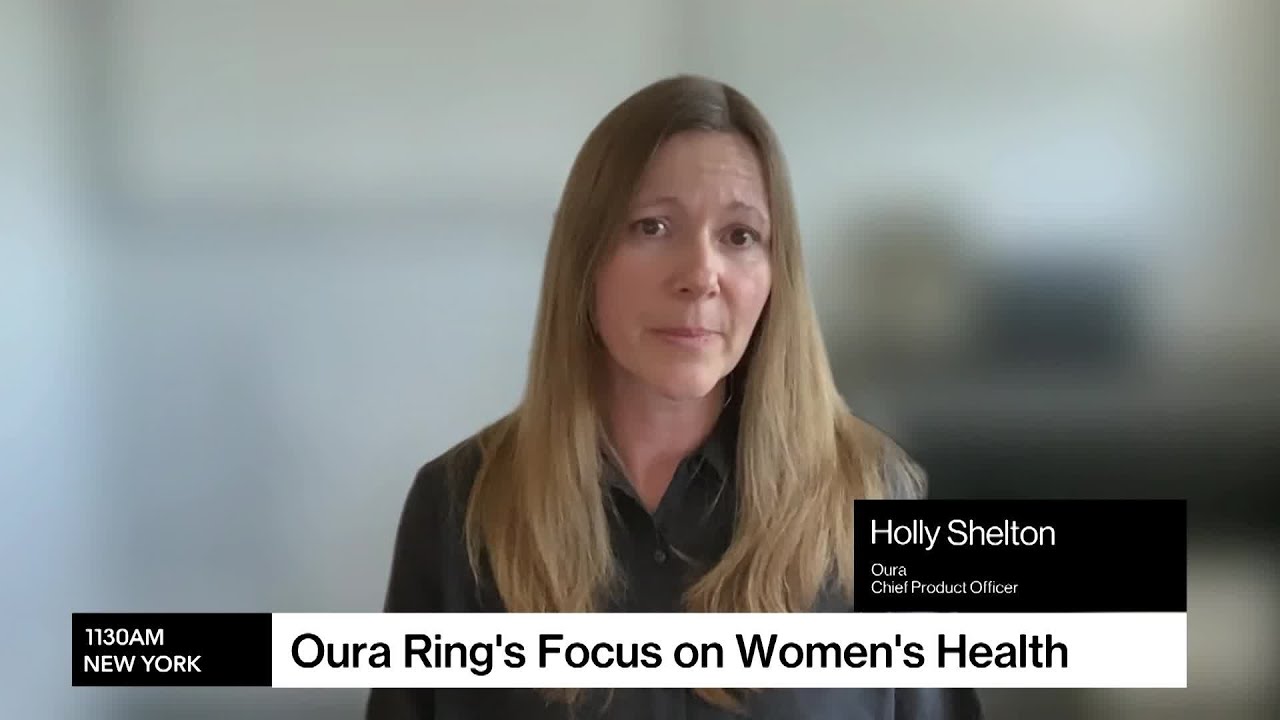
Holly Shelton, Chief Product Officer at Oura, discussed the company's strategic shift towards leveraging artificial intelligence to enhance its health tracking capabilities, with a particular emphasis on women's health. In a recent interview, Shelton elaborated on how Oura is evolving beyond simple data collection to provide users with deeper, actionable insights.
Holly Shelton's Role at Oura
As Chief Product Officer, Holly Shelton is instrumental in shaping the direction and feature set of the Oura Ring. Her expertise lies in translating complex physiological data into user-friendly and actionable health recommendations. Oura, known for its smart ring that monitors sleep, activity, and physiological signals, is at the forefront of consumer health technology. Shelton's leadership is crucial in guiding the product's development to meet the diverse health needs of its user base.
AI-Driven Health Insights
Shelton explained that Oura's approach to AI is twofold. Firstly, it involves using deep machine learning to analyze the vast amounts of data collected by the ring. This allows Oura to move from merely tracking metrics to actively detecting, predicting, and understanding signals within the body. The goal is to translate this complex data into something users can easily understand and act upon daily.
The full discussion can be found on Bloomberg Podcast's YouTube channel.
Secondly, Oura is employing AI to evolve the Oura Ring from a passive tracking device into a proactive health companion. This means offering personalized recommendations that integrate seamlessly into a user's life, rather than simply presenting raw data. As Shelton stated, "We want to move from a tracker to truly a proactive health companion." This shift aims to empower users to make informed decisions about their well-being.
Focus on Women's Health
A significant portion of the discussion centered on Oura's commitment to women's health. Shelton highlighted that women's health has historically been an under-researched and underserved area in both medical and technological fields. She noted the common issue of women's health being reduced to purely reproductive aspects, overlooking the broader physiological experiences. "We think about women's health a lot at Oura," Shelton emphasized, "and we start almost everything that we work on, starting with women's bodies, deeply understanding that."
Oura's strategy is to build features that cater specifically to the physiological nuances of women, such as the menstrual cycle, pregnancy, and menopause. By collecting and analyzing data that reflects these unique biological processes, Oura aims to provide highly personalized and relevant insights. This contrasts with many general health trackers that may not adequately account for hormonal fluctuations and their impact on sleep, activity, and overall health.
From Passive Tracking to Proactive Guidance
Shelton articulated a clear vision for the Oura Ring's evolution: to become a tool that is always present and supportive, without being intrusive. "It's just always there when you need it, giving you insight when you need it, but it's not going to bug you at, it's not going to take attention, it's not going to grab your attention. Instead, we're thinking about how we connect you back to yourself." This philosophy underscores the importance of unobtrusive, continuous monitoring that builds self-awareness. The ring's ability to provide real-time feedback on readiness, sleep quality, and recovery is designed to help users understand their body's signals and make adjustments accordingly.
Addressing Historical Neglect in Health Tech
The conversation also touched upon the broader challenge within the tech industry of addressing historically under-researched populations. Shelton pointed out that many health technologies have been developed with a male-centric approach, leading to a gap in understanding and support for women's specific health needs. "We've had a lot of conversations in this segment about women's health research lagging, and how do you think about those specific opportunities for women and technology in health?" she questioned, setting the stage for Oura's proactive stance.
Oura's commitment is to actively bridge this gap by ensuring that its AI models and product features are inclusive and representative of women's diverse physiological experiences. "We start almost everything that we work on, starting with women's bodies, deeply understanding that," Shelton reiterated. This approach is not just about inclusivity but about providing accurate and meaningful health data that can genuinely empower women to take control of their well-being throughout different life stages.
The Oura Ring as a Health Companion
Shelton highlighted the practical application of Oura's AI. For instance, the ring can identify different phases of a woman's reproductive cycle, providing insights into how these phases might affect sleep, energy levels, and readiness for physical activity. This level of detail goes beyond generic health advice and offers personalized guidance tailored to the individual's biological rhythm. "We start almost everything that we work on, starting with women's bodies, deeply understanding that," Shelton stated. This deep understanding allows Oura to provide more relevant and actionable insights, transforming the ring into a true health companion.
The ultimate goal is to shift the paradigm from reactive healthcare to proactive wellness. By understanding individual physiological patterns, Oura aims to help users make informed decisions that can prevent issues before they arise and optimize their overall health. "We think about women's health a lot at Oura, and we start almost everything that we work on, starting with women's bodies, deeply understanding that," Shelton concluded, emphasizing the company's dedication to serving a critical, yet often overlooked, segment of the population.


