

OpenAI Pivots: Sora Dropped, Focus Shifts to Core AI

Bloomberg News AI Reporter Rachel Metz discusses OpenAI's strategic shift, discontinuing Sora video generation support and its Disney partnership to focus on core AI products like ChatGPT.

5 min read
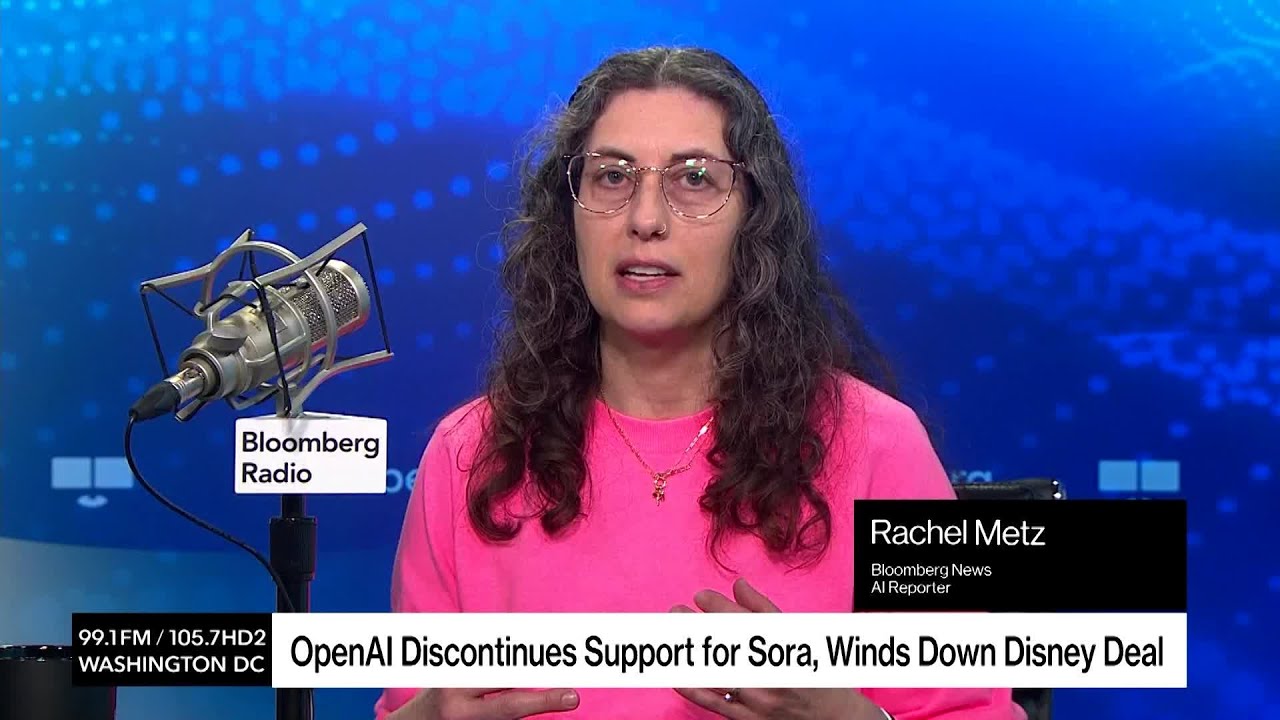
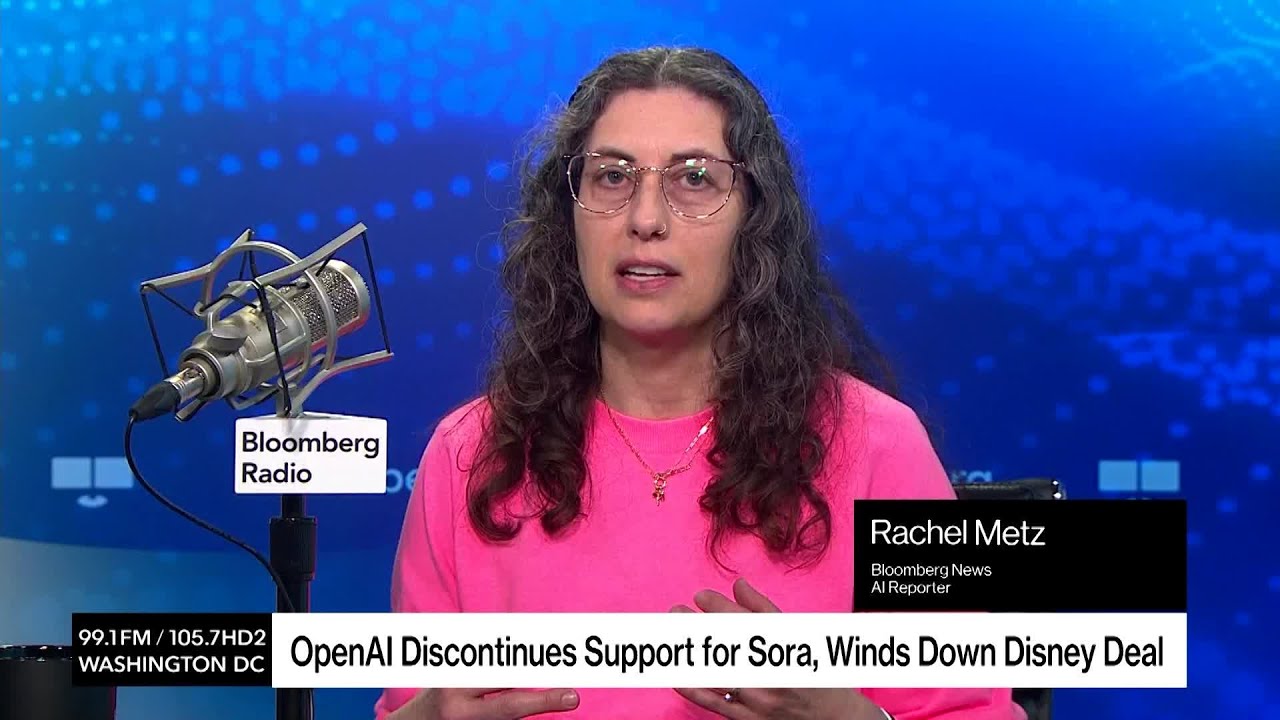
Rachel Metz speaking on Bloomberg Radio about OpenAI's strategy shift.
OpenAI Discontinues Support for Sora, Winds Down Disney Deal — Bloomberg Podcast on YouTube

In a significant shift in strategy, OpenAI has announced it will discontinue support for its Sora video generation model and is winding down its partnership with Disney that involved licensing Sora's capabilities. This move signals a pivot towards prioritizing OpenAI's core AI products, particularly those with clearer paths to monetization and broader market applicability, such as its popular ChatGPT conversational AI and its AI-powered coding assistant.

Rachel Metz, an AI Reporter for Bloomberg News, discussed these developments, highlighting the underlying reasons for the change. Metz explained that the decision stems from the immense computational resources required to build and run advanced AI models like Sora. She stated, "The fact of the matter is generating video is computationally very, very hungry. And if we need compute, let's put it toward other things." This implies that OpenAI is reallocating its substantial computing power and research efforts to areas where it sees a more immediate and sustainable return on investment.

OpenAI's Strategic Realignment

Metz elaborated on OpenAI's broader strategy, noting that the company is attempting to simplify its product portfolio and focus on areas with proven demand and revenue potential. "OpenAI is trying to simplify what has become a pretty vast portfolio of different kinds of AI products, and if there is one thing that OpenAI has not quite nailed down is how people are going to pay for and pay over time for these products," Metz observed. The company's exploration into various AI applications, from image generation to video synthesis, has been broad, but the path to profitability for some of these cutting-edge technologies remains less clear.

The full discussion can be found on Bloomberg Podcast's YouTube channel.
OpenAI Discontinues Support for Sora, Winds Down Disney Deal - Bloomberg Podcast
OpenAI Discontinues Support for Sora, Winds Down Disney Deal — from Bloomberg Podcast

The discontinuation of Sora support and the dissolution of the Disney partnership suggest that the initial vision for Sora may have been too ambitious or too resource-intensive for its current stage of development and market readiness. While the AI-generated videos showcased by OpenAI were visually impressive, the practical application and cost-effectiveness for widespread use by companies like Disney were likely key factors in the decision to cease support.

The Economics of AI Video Generation

The core challenge for AI video generation, as Metz pointed out, lies in its extreme computational demands. Training and running these models require vast amounts of processing power, which translates to significant operational costs. "Generating video is computationally very, very hungry," Metz reiterated, emphasizing that these costs create a hurdle for both the developers and potential users. For companies like OpenAI, which are backed by significant investment and operate at a massive scale, finding a sustainable economic model is crucial. Subsidizing these computationally expensive models indefinitely is not a viable long-term strategy.

This reality forces AI companies to make strategic choices about where to focus their resources. While the creative potential of AI video generation is undeniable, the immediate need for revenue and a clear return on investment likely pushed OpenAI to concentrate on products that have a more direct and profitable application. The focus on coding assistants and conversational AI like ChatGPT reflects this prioritization, as these tools have already demonstrated their value and a willingness from users and businesses to pay for them.

Focus on Core AI Products and Monetization

Metz highlighted that OpenAI is looking to streamline its offerings to concentrate on areas where it has already established a strong market presence and a clearer revenue stream. "I think that, you know, trying to figure out how people are going to pay and pay over time for these products, you know, companies have to make money, right? And they're doing what they can to, you know, ramp up the revenue," she stated. The shift is indicative of a broader trend in the AI industry, where the initial excitement and investment in novel applications are now being tempered by the practicalities of business models and profitability.

The decision to discontinue Sora support and the Disney partnership is a clear signal that OpenAI is prioritizing its core offerings, which have already gained significant traction and monetization potential. This includes their widely adopted ChatGPT, which serves as a versatile tool for communication and information retrieval, and their AI coding assistants, which are proving invaluable to developers. These products represent a more immediate and tangible return on the company's substantial investments in AI research and development.

The Future of AI in Media and Entertainment

The winding down of the Disney partnership also raises questions about the future of AI in the media and entertainment industry. While AI can undoubtedly be a powerful tool for content creation, its integration into mainstream production pipelines requires careful consideration of costs, quality, and consumer acceptance. Metz alluded to this, noting that while AI video generation is impressive, "it's not our core product... and if we need compute, let's put it toward other things." This suggests that the company views AI video generation as a more experimental or supplementary technology for now, rather than a core pillar of its business.

The industry is still in the early stages of understanding how AI can be effectively and profitably integrated into creative workflows. While the potential for AI to revolutionize content creation is immense, the current economic realities and technological limitations mean that companies are focusing on applications with a more immediate and demonstrable impact. The move by OpenAI indicates a pragmatic approach to navigating this evolving landscape, prioritizing proven technologies and business models while continuing to explore the frontiers of AI research.