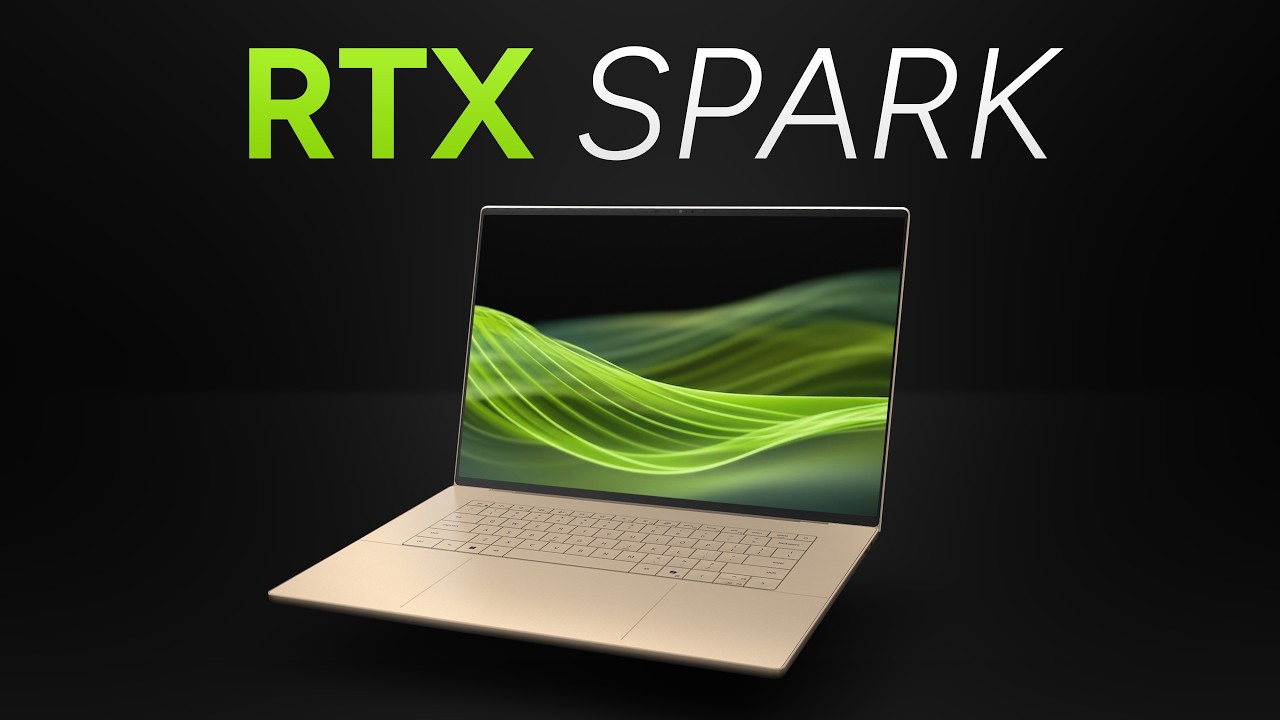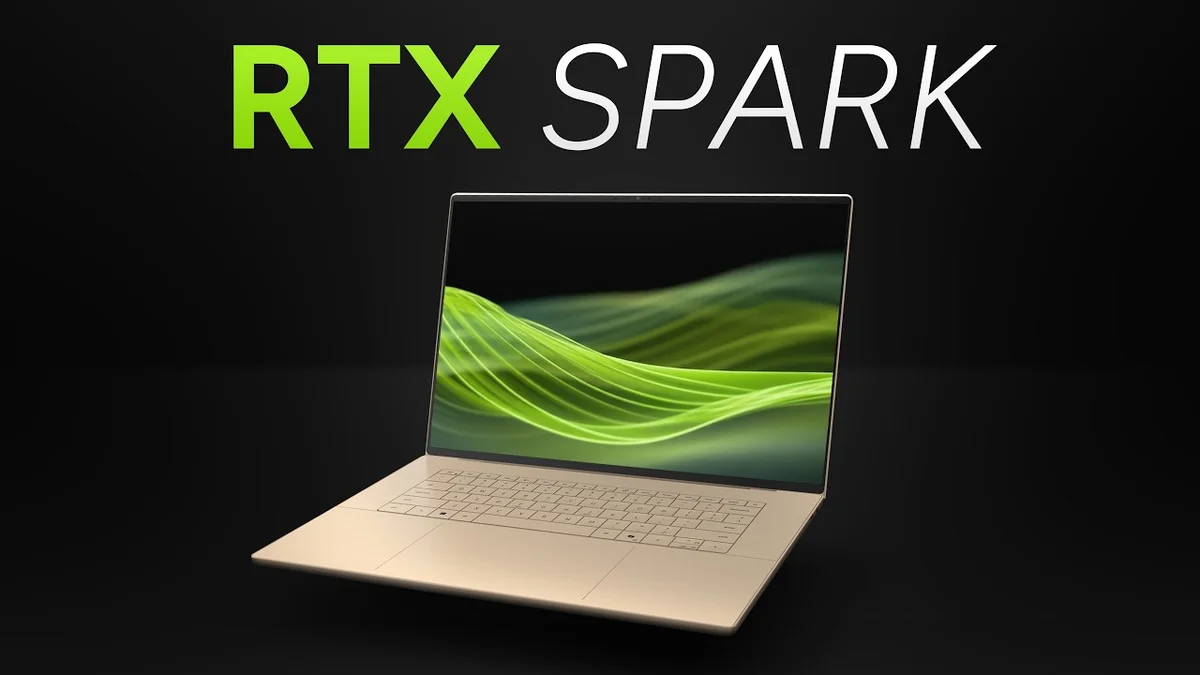
Nvidia's RTX Spark: AI Agents and the Future of PCs

Nvidia's new RTX Spark chip aims to redefine PCs by enabling on-device AI agents for complex tasks, promising a new era of computing power and creative potential.

Man presenting Nvidia's RTX Spark chip and new laptops on stage.
Jensen Huang, CEO of Nvidia, showcases the company's vision for AI-powered laptops with the RTX Spark chip.· YouTube
Visual TL;DR
AI Agents on PCsContext
intelligent assistants performing tasks locally on device
From the article 8 mentionsNvidia, in collaboration with Microsoft, is positioning the RTX Spark as the foundation for a new generation of PCs.
Nvidia RTX SparkCore
new chip enabling on-device AI agents for complex tasks
From the article 4 mentionsNvidia is making a bold play to reshape the personal computing experience with its new RTX Spark chip.
Powerful HardwareCore
20-core Arm Grace CPU, Blackwell RTX GPU, 128GB memory
From the article 3 mentionsThe success of the RTX Spark will ultimately depend not only on its hardware capabilities but also on how seamlessly and unobtrusively these AI agents can be integrated into the user’s daily computing life.
Local AI ProcessingContext
From the articleThe core proposition is that these agents can interact with applications, manage workflows, and execute commands without constant reliance on cloud processing.
Major ManufacturersCore
ASUS, Dell, HP, Lenovo, Microsoft integrating the chip
From the articleThis powerful silicon, integrated into a range of upcoming laptops from major manufacturers like ASUS, Dell, HP, Lenovo, and Microsoft, promises to usher in an era of AI-powered agents that can perform tasks directly on the device.
User ConcernsContext
potential challenges and user concerns about new technology
From the article 3 mentionsWhile the technological advancements are significant, the presenter raises a critical point about user perception and control.
New PC EraEffect
ushering in a new era of computing power and creativity
From the articleThis powerful silicon, integrated into a range of upcoming laptops from major manufacturers like ASUS, Dell, HP, Lenovo, and Microsoft, promises to usher in an era of AI-powered agents that can perform tasks directly on the device.
Contents(3)

Nvidia is making a bold play to reshape the personal computing experience with its new RTX Spark chip. This powerful silicon, integrated into a range of upcoming laptops from major manufacturers like ASUS, Dell, HP, Lenovo, and Microsoft, promises to usher in an era of AI-powered agents that can perform tasks directly on the device.

StartupHub data

Microsoft

A global technology leader providing software, cloud services, AI, and devices for individuals and businesses.

Founded
1975
Location
Redmond, Washington, United States

Global technology company providing PCs, servers, storage, software, and IT services.

Founded
1984
Location
Round Rock, United States

Designs and licenses CPU cores and related technologies for semiconductors, powering most mobile devices and increasingly AI infrastructure.

Founded
1990
Location
Cambridge, United Kingdom
Valuation
$54.5B

A global technology company specializing in PCs, smartphones, and other electronic devices.

Founded
1984
Location
Beijing, China
Nvidia's RTX Spark: AI Agents and the Future of PCs - YouTube
Nvidia's RTX Spark: AI Agents and the Future of PCs, from YouTube

The RTX Spark is built around a 20-core Arm-based Grace CPU, paired with a Blackwell RTX GPU and a substantial 128 GB of unified memory. This configuration is designed to handle demanding AI workloads, enabling sophisticated agents to operate locally. The core proposition is that these agents can interact with applications, manage workflows, and execute commands without constant reliance on cloud processing.

The Rise of AI Agents on PCs

The video highlights the potential for these AI agents to act as intelligent assistants, performing tasks ranging from managing emails and calendars to creating content. A key demonstration shows an agent interacting with creative software, adjusting camera angles and generating 3D views, showcasing a vision where AI agents are deeply integrated into professional workflows. This move aligns with Nvidia's broader strategy to accelerate AI across various applications, from gaming to content creation.

Nvidia's Vision for a New PC Era

Nvidia, in collaboration with Microsoft, is positioning the RTX Spark as the foundation for a new generation of PCs. The focus is on enabling AI to run efficiently and effectively on the device itself. This approach aims to provide a more responsive and integrated AI experience compared to current cloud-based solutions. The company’s extensive list of software partners, including Adobe, Unity, and Unreal Engine, suggests a broad push to embed these AI capabilities across the software spectrum.

Potential Challenges and User Concerns

While the technological advancements are significant, the presenter raises a critical point about user perception and control. The idea of AI agents running constantly in the background, even if beneficial, could be seen as intrusive. The challenge for Nvidia and Microsoft will be to strike a balance between powerful AI assistance and user privacy and autonomy. The success of the RTX Spark will ultimately depend not only on its hardware capabilities but also on how seamlessly and unobtrusively these AI agents can be integrated into the user’s daily computing life.

© 2026 StartupHub.ai. All rights reserved. You may not republish this article in full without a license. Search engines and AI research tools may crawl and summarize for reference. Bulk reproduction or model training requires a license. See our terms.
Daniel Singer

Written by

Daniel Singer

Editor, StartupHub.ai

Daniel Singer is the editor of StartupHub.ai, a technology expert and thought leader on AI and its applications across sectors, from fintech and healthcare to developer tooling and consumer software. He writes and tests the tools covered here thoroughly and regularly, and built StartupHub.ai to give founders, operators and buyers a clearer read on what they are actually being sold.

More from Daniel Singer