

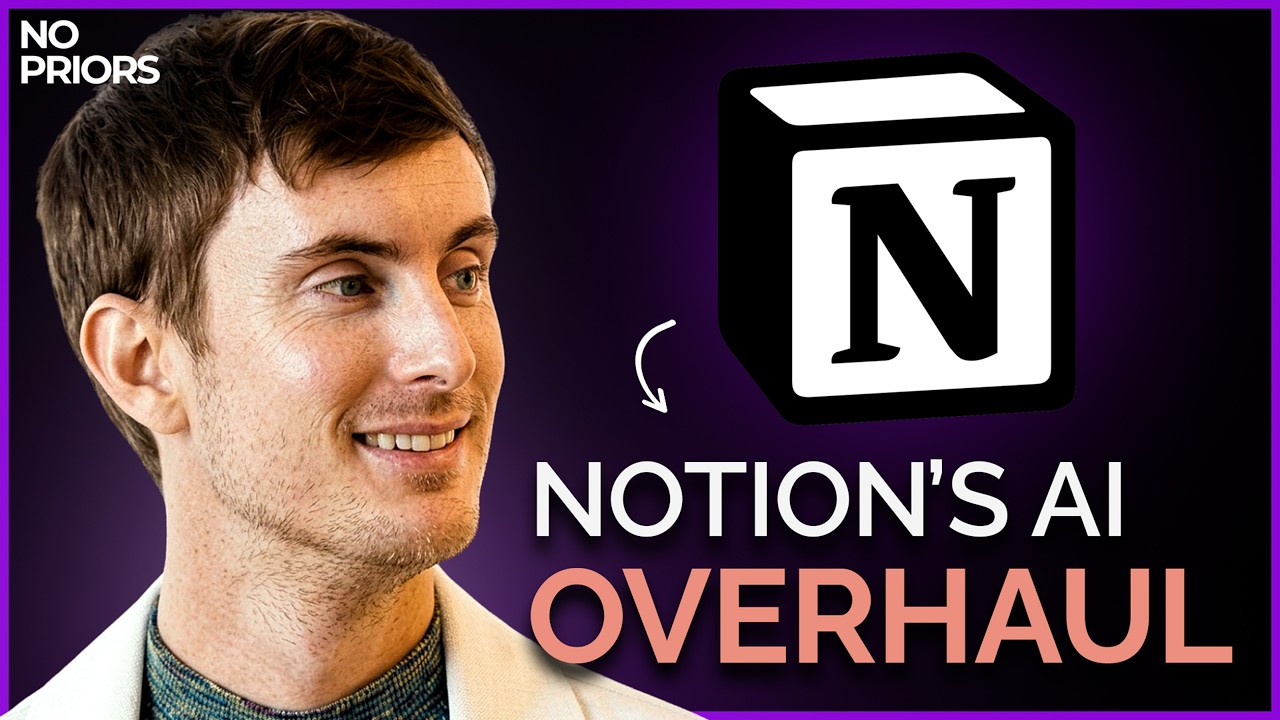
Notion's Simon Last on AI Agents & Workflows

Notion co-founder Simon Last discusses the evolution of AI agents at Notion, the challenges of integrating AI with diverse data, and the future of AI in productivity.

Mar 12 at 10:46 AM5 min read
Portrait of Simon Last and Sarah Guo, hosts of No Priors podcast, with AI-inspired visuals.

In a recent episode of the "No Priors" podcast, hosted by Sarah Guo, Simon Last, co-founder of Notion, shared insights into the company's vision for AI agents and their integration into productivity workflows. Last detailed Notion's journey in harnessing AI, emphasizing the iterative development process and the aim to create powerful, yet user-friendly, tools that augment human capabilities.
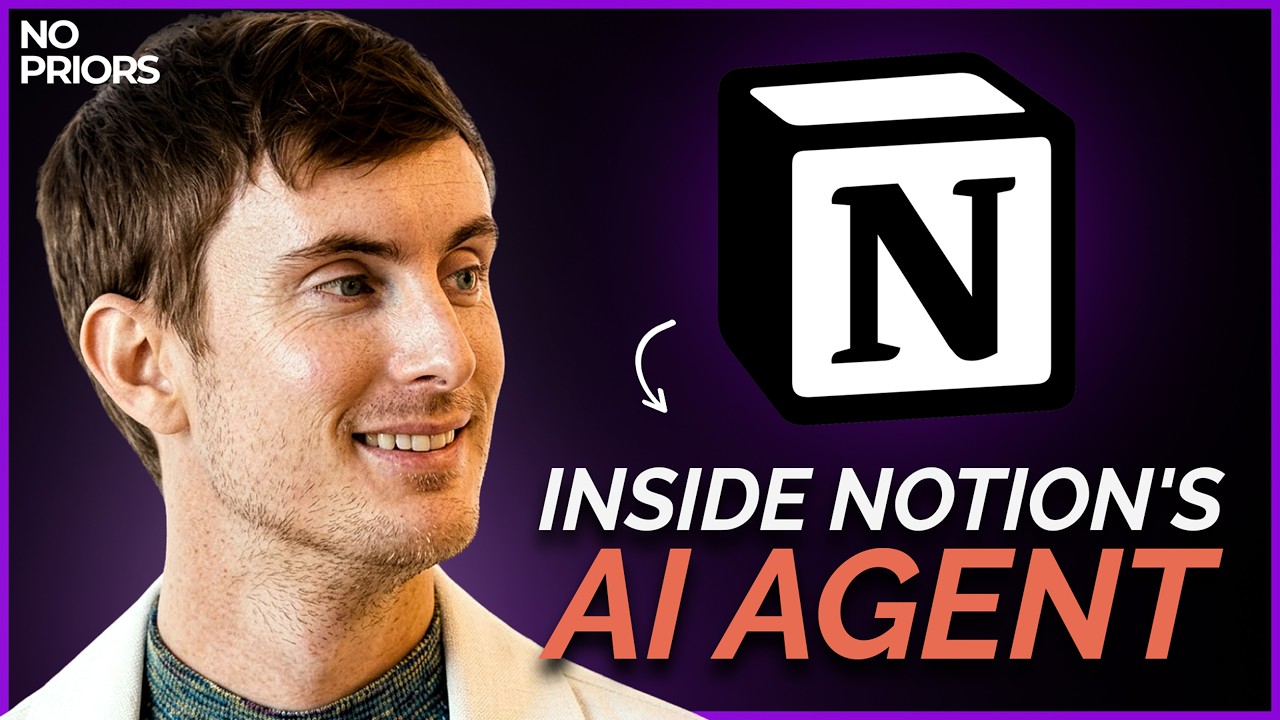
Notion's Simon Last on AI Agents & Workflows — from NoPriors

Introducing Simon Last and Notion's AI Ambitions

Simon Last, as a co-founder of Notion, brings a deep understanding of product development and user experience to the conversation. Notion, a widely adopted productivity and collaboration platform, has been actively exploring the integration of artificial intelligence to enhance its offerings. Last highlighted that the company has been proactively embracing AI, particularly in the wake of advancements like OpenAI's GPT-4.

Last recounted how Notion's foray into AI began with early experiments, including gaining access to GPT-4 during its development phase. This early exposure allowed the Notion team to grasp the potential of large language models for augmenting user productivity. He noted that their initial exploration led to the development of two key types of AI functionalities: short-term, task-specific agents and longer-term, more integrated AI capabilities. The former, such as an AI writing assistant that can rephrase or summarize text, was relatively quick to implement. The latter, aiming for a more comprehensive AI integration, required a more extended development cycle.

The Evolution of Notion's AI Agents

The development of Notion's AI agents has been a significant undertaking, marked by continuous iteration and learning. Last explained that the initial focus was on creating AI that could act as a writing assistant, capable of tasks like rephrasing text, summarizing documents, or generating content. This was a natural starting point, given the prevalence of text-based work in Notion.

However, the team soon realized the potential for AI to go beyond simple text manipulation. The introduction of features like the AI-powered search and the ability to create custom agents marked a significant leap. Last elaborated on the challenges and learnings in developing these agents, particularly in managing the diverse data structures within Notion. He emphasized that unlike general-purpose AI models, Notion's agents need to understand the context of a user's specific workspace, including its various databases, pages, and interconnections. This requires a more nuanced approach to AI development, focusing on contextual understanding and personalized agent behavior.

Key Learnings and Future Directions

A crucial learning for Notion has been the importance of user feedback and iterative development in refining AI capabilities. Last shared that the team actively solicms user feedback to identify areas for improvement and new feature development. This iterative process allows them to adapt to evolving user needs and the rapid advancements in AI technology.

One of the most significant shifts has been the move from specialized AI tools to more general-purpose agents. Last explained that while early agents were designed for specific tasks, the current focus is on building agents that can understand and interact with a broader range of user data and workflows. This includes enabling agents to access and process information from various sources within Notion, such as databases and documents, to provide more comprehensive assistance. The goal is to create agents that can act as intelligent assistants, anticipating user needs and proactively offering support.

The Role of Data and Customization

Last highlighted the critical role of data in training and refining AI agents. He explained that while general-purpose AI models are powerful, they lack the specific context of an individual user's workspace. Notion's approach is to leverage the rich, structured data within a user's workspace to train personalized AI agents. This allows the agents to understand the user's specific workflows, preferences, and data, leading to more relevant and accurate assistance.

He also touched upon the importance of customization, allowing users to tailor the behavior of AI agents to their specific needs. This includes the ability to define the scope of the agent's access to data, its communication style, and the types of tasks it can perform. This level of control ensures that users can trust and effectively utilize AI tools without compromising their privacy or workflow efficiency.

The Future of AI in Productivity

Looking ahead, Last expressed optimism about the future of AI in augmenting human productivity. He believes that AI agents will become increasingly sophisticated, acting as intelligent collaborators that can handle routine tasks, provide insights, and help users make better decisions. He emphasized that the goal is not to replace human creativity or critical thinking but to augment it, freeing up users to focus on more high-value activities.

Last concluded by reiterating Notion's commitment to building AI tools that are not only powerful but also accessible and intuitive. The company aims to democratize AI, making it available to a wider range of users and empowering them to achieve more with their work. The ongoing development of Notion's AI capabilities signifies a broader trend in the industry, where AI is increasingly being integrated into everyday tools to enhance efficiency and unlock new possibilities.