

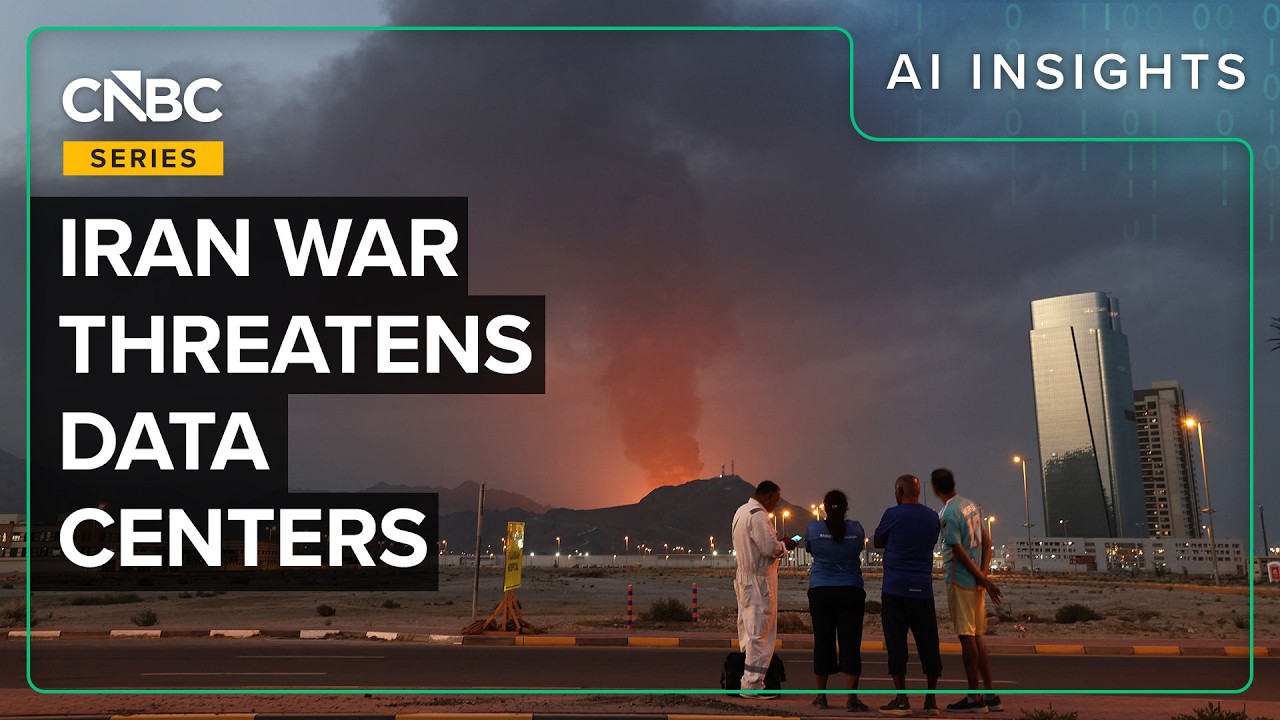
Middle East AI Boom Faces Geopolitical Headwinds

Geopolitical tensions, particularly involving Iran, are casting a shadow over the Middle East's $169 billion AI compute expansion, raising concerns about infrastructure security and supply chains.

Mar 12 at 2:45 PM4 min read
Kate Rooney reporting for CNBC with a backdrop of the San Francisco skyline and Golden Gate Bridge.

The Middle East, once envisioned as a burgeoning hub for artificial intelligence, is now facing significant geopolitical challenges that could disrupt its ambitious AI compute expansion. A projected $169 billion investment in AI infrastructure across the Gulf region, fueled by abundant and cheap energy, is now under scrutiny due to escalating regional conflicts, particularly those involving Iran. This geopolitical tension introduces a new layer of risk for major tech players like Amazon, Google, Microsoft, and Oracle, as well as AI developers such as OpenAI and Anthropic, who are increasingly embedding their technologies in critical infrastructure and defense sectors.
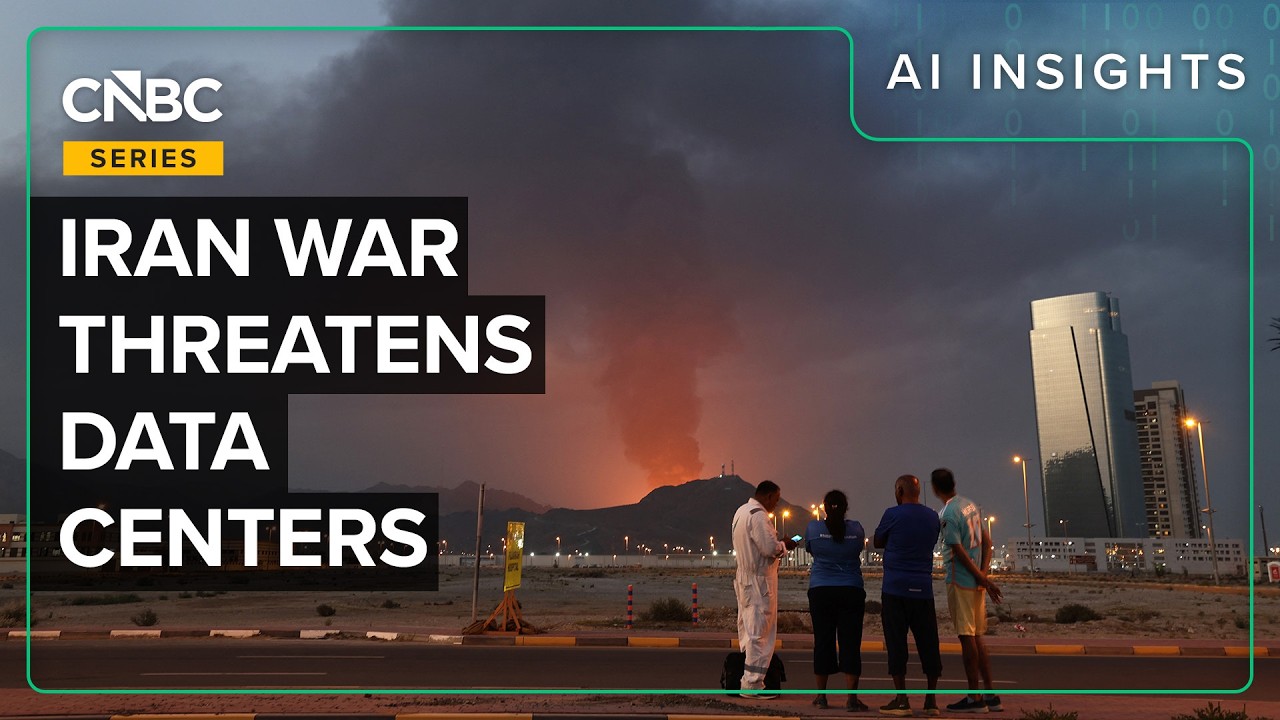
Middle East AI Boom Faces Geopolitical Headwinds — from CNBC

Experts Weigh In on Geopolitical Risks

CNBC's Kate Rooney highlights the growing concerns surrounding the AI boom in the Middle East, featuring insights from Patrick J. Murphy, Executive Director at Geopolitical Advisors, and Mona Yacoubian, Director of the Middle East Program at the Center for Strategic and International Studies.

Patrick J. Murphy notes that while oil-rich nations have the financial capacity and geographic advantage to become key players in AI compute, the current geopolitical climate presents a considerable obstacle. He points out that these nations have been able to leverage their sovereign wealth for strategic investments in AI infrastructure, including data centers, and have also benefited from access to emerging markets. However, the recent escalations, including the U.S. and Israel striking Iran, have significantly altered the landscape.

Mona Yacoubian elaborates on the historical context, stating that the Persian Gulf region was previously viewed as relatively stable. However, the recent conflict, which has seen strikes on Iran and subsequent retaliation impacting infrastructure in the UAE and Bahrain, has destabilized this perception. Yacoubian recalls that the region experienced similar tensions during the first Gulf War in 1991, when Saddam Hussein invaded Kuwait, but the current situation involves a more complex web of geopolitical actors and technologies.

AI Infrastructure as a Target

The video touches upon the increasing vulnerability of AI infrastructure, particularly data centers, amidst heightened geopolitical tensions. A CNBC report highlights that data centers are becoming potential military targets as the conflict involving Iran escalates. This threat is not merely theoretical; recent events have seen major cloud providers' infrastructure, including data centers in the UAE and Bahrain, impacted.

The increasing reliance of both commercial and military sectors on AI and cloud computing makes these facilities critical assets. As Mona Yacoubian explains, the blurring lines between business, military applications, and AI infrastructure mean that these data centers are increasingly becoming targets. The ongoing conflict raises concerns about the safety and security of these facilities, potentially leading to increased operational costs for companies investing in the region.

Economic and Supply Chain Implications

The geopolitical instability is not only a direct threat to infrastructure but also has significant economic ramifications. The conflict has already led to a surge in crude oil prices, with WTI futures briefly exceeding $110 per barrel, impacting energy costs globally. This volatility directly affects the operational expenses of data centers, which are highly energy-intensive.

Furthermore, the conflict poses a threat to the supply chain of critical materials necessary for semiconductor manufacturing. A Reuters report warns that the Iran crisis could disrupt the supply of key chipmaking materials like helium and bromine, essential for producing memory chips. This disruption could exacerbate existing semiconductor shortages and further increase the cost of AI hardware, impacting the pace of AI development and deployment worldwide.

Strategic Investments and Future Outlook

Despite the risks, major tech companies continue to make significant investments in AI and cloud infrastructure. Recent reports indicate that the Pentagon has awarded multibillion-dollar cloud contracts to Amazon, Google, Microsoft, and Oracle. These companies are also expanding their data center footprint internationally, including in the Middle East. OpenAI, for instance, has recently signed a deal with the Department of Defense, underscoring the deep integration of AI into national security strategies.

However, the current geopolitical climate introduces a significant challenge for these long-term investments. Patrick J. Murphy raises the critical question of whether these big tech companies can sustain their planned investments in AI infrastructure in the region if the conflict continues or escalates. The increased costs associated with security and potential disruptions could force a re-evaluation of strategies. As Gene Munster, Managing Partner at Deepwater Asset Management, observes, the ongoing conflict and rising energy prices create a negative equation for the semiconductor industry, potentially slowing down the speed at which companies can deploy their AI capabilities.