

Iran's Missile Math: $20K Drones vs. $4M Patriots

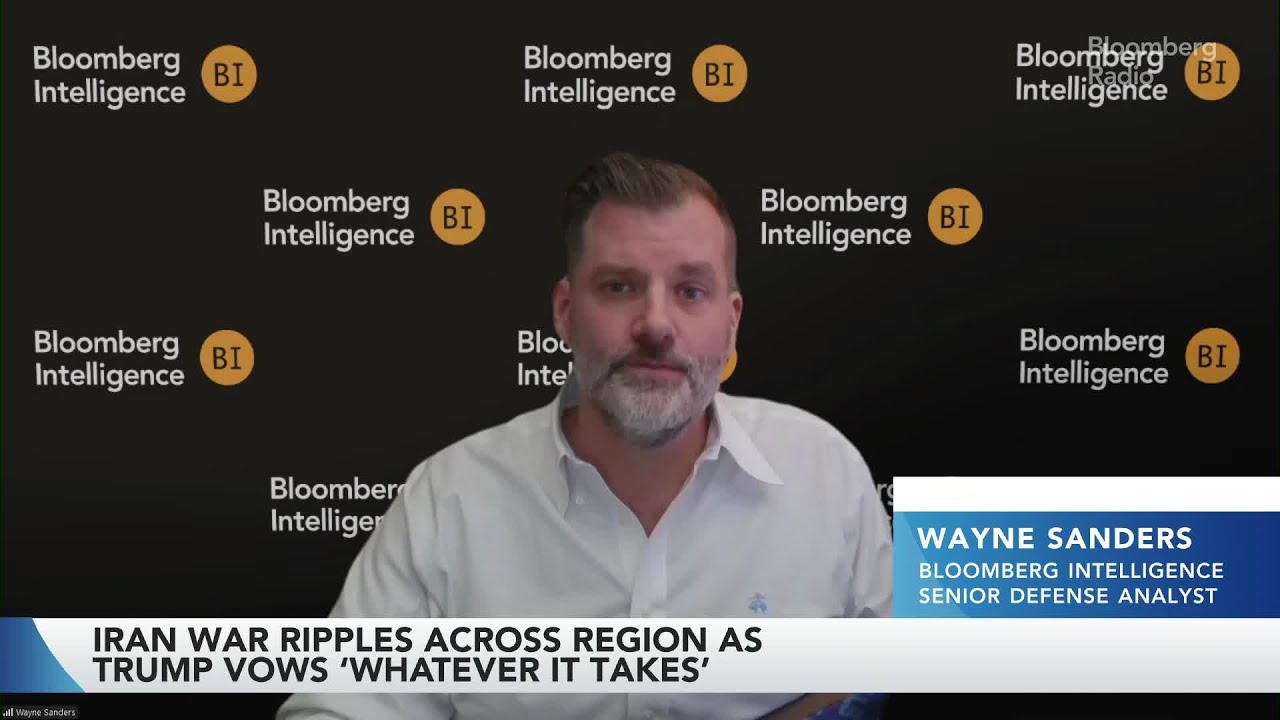
Wayne Sanders, Senior Defense Analyst at Bloomberg Intelligence, discusses the strategic cost advantage Iran holds with its drones versus US Patriot missiles and the implications for sustained conflict.

Mar 5 at 5:02 PM5 min read
Wayne Sanders speaking on Bloomberg Radio about Iran's military strategy and drone costs.

In a discussion on Bloomberg Radio, Wayne Sanders, Senior Defense Analyst at Bloomberg Intelligence, and an unnamed host delve into the strategic implications of Iran's recent military actions, particularly concerning the economic calculus of drone and missile warfare. Sanders highlights a critical disparity in the cost of engagement, where Iran's relatively inexpensive drone and missile technology poses a significant challenge to the United States' reliance on high-cost, advanced air defense systems.

Wayne Sanders: A Defense Analyst's Perspective

Wayne Sanders brings a wealth of experience in defense analysis to the conversation, offering insights into military strategy, technological capabilities, and geopolitical implications. His background suggests a deep understanding of defense spending, weapon systems, and operational planning, making his commentary particularly valuable in assessing the effectiveness and sustainability of military engagements in complex geopolitical landscapes.

The Economics of Conflict: Drones vs. Patriots

Sanders articulates a core thesis that the military's success is often measured by its ability to conduct sustained operations, which is intrinsically linked to its available ordnance. He points out that the U.S. military conducts extensive contingency planning, simulating various scenarios to estimate the required munitions. "In case of a scenario like X or Y," Sanders explains, "when you put those together, you say, 'Okay, I have kill chain analysis, I've run the war game thousands of times, and during that time frame, we think it would take this amount of time, and these are the number of targets, these are also the types of munitions we would need."

The full discussion can be found on Bloomberg Podcast's YouTube channel.
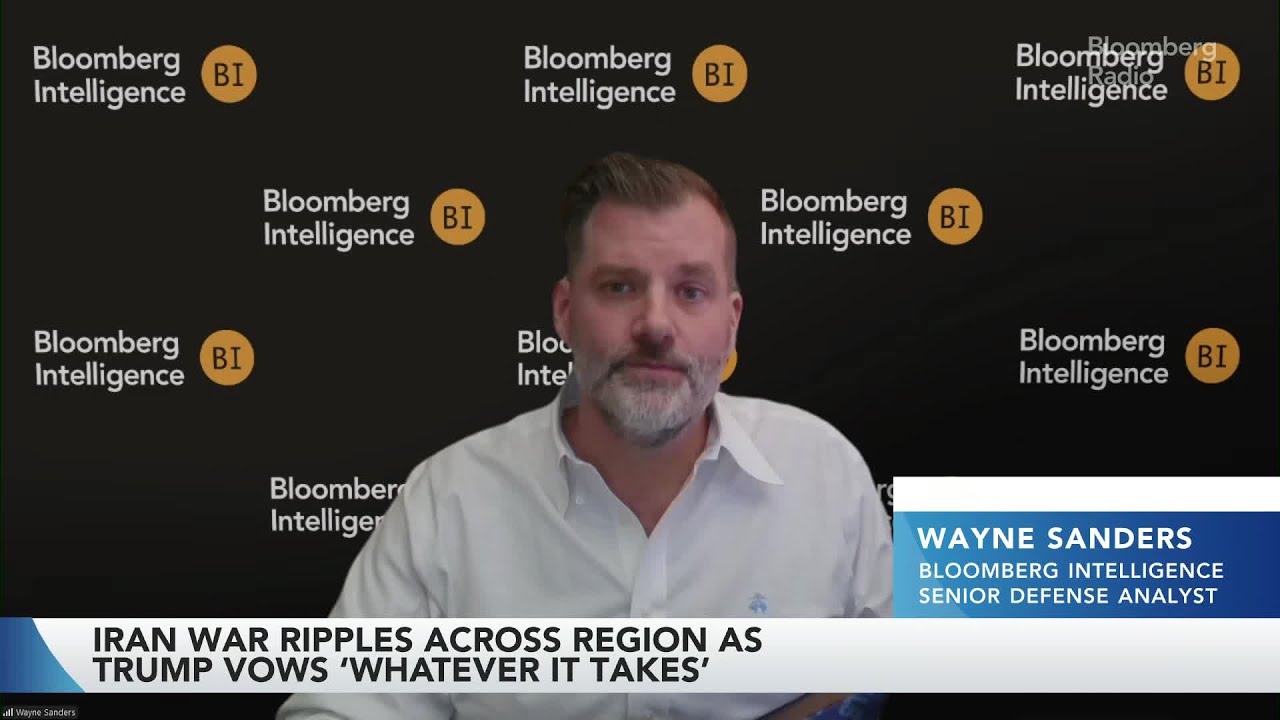
Iran Vows to Escalate Attacks as Trump Hails Progress in War — from Bloomberg Podcast

He elaborates on the strategic shift occurring within military planning: "I took as a very positive transition as part of this was the move away from standoff weapons and towards precision-guided munitions and air superiority." This shift, he notes, allows for the targeting of specific threats with more cost-effective means. Sanders provides a stark cost comparison: "We're looking at these Tomahawk missiles and these Javelins that run around $1 million, $1.5 to $2 million. And now you're bringing in munitions that are $25,000 to $40,000. And we have a lot more of them."

This cost differential is a crucial factor when considering the potential for prolonged conflict. Sanders emphasizes that while the U.S. has a substantial inventory of advanced munitions, the cost of their deployment can become a limiting factor. He draws parallels to historical conflicts, stating, "When you look at the intelligence community, you can take out most of the military targets, and all that, probably by mid-next week. I would say by Wednesday next week." This implies a certain confidence in the ability to achieve objectives with existing resources in the short term.

Iran's Strategic Advantage: Cost-Effective Offense

Sanders then pivots to the strategic advantage Iran might possess due to its weapon systems. He notes that Iran's approach involves utilizing lower-cost munitions, such as drones, to engage targets that would typically require much more expensive defensive measures. "The problem is, is that the enemy has a vote," Sanders states, highlighting that Iran can adapt its strategy. He explains that the U.S. military's reliance on expensive platforms can be a vulnerability. "We have hundreds of thousands of these that have been produced," he says, referring to the lower-cost munitions. "And obviously, we don't get a good say of that right now because they keep those numbers as operational risk and operational security."

Sanders further elaborates on the cost-effectiveness of Iranian tactics: "The air campaign works in this region based off of the terrain. It's not the same as Afghanistan, where you're looking into deep inside of caves and you're not exactly sure where folks are. You really have to rely on those other mechanisms to carry the weight, and where those strategic objectives are." He suggests that the intelligence community plays a vital role in identifying targets and ensuring the effectiveness of strikes. "The big piece of this is if you can continue to dismantle any type of infrastructure that they have, if you can continue to dismantle them, you're taking out systematically any type of infrastructure that they have."

The Broader Implications for Military Strategy

The discussion touches upon the broader implications for military strategy and the challenges of countering adversaries who can leverage cost-effective weaponry. Sanders points to the difficulty in verifying the success of strikes when dealing with dispersed or hidden targets. "The question is, can they verify, without boots on the ground, how well you can verify whether or not those strikes were successful?" he posits.

He contrasts this with the U.S. approach, suggesting that a reliance on expensive, advanced systems might not always be the most sustainable or effective strategy in prolonged conflicts. "What we've learned throughout history is that air power alone, while impressive and devastating, has its limits," Sanders concludes. "And they have their limits. And then you look at the intelligence community and how they can respond to the threats that they have." This implies a need for a more balanced approach, incorporating both high-end and lower-cost capabilities, as well as robust intelligence gathering and analysis to inform strategic decision-making.

The conversation also touches on the strategic advantage of having a diverse arsenal. Sanders mentions that Iran's production of numerous lower-cost munitions, like the $20,000 drones and $1 million to $2 million missiles, contrasts sharply with the U.S. spending upwards of $4 million for each Patriot missile. This economic disparity means that Iran can potentially sustain a higher volume of attacks, challenging the U.S. to match that output without depleting its strategic reserves or incurring unsustainable costs.