


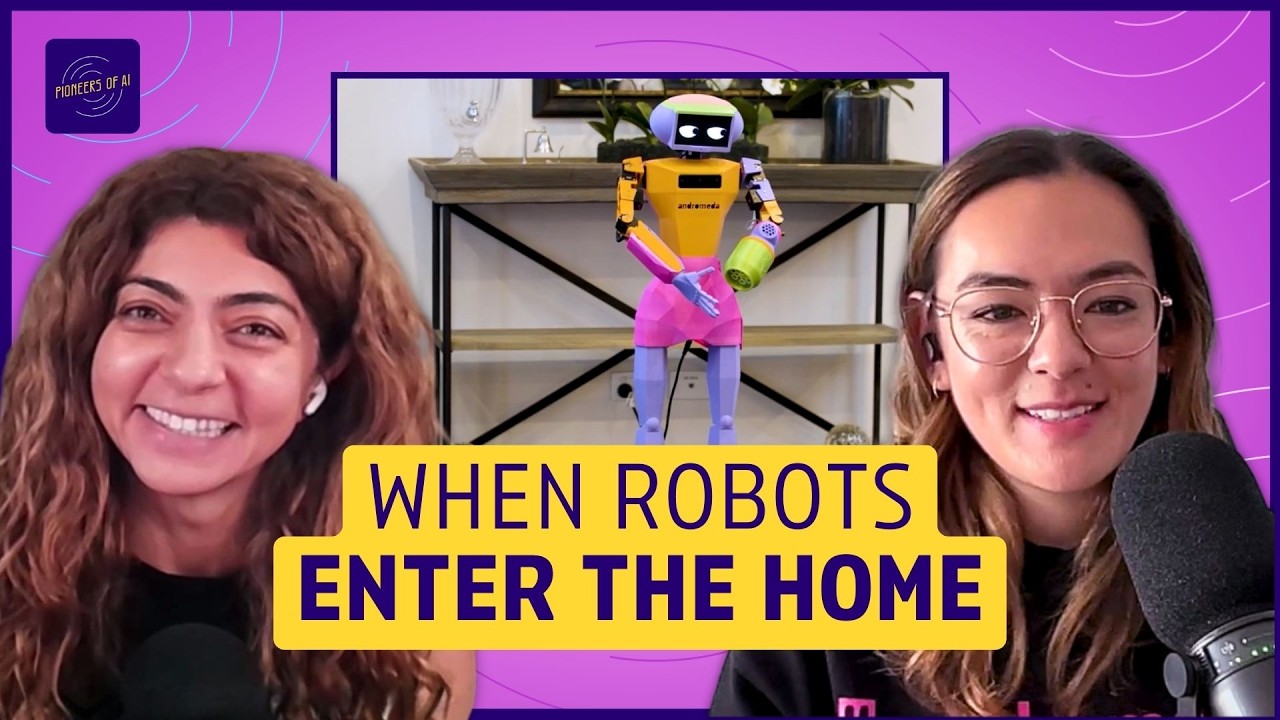
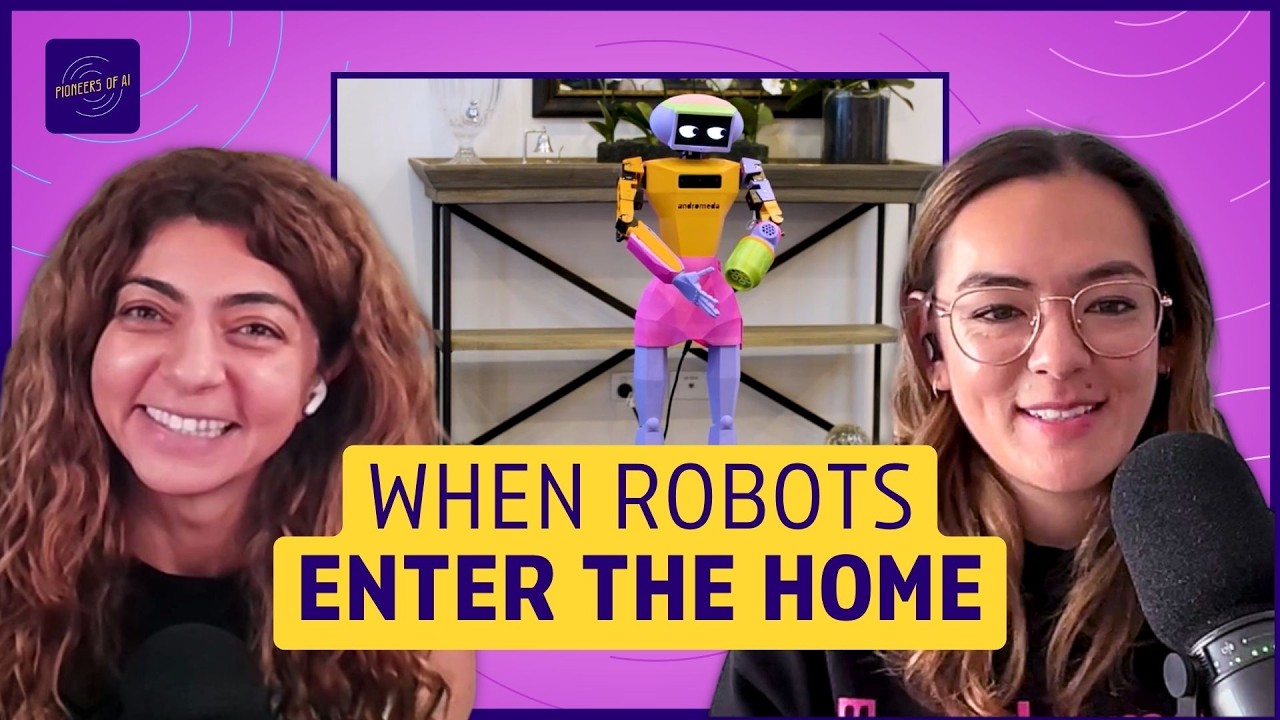
In a recent episode of Pioneers of AI, Rana el Kaliouby sat down with Grace Brown, co-founder and CEO of Andromeda, to discuss the development and philosophy behind their unique social humanoid robot, ABI. Brown, a seasoned engineer with a background in mechatronics, shared insights into her journey from building robots in high school to leading a company focused on creating emotionally intelligent machines for human companionship.
Meet ABI: The Social Robot Companion
Grace Brown introduced ABI as a robot designed to be a social, humanoid companion, specifically targeting the growing need for support and interaction within the elderly population. Standing at approximately 110 cm (about 3 feet 7 inches) tall, ABI is characterized by its bright, colorful, and anthropomorphic design, featuring distinct arms, legs, and a head with large, expressive eyes displayed on a screen. Brown emphasized that ABI's design deliberately avoids being overly human-like to prevent the uncanny valley effect, aiming instead for a friendly and approachable appearance that fosters comfort and trust.
From Engineering Passion to Robotics Startup
Brown's personal journey into robotics began at a young age, fueled by an early interest in mathematics and physics during high school. Her first hands-on experience with robotics came through an engineering class where she built a three-degree-of-freedom hydraulic arm. This early success ignited a passion for the field, leading her to pursue a career in robotics and AI.
The full discussion can be found on Pioneers of AI's YouTube channel.
The inspiration for Andromeda and ABI stemmed from Brown's observations during the COVID-19 pandemic. Witnessing the profound impact of isolation and loneliness, particularly among the elderly, she recognized a significant societal need for companionship and assistance. This realization, coupled with her technical expertise, drove her to develop ABI as a solution, aiming to provide comfort, engagement, and a sense of connection to those who might otherwise feel isolated.
Designing for Emotional Connection and Safety
A key aspect of ABI's design is its ability to adapt its personality and interaction style based on the user. Brown explained that ABI utilizes a range of sensors, including microphones, cameras, and LiDAR, to perceive and interpret human emotions and behaviors. This allows ABI to engage in more nuanced interactions, such as recognizing a user's mood through their voice and facial expressions, and responding appropriately. For instance, if a user expresses sadness, ABI might offer comfort or suggest a calming activity.
Brown highlighted the importance of building trust and ensuring safety in human-robot interaction. She noted that while ABI is designed to be engaging and responsive, it also incorporates safeguards to prevent it from becoming overly intrusive or causing distress. The robot's ability to learn and adapt to individual preferences, such as not interrupting a resident before breakfast or engaging in conversations in their preferred language, is central to its design philosophy.
The Importance of Diversity in AI
The conversation also touched upon the critical role of diversity in the AI and robotics industry. Brown emphasized that having diverse teams, particularly with more women in leadership and technical roles, is essential for building technologies that are truly inclusive and beneficial to society. She believes that diverse perspectives lead to more robust and ethically sound AI systems that can better understand and serve a wider range of human needs.
Brown expressed her excitement for the future of robotics, particularly the potential for robots like ABI to positively impact the lives of individuals, especially the elderly. She envisions a future where robots are seamlessly integrated into homes and care facilities, providing companionship, assistance, and enhancing the overall quality of life for people.
