

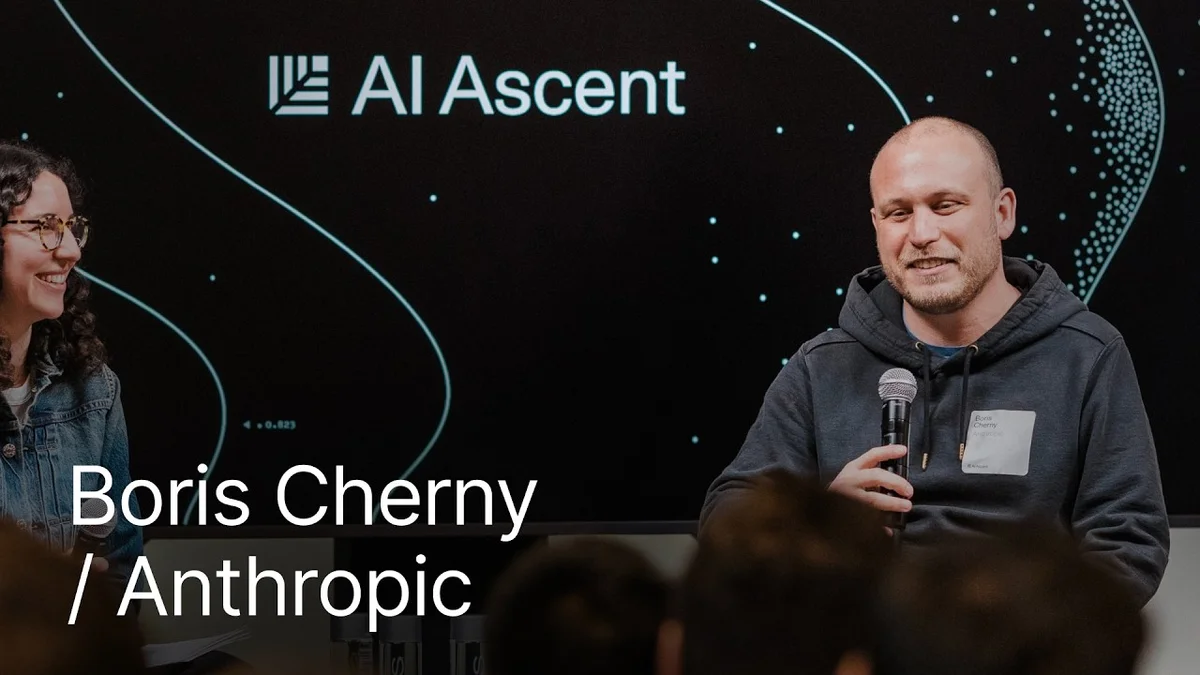
In a recent fireside chat, Boris Cherny, a prominent figure from Anthropic, shared a provocative perspective: coding is solved, and the future of software development lies beyond traditional programming. Cherny, who has been instrumental in developing AI models capable of understanding and generating code, suggested that the current era marks a fundamental shift in how software is created.
Boris Cherny's Perspective on Coding
Cherny's assertion that coding is 'solved' stems from the rapid advancements in AI's ability to handle complex coding tasks. He highlighted that AI models are now sophisticated enough to not only write code but also to understand context, debug, and even optimize it. This suggests that the fundamental challenge of translating human intent into machine-readable instructions is increasingly being met by AI.
This perspective implies a significant change in the role of human developers. Instead of focusing on the granular details of syntax and logic, developers will likely shift towards higher-level tasks such as defining problems, crafting effective prompts, and ensuring the ethical and safe deployment of AI-generated code. The emphasis will move from 'how to code' to 'what to code' and 'how to guide the AI to code it effectively'.
The Future of Software Development
Cherny envisions a future where AI acts as a powerful co-pilot, democratizing software development. With AI handling much of the routine coding, individuals without extensive programming backgrounds could potentially create sophisticated software solutions. This democratization could accelerate innovation across various sectors by lowering the barrier to entry for software creation.
The implications for the tech industry are profound. Companies will need to adapt their development processes and training programs to incorporate AI tools and workflows. Developers will need to cultivate new skills, focusing on areas like prompt engineering, AI model interaction, and understanding the nuances of AI-generated outputs. The ability to effectively collaborate with AI will become a key differentiator.


