


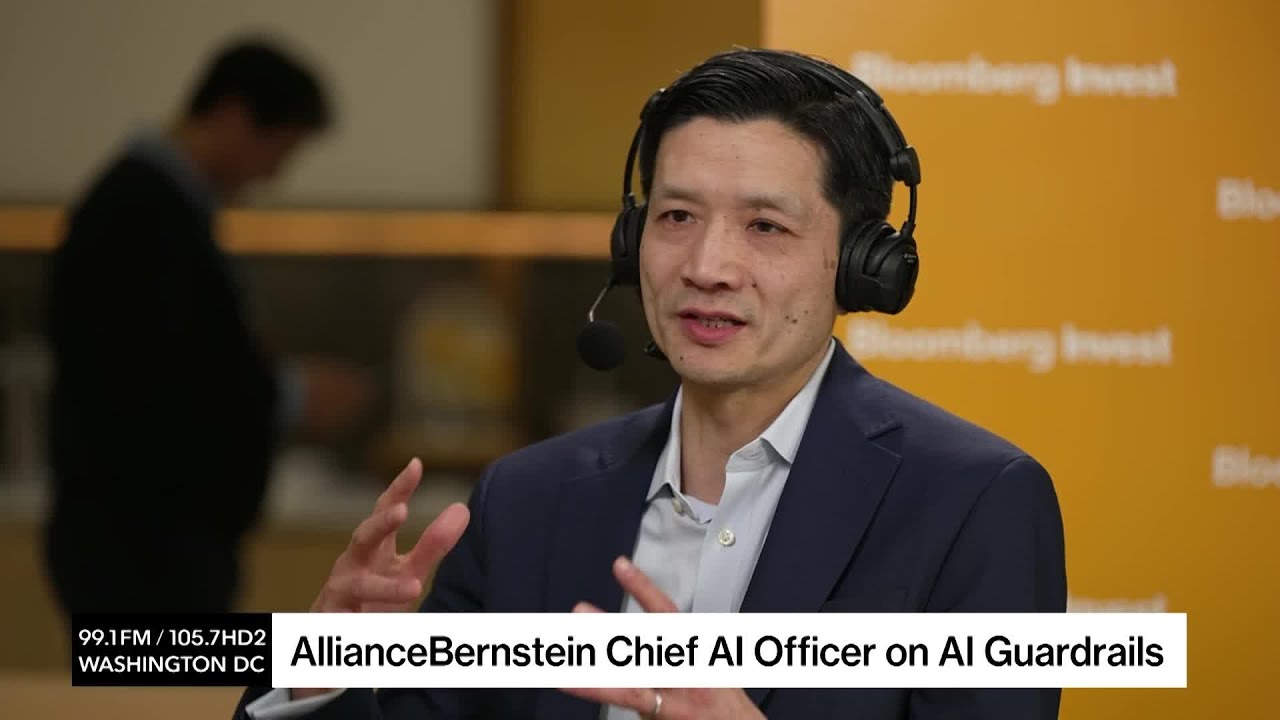
Andrew Chin, Chief AI Officer at AllianceBernstein, recently shared insights into the firm's strategic approach to artificial intelligence during a Bloomberg Businessweek Live broadcast. Chin detailed a comprehensive framework designed to harness AI's transformative potential across various facets of the financial services organization, from investment performance to client engagement and operational efficiency. His perspective highlights a pragmatic, yet forward-thinking, integration of AI, emphasizing not just the technology itself, but the foundational elements required for its successful and responsible deployment.
Andrew Chin: Chief AI Officer at AllianceBernstein
Andrew Chin leads AllianceBernstein's artificial intelligence initiatives, a role that places him at the forefront of leveraging advanced technology within the investment management sector. With a background steeped in both quantitative analysis and strategic technology implementation, Chin is instrumental in guiding how AI can be applied to generate alpha, improve client experiences, and streamline internal operations. His expertise is crucial in navigating the complex landscape of financial markets and the rapidly evolving capabilities of AI.
AllianceBernstein's Four Pillars of AI Integration
Chin articulated a strategic framework built on four key pillars, which guide AllianceBernstein's AI adoption. These pillars represent a holistic approach to integrating AI effectively and responsibly within the organization:
The full discussion can be found on Bloomberg Podcast's YouTube channel.

- Identifying Opportunities: The first step involves a rigorous process of identifying specific areas where AI can provide a tangible benefit, whether it's enhancing investment decision-making, personalizing client interactions, or optimizing operational workflows.
- Building Foundational Capabilities: This pillar focuses on establishing the necessary technological infrastructure, data pipelines, and analytical tools that are essential for supporting AI initiatives. It's about creating a robust environment where AI can thrive.
- Leveraging Proprietary Data: Chin stressed the significance of utilizing AllianceBernstein's unique and extensive datasets. He explained that "We have data that no one else has... and the analysis that we've done over time." This proprietary data is critical for training AI models that can yield unique insights and generate differentiated investment alpha.
- Ensuring Responsible Governance: The final and crucial pillar is governance, which involves establishing clear ethical guidelines, risk management frameworks, and oversight mechanisms. Chin stated, "We have to make sure we do this in a responsible way." This ensures that AI is used ethically, transparently, and in alignment with regulatory requirements and the firm's values.
AI as an Augmentation Tool
A central theme of Chin's discussion was the role of AI as an augmentation tool rather than a replacement for human expertise. He elaborated on how AI can empower employees by providing them with better tools and insights. "AI augments the capabilities that your firm has today," Chin explained. This augmentation allows individuals to perform their roles more effectively and efficiently. For instance, in the context of investment analysis, AI can process vast amounts of data, identify patterns, and generate predictions, freeing up human analysts to focus on higher-level strategic thinking and client relationships.