AI's Job Market Dilemma: Fear vs. Opportunity

The debate on AI's impact on jobs: concerns of displacement vs. opportunities for augmentation and new roles.

3 min read
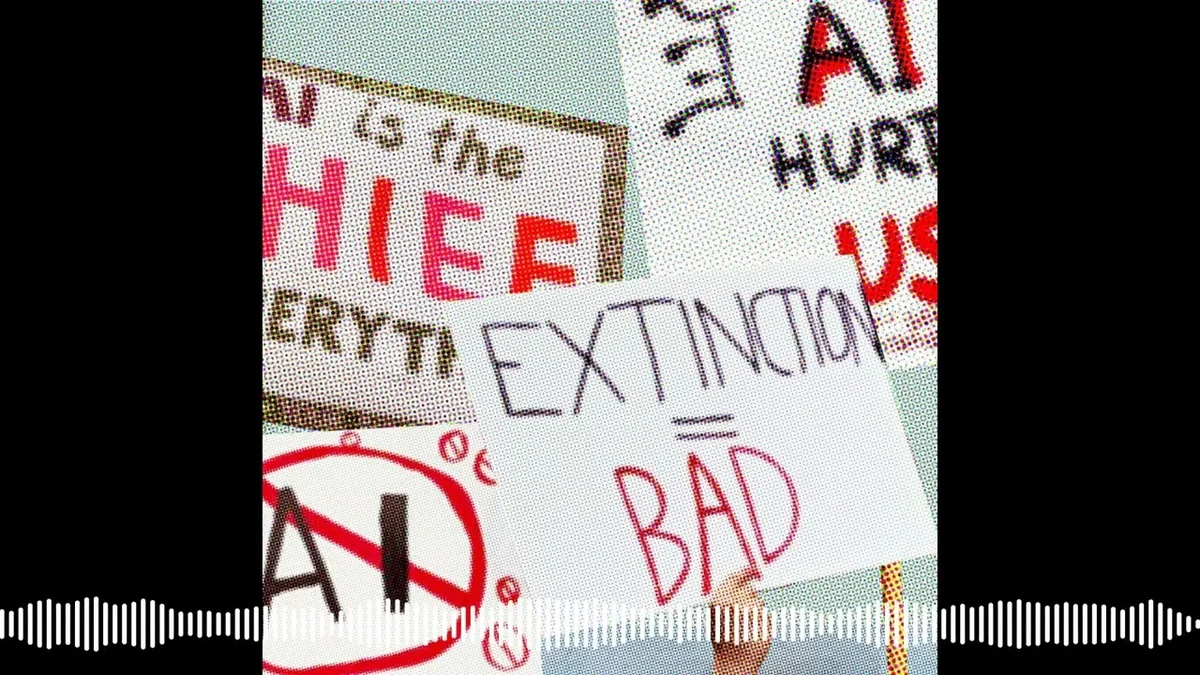
Protest signs about AI, with messages like 'AI is the chief', 'AI hurts us', and 'Extinction is bad'.
The conversation around AI's impact on jobs is multifaceted.· Bloomberg Podcast

The rapid advancement of Artificial Intelligence (AI) has sparked a global conversation about its potential impact on the job market. While AI promises increased productivity and efficiency, it also raises concerns about widespread job displacement and the future of work. This discussion delves into the nuanced perspectives on AI's role in the economy, examining both the anxieties and the opportunities it presents.

The Dual Nature of AI's Economic Impact

There's a palpable sense of apprehension surrounding AI's potential to automate tasks previously performed by humans. Surveys consistently show that a significant portion of the population fears job loss due to AI. This anxiety is not unfounded, as AI technologies are becoming increasingly capable of performing complex tasks across various sectors, from manufacturing to customer service and even creative industries. The fear is that as AI systems become more sophisticated, they will render many human jobs obsolete, leading to increased unemployment and economic instability.

Related startups

However, this concern is often balanced by the perspective that AI can also be a powerful tool for augmenting human capabilities and creating new types of jobs. Proponents argue that AI can handle repetitive and time-consuming tasks, freeing up human workers to focus on more creative, strategic, and interpersonal aspects of their roles. Furthermore, the development, implementation, and maintenance of AI systems themselves are creating new job categories and demanding new skill sets. The narrative is shifting from simple job replacement to a more complex transformation of the labor market.

The full discussion can be found on Bloomberg Podcast's YouTube channel.
The AI Hate is Existential | Everybody's Business - Bloomberg Podcast
The AI Hate is Existential | Everybody's Business — from Bloomberg Podcast

Navigating the Evolving Job Market

The consensus among experts is that the job market is not static; it is continuously evolving, driven by technological advancements. The rise of AI is no different. To thrive in this changing landscape, individuals will need to adapt by acquiring new skills and embracing lifelong learning. This includes developing a deeper understanding of AI technologies, fostering critical thinking, problem-solving, and interpersonal skills that are inherently human and less susceptible to automation.

The conversation often touches upon the idea that AI might not necessarily eliminate jobs but rather redefine them. Jobs that require empathy, creativity, complex decision-making, and human interaction are likely to remain in high demand. The challenge, therefore, lies in equipping the workforce with the necessary skills to collaborate with AI and to transition into roles that leverage these new technologies effectively.

The Economic and Societal Implications

Beyond individual job prospects, the broader economic and societal implications of AI are significant. There are ongoing debates about how to manage the transition, including discussions around universal basic income, retraining programs, and the ethical considerations of widespread automation. The potential for AI to exacerbate existing inequalities is also a concern, as those with the skills and resources to adapt may benefit disproportionately.

Ultimately, the impact of AI on the job market is a complex issue with no easy answers. It presents a dual narrative of potential disruption and unprecedented opportunity. As AI continues to integrate into our lives and workplaces, a proactive and adaptive approach will be crucial for individuals, businesses, and policymakers alike to navigate this transformative period successfully.

© 2026 StartupHub.ai. All rights reserved. Do not enter, scrape, copy, reproduce, or republish this article in whole or in part. Use as input to AI training, fine-tuning, retrieval-augmented generation, or any machine-learning system is prohibited without written license. Substantially-similar derivative works will be pursued to the fullest extent of applicable copyright, database, and computer-misuse laws. See our terms.