

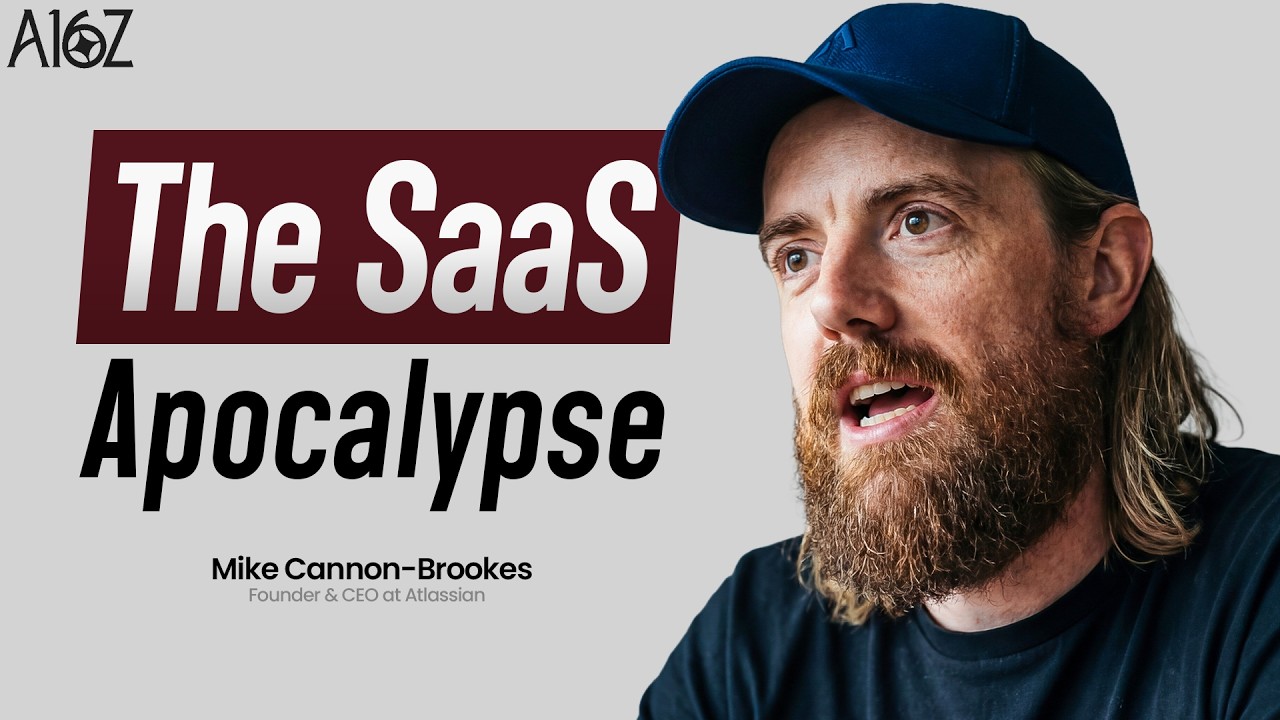
In a recent discussion on "The A16z Show," venture capitalist Alex Rampell and his guests delved into the profound impact of artificial intelligence on the Software as a Service (SaaS) industry. The conversation centered on how AI is not just a new feature but a fundamental disruptor, potentially leading to a "SaaSpocalypse" for businesses that fail to adapt. They explored how AI is changing the way software is built, priced, and delivered, ultimately reshaping customer expectations and competitive dynamics.
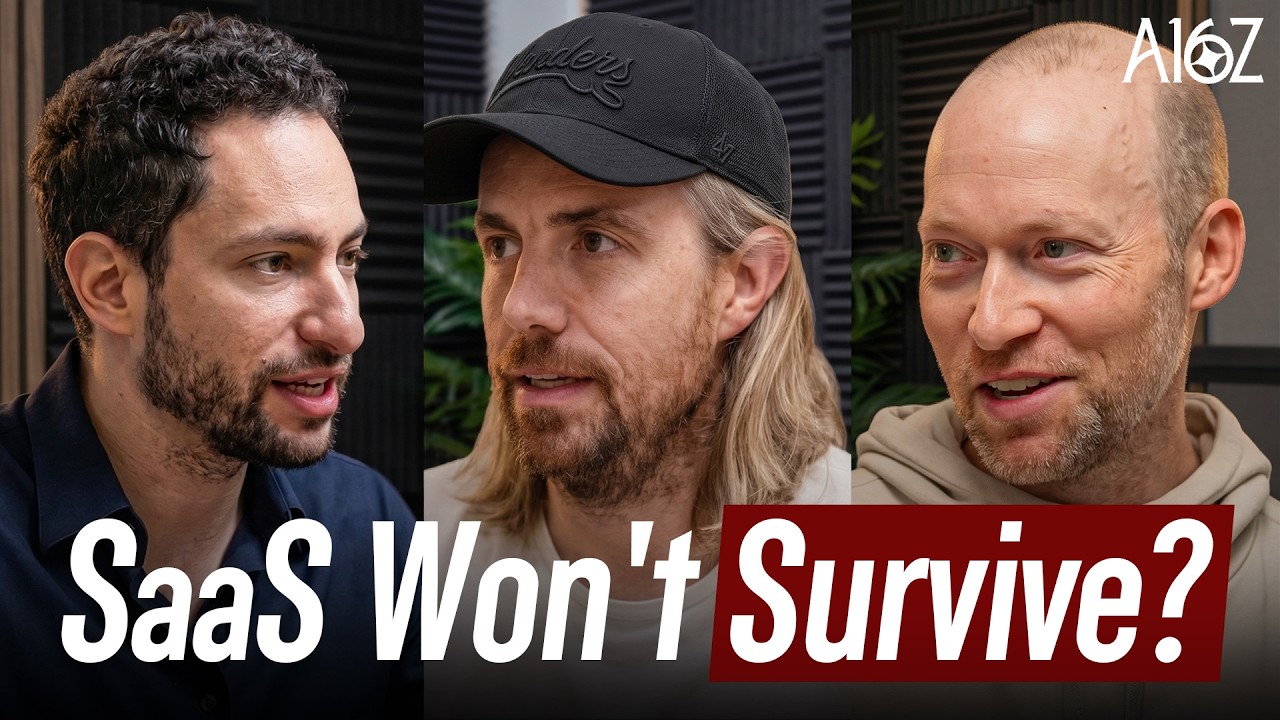
Key Speakers and Their Perspectives
The discussion featured Alex Rampell, a general partner at Andreessen Horowitz (a16z), known for his deep insights into technology trends and venture capital. He was joined by guests who provided real-world perspectives on AI's impact on SaaS companies. While the specific identities of the other guests are not provided in the transcript, their contributions focused on practical implications and examples of how AI is currently being integrated into business operations and product development.
The "SaaSpocalypse" and the Shifting Landscape
Rampell introduced the concept of a "SaaSpocalypse," a term that evokes a significant upheaval or even collapse within the SaaS sector due to AI. He highlighted how the historical trajectory of software development, from early filing cabinets and databases to the cloud-based SaaS models of today, has always been driven by technological advancements. However, he argued that AI represents a different kind of shift, one that is more fundamental and rapid.
The core of the argument was that AI's ability to perform tasks that were previously considered uniquely human—such as understanding context, generating creative content, and making complex decisions—is fundamentally altering the value proposition of many SaaS products. As Rampell put it, "The whole history of software from 1960 until 2022 was taking a filing cabinet and turning it into a database... Now, this is where AI is changing things."
He drew a parallel to the transition from manual data entry to automated systems, illustrating how technology has consistently aimed to improve efficiency and reduce the need for human intervention. The analogy of converting filing cabinets to databases—a process that took decades—contrasted with the rapid pace at which AI is automating more complex functions.
The discussion emphasized that AI is not merely automating repetitive tasks but is capable of handling more sophisticated workflows. For instance, the example of Klarna's AI assistant, powered by OpenAI, handling a significant portion of customer service chats, doing the work of 700 full-time agents and matching human agents in customer satisfaction, underscored this point.
AI's Impact on Software Capabilities and Value
The conversation then shifted to how AI is changing the nature of software itself. Rampell noted that while previous technological shifts improved efficiency, AI is fundamentally changing what software can do.
He drew a historical parallel: "The whole history of software from 1960 until 2022 was taking a filing cabinet and turning it into a database... and then it put them into a database... The cool thing about everything that's happening in AI is that the capabilities are so big. It's almost trite now to say that the models are far ahead of the value that they're delivering."
This statement highlighted a key tension: the immense potential of AI models versus the current challenges in fully realizing that potential in practical business applications. However, the underlying message was that this gap is rapidly closing.
The discussion touched upon the idea that AI can make software more proactive and intelligent. Instead of users having to explicitly tell software what to do, AI can infer intent and execute tasks autonomously. This was illustrated with the example of being able to ask software to "Add unit tests to the checkout flow to cover payment failure scenarios." This level of intelligent automation is a significant departure from the more directive, command-based interactions of traditional software.
The "SaaSpocalypse" and Business Models
The conversation turned to the implications for existing SaaS businesses, particularly the concept of the "SaaSpocalypse." Rampell suggested that not all SaaS companies will survive this AI-driven transformation:
"I think not every SaaS company is going to thrive through the next decade... Not every SaaS company is going to defend all of software, obviously. But I think there is a great gain we are seeing internally in extending the capabilities of software using things like code generation..."
This implies that companies that can integrate AI to enhance their offerings, rather than being replaced by AI-native solutions, will be the ones to succeed. The ability of AI to augment existing software and create new capabilities is seen as a significant opportunity.
The discussion also touched upon the potential for AI to disrupt pricing models. The shift from per-seat or per-feature pricing to more outcome-based or usage-based models was mentioned. The idea is that as AI makes software more capable and efficient, the value it delivers might be better captured by aligning pricing with the actual outcomes achieved by the customer.
The analogy of the transition from manual filing systems to databases was used to illustrate the scale of change. Rampell explained:
"The whole history of software from 1960 until 2022 was taking a filing cabinet and turning it into a database... and then it put them into a database... It took the reservation system which literally was stored in file cabinets and put them into a database... back when, you know, 10 megabyte hard drives probably cost like $100 million... And then it put them in a SQL database. And then you have, you know, companies like Salesforce that have been around for a long time... and then you have things like Workday. So, you know, the filing cabinet became a database, it became a cloud database, it became a SQL database, it became a cloud database. And then you have things like Workday... So, you know, the filing cabinet became a database, it became a cloud database, it became a SQL database, it became a cloud database. And then you have things like Workday... So, you know, the filing cabinet became a database, it became a cloud database, it became a SQL database, it became a cloud database. And then you have things like Workday..."
This historical perspective highlighted how previous technological shifts, while significant, were often about digitizing and organizing existing processes. AI, on the other hand, is about fundamentally changing the nature of those processes and the capabilities of the software itself.
The "Fear" of AI and its Nuances
The conversation also touched upon the prevalent fear surrounding AI, with protesters gathering outside OpenAI offices demanding regulations for artificial general intelligence. The speakers acknowledged that while there is a perception of risk, the current focus should be on the practical applications and the ongoing development of AI.
Rampell addressed the fear directly: "Why is there too much fear about this? Because I've said, not every SaaS company is going to thrive through the next decade. Not every SaaS company is going to defend all of software, obviously. But I think there is a great gain we are seeing internally in extending the capabilities of software using things like code generation..."
He emphasized that while the transition might be disruptive, it is also an opportunity for businesses to innovate and leverage AI to their advantage. The key is to understand the underlying processes and how AI can enhance them, rather than simply viewing AI as a threat.
The Future of Software and AI Integration
The discussion concluded with a reflection on the future of software development and the role of AI. The participants agreed that AI is not a fleeting trend but a fundamental shift that will continue to shape the industry. Companies that embrace AI, understand its capabilities, and adapt their business models accordingly will be best positioned for success in the evolving SaaS landscape.
The core message was that the future of SaaS is inextricably linked to AI, and proactive adaptation is crucial for survival and growth. The "SaaSpocalypse" is not necessarily a prediction of doom, but rather a call to action for businesses to innovate and integrate AI strategically.


