

AI Agents Need Consent: IBM Explains Agentic Consent

IBM's Grant Miller explains agentic consent, detailing how AI agents' autonomous actions necessitate dynamic, transparent, and revocable consent mechanisms.

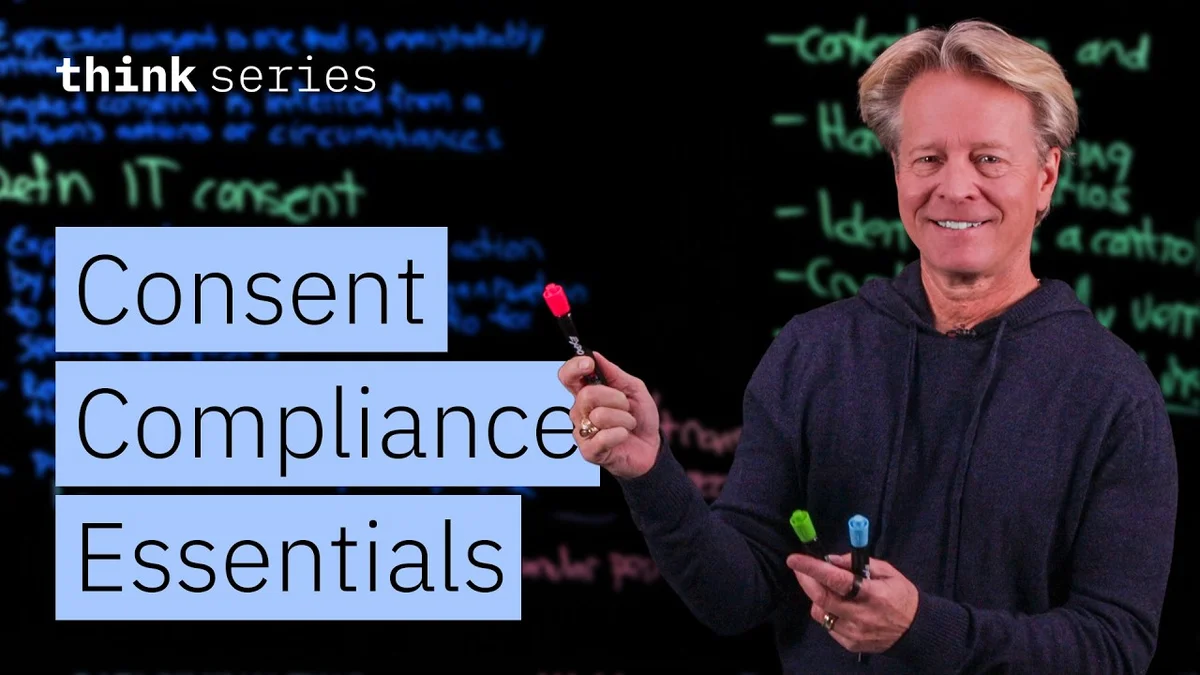
Grant Miller, Distinguished Engineer at IBM, explaining agentic consent.
Image credit: IBM· IBM

In the rapidly evolving world of artificial intelligence, the concept of AI agents acting autonomously is becoming increasingly prevalent. However, with this autonomy comes a critical need for robust consent mechanisms to ensure safety and responsibility. Grant Miller, a Distinguished Engineer at IBM, breaks down the intricacies of "Agentic Consent" in a recent video, explaining how AI agents can act safely and responsibly.

Miller begins by clarifying that AI agents do not simply generate output; they execute actions. This fundamental difference requires a new approach to consent that goes beyond traditional models. Agentic consent, as explained by Miller, is about defining the parameters of an agent's actions: who is delegating the authority, what specific actions are permitted, and what is the scope and lifetime of that delegation.

Understanding Consent in the Age of AI Agents

Miller draws a parallel to everyday consent, such as borrowing a car. If you lend your car to a friend, you might specify that they can only go to the store and must return it within an hour. This is akin to setting explicit terms and conditions for an action. Similarly, when interacting with an AI agent, the user must clearly understand and consent to the actions the agent will perform on their behalf.

Related startups

The full discussion can be found on IBM's YouTube channel.
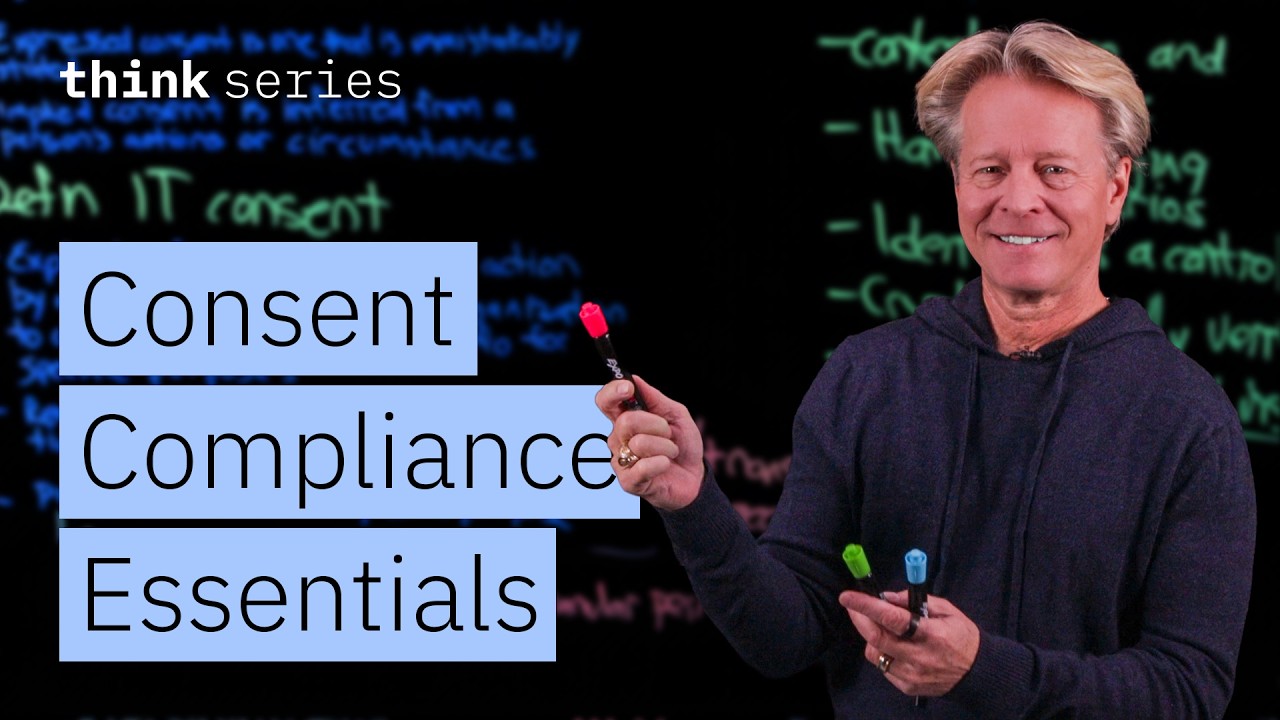
Agentic Consent Explained: How AI Agents Act Safely and Responsibly - IBM
Agentic Consent Explained: How AI Agents Act Safely and Responsibly — from IBM

He differentiates between two types of consent: expressed and implied. Expressed consent is when a person explicitly states their agreement, such as ticking a box or clicking an "accept" button. Implied consent, on the other hand, is inferred from a person's actions or circumstances. For instance, if an agent is present and a user takes no action to stop it, that might be considered implied consent in some contexts.

The Limitations of Traditional IT Consent

Miller highlights that traditional IT consent mechanisms, often characterized by static click-wrap agreements, are inadequate for the dynamic nature of AI agents. These agents can learn, adapt, and expand their scope of work autonomously after initial permission is granted. This means that consent needs to be more context-aware and dynamic to keep pace with the agent's evolving capabilities and the changing environment in which it operates.

For example, if an AI agent is given permission to access data for a specific purpose, its ability to autonomously change its actions or expand its scope means that the initial consent might not cover all future activities. This necessitates a more sophisticated approach to consent management.

Key Pillars of Agentic Consent

To address these challenges, Miller outlines three key pillars for effective agentic consent:

  • Transparency: Users must have clear visibility into what actions an agent is permitted to take and the purposes for which their data is being used. This includes understanding the agent's capabilities and limitations.
  • Revocability: Users must be able to revoke consent at any time, thereby regaining control over the agent's actions and data access. This ensures that consent is not a one-time, irreversible grant of authority.
  • Personalization: Consent mechanisms should be adaptable to individual user preferences and the specific context of the interaction. This allows for granular control over permissions, ensuring that consent is tailored to the user's needs and comfort level.

Implementing Agentic Consent

Miller illustrates the implementation of these principles with a diagram showing a user interacting with an AI agent. This interaction involves policies, which govern the agent's actions, and a flow from permission to data access. He emphasizes that the process should be granular and context-aware, meaning the agent should only perform actions for which explicit, specific consent has been granted.

The key takeaway is that agentic consent is not a one-size-fits-all solution. It requires a dynamic and transparent framework that allows users to understand, control, and revoke permissions as needed. This approach ensures that AI agents can operate safely and responsibly, building trust between users and the AI systems they interact with.

© 2026 StartupHub.ai. All rights reserved. Do not enter, scrape, copy, reproduce, or republish this article in whole or in part. Use as input to AI training, fine-tuning, retrieval-augmented generation, or any machine-learning system is prohibited without written license. Substantially-similar derivative works will be pursued to the fullest extent of applicable copyright, database, and computer-misuse laws. See our terms.