

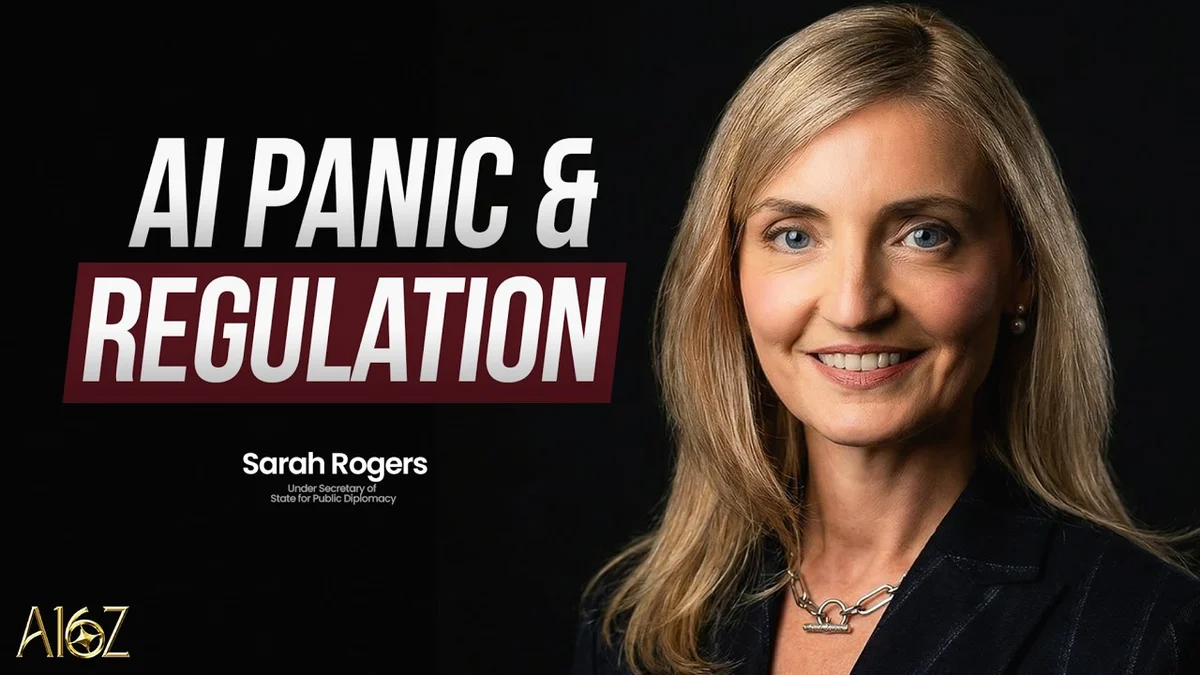
In a recent episode of The a16z Show, Katherine Boyle, General Partner at a16z, and Sarah Rogers, Under Secretary of State, engaged in a crucial discussion about the evolving landscape of digital freedom, AI regulation, and the future of the Western internet. The conversation highlighted the critical juncture at which technology and policy intersect, particularly concerning the rapid advancement of artificial intelligence.
Boyle, a vocal proponent of digital freedom and anti-censorship, framed the debate by emphasizing the significance of AI's impact on societal discourse and the importance of safeguarding free speech in the digital age. Rogers, representing the U.S. Department of State, brought a critical foreign policy perspective, detailing the government's role in shaping international norms and fostering responsible innovation.
The 'Western AI Stack' and Digital Freedom
The discussion began by dissecting the concept of the 'Western AI Stack,' a term used to describe the interconnected technologies and platforms that underpin AI development and deployment in Western nations. Boyle articulated that the rapid proliferation of this stack is not merely a technical development but a crucial factor in the ongoing fight for digital freedom. She suggested that how this stack is built and regulated will have profound implications for how information flows and how individuals can express themselves online.
Rogers concurred, noting that the ongoing evolution of AI necessitates a proactive approach to regulation. She stated that the global regulatory conversation around AI is moving rapidly, and it's essential for policymakers to keep pace. The challenge, she explained, lies in balancing the imperative to foster innovation with the need to ensure safety, mitigate risks, and uphold fundamental rights like free speech.
Navigating Global AI Regulation
The conversation then shifted to the differing regulatory approaches across the globe. Boyle highlighted that while the U.S. is striving for a balanced approach, other regions, like Europe, are implementing more stringent regulations, such as the AI Act. This divergence, she argued, could lead to fragmented digital markets and differing levels of protection for users.
Rogers elaborated on the State Department's role in this global regulatory dialogue. She emphasized the importance of public diplomacy in shaping international agreements and setting standards that promote both innovation and responsible AI development. The U.S. aims to foster an environment where AI can be developed and deployed in a way that aligns with democratic values, including freedom of expression and open access to information.
The Role of Government and the Private Sector
A key theme that emerged was the interconnectedness of government and the private sector in navigating the complexities of AI regulation. Boyle queried how the U.S. government could encourage private sector innovation while simultaneously promoting free speech. Rogers responded by explaining that the State Department's Digital Freedom Office is actively working to support initiatives that promote transparency and free expression online, citing examples of past efforts to combat misinformation and cyber threats.
Rogers further explained that her office is actively engaged in promoting initiatives aimed at enhancing digital freedom, such as fostering open internet principles and countering censorship efforts by authoritarian regimes. She drew a parallel to historical communication revolutions, like the telegraph, noting that each technological leap brings new challenges and necessitates new approaches to governance and public discourse.
The discussion also touched upon the broader societal implications of AI, including its potential to influence public opinion and democratic processes. Both speakers agreed that a robust and open digital ecosystem is paramount for the healthy functioning of democracies, especially in an era where AI is increasingly shaping the information landscape.
The Future of Digital Freedom
The conversation underscored the critical importance of ongoing dialogue and collaboration between policymakers, technologists, and civil society to ensure that AI development serves humanity's best interests. As AI continues to evolve at an unprecedented pace, the need for thoughtful, rights-respecting regulations becomes ever more pressing. Boyle and Rogers concluded by emphasizing that the fight for digital freedom in the context of AI is a continuous effort, requiring vigilance, adaptability, and a commitment to core democratic values.
