

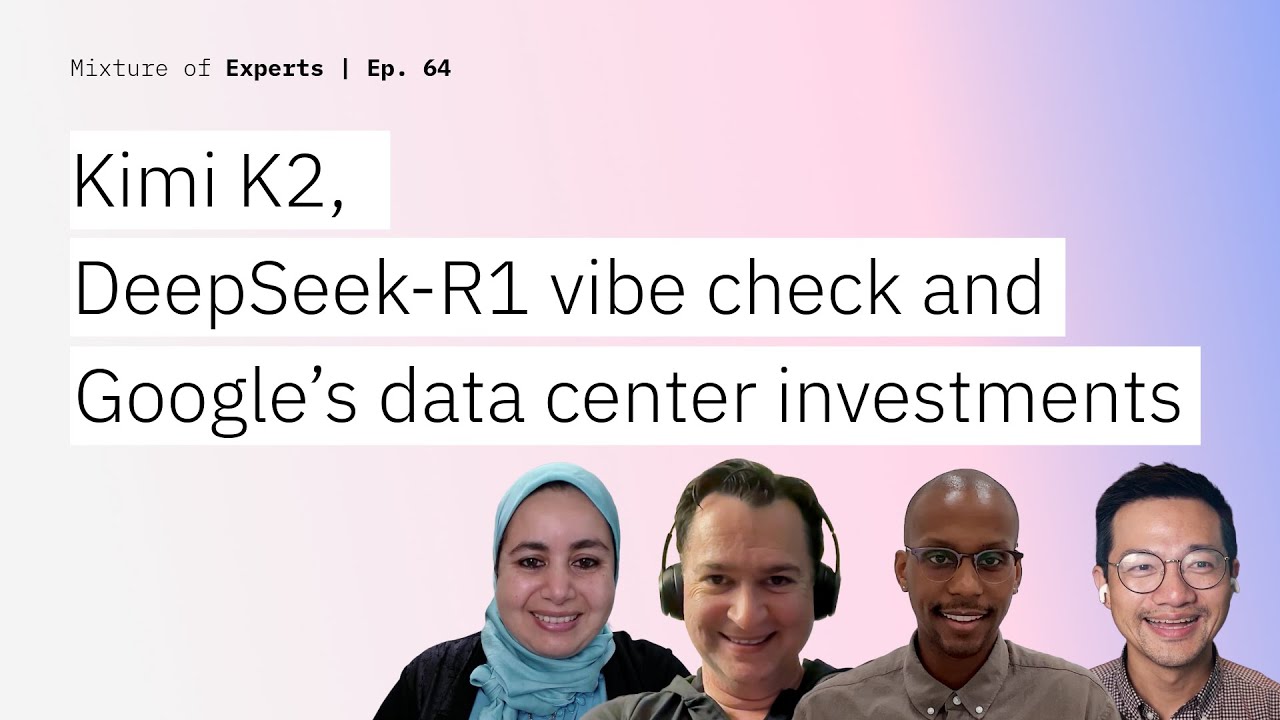
The relentless pace of artificial intelligence development continues to challenge conventional metrics and strategic investments. In a recent episode of the Mixture of Experts podcast, host Tim Hwang engaged Abraham Daniels, Chris Hay, and Kaoutar El Maghraoui in a comprehensive discussion spanning the latest model releases, the enduring impact of open source, and the escalating infrastructure race among tech giants.
The conversation commenced with Moonshot AI’s Kimi K2, a trillion-parameter Mixture-of-Experts (MoE) model. While its sheer scale captured attention, the experts cautioned against equating parameter count directly with superior performance or general intelligence. Chris Hay articulated this nuance, stating, “The trillion parameter count is a bit of a red herring,” suggesting that real-world utility often diverges from benchmark scores, particularly for models optimized for specific tasks like long-context understanding. The panel emphasized that the true test for models like Kimi K2 lies in their practical application and integration into complex workflows, rather than isolated performance metrics.
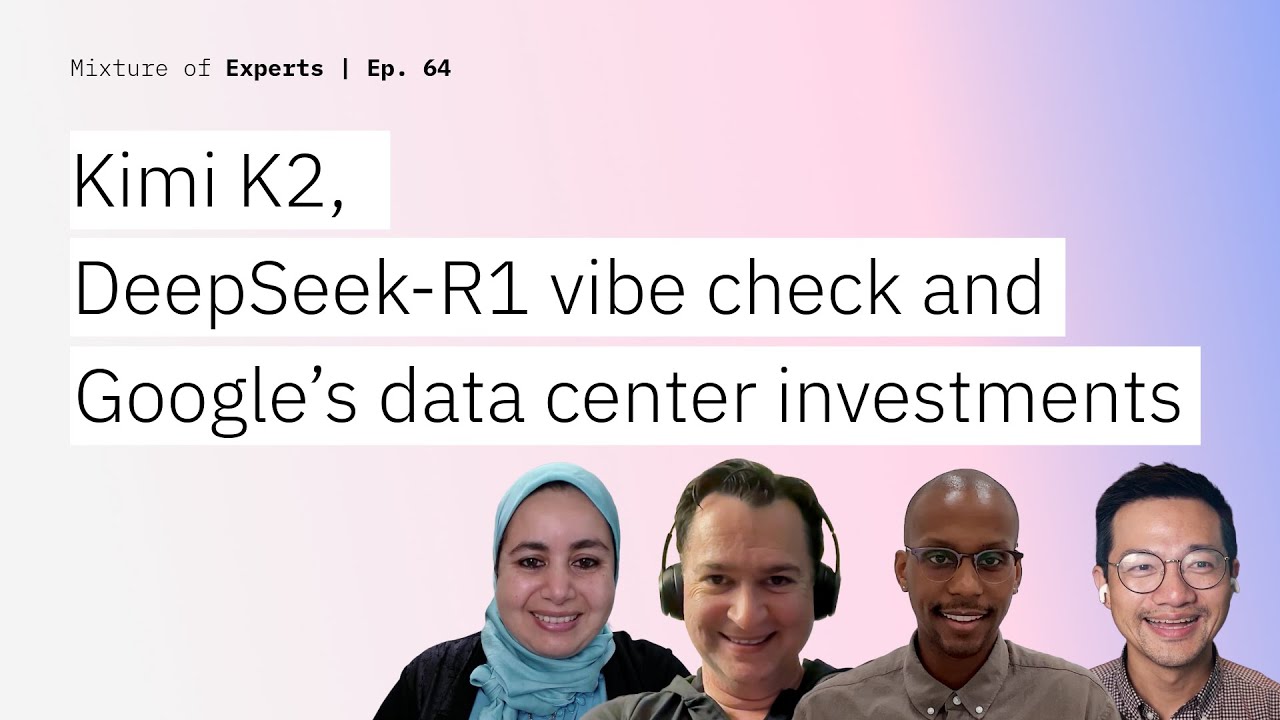
Six months after its release, DeepSeek-R1 underwent a "vibe check," with the panelists assessing its long-term impact on the AI landscape. Initially lauded for its impressive performance relative to its size and open-source nature, DeepSeek-R1 has indeed left a significant mark. Kaoutar El Maghraoui noted, “It really changed the landscape for open-source models,” highlighting its role in democratizing access to powerful AI capabilities and fostering a more vibrant, collaborative ecosystem for developers and researchers. Its success underscored the growing viability of open-source alternatives to proprietary models, driving innovation across the board.
The discussion then pivoted to Google's formidable $25 billion investment in AI infrastructure, a sum indicative of the intensifying competition in the sector. This expenditure, the experts highlighted, extends far beyond mere AI chips. Abraham Daniels underscored the broader scope, asserting, “It's not just compute, it's the physical infrastructure.” This encompasses everything from data centers and power grids to cooling systems and real estate, signaling a long-term strategic play for foundational control over the AI supply chain. This comprehensive approach reflects a recognition that raw processing power is only one component of a robust AI ecosystem; the underlying physical and energy infrastructure is equally critical for scaling next-generation models.
Finally, the panel touched upon Anthropic’s expansion with Lawrence Livermore National Laboratory, raising pertinent questions about AI safety. The integration of powerful AI models into sensitive research environments inherently carries risks that necessitate careful consideration. Kaoutar El Maghraoui succinctly captured this duality: “These models are very powerful, and they can be used for good, but also for harm.” This partnership serves as a crucial case study in navigating the ethical complexities and potential safeguards required as AI permeates increasingly critical sectors, balancing innovation with responsible deployment.