

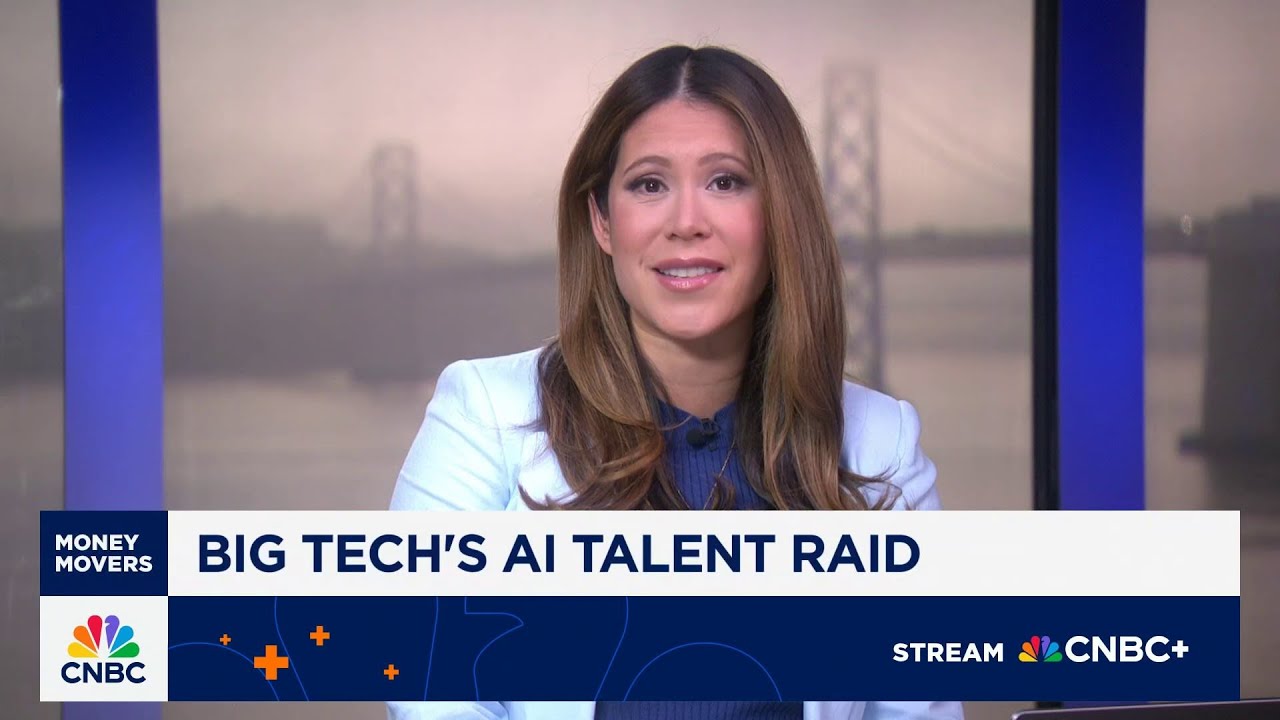
In the cut-throat world of artificial intelligence, Google’s recent hiring of Windsurf CEO Varun Mohan and his team of key engineers for an estimated $2.4 billion marks a significant "knife twist," as CNBC’s Deirdre Bosa aptly put it. This strategic talent acquisition comes on the heels of a dissolved $3 billion acquisition deal between the buzzy AI coding startup, Windsurf, and OpenAI.
Deirdre Bosa, CNBC’s TechCheck Anchor, spoke on "Money Movers" about the fierce competition for AI talent, highlighting Google's aggressive posture in securing top-tier expertise. The core of the discussion revolved around why OpenAI’s planned acquisition of Windsurf collapsed, paving the way for Google to secure the talent.
Windsurf, an AI coding startup, was reportedly deep in acquisition talks with OpenAI, with the intent to integrate its technology and user base into OpenAI's expanding application layer. However, the deal faltered. Sources indicate that Microsoft, OpenAI's largest investor, loomed large in Windsurf's considerations. Windsurf reportedly had "concerns about sharing its technology with Microsoft as part of the deal with OpenAI, especially since Microsoft’s own Copilot, it directly competes in AI coding." This suggests a critical vulnerability for OpenAI: its deep entanglement with Microsoft, while beneficial for investment, is becoming a liability when pursuing strategic partnerships or acquisitions that involve competitive technologies. Google, lacking such intricate competitive baggage, was able to secure the prized talent.
This event reveals a broader trend in the AI landscape: the regulatory climate is increasingly "unfriendly to full acquisitions by the megacaps," pushing Big Tech to adopt alternative strategies. The traditional path to scale through mergers and acquisitions is being supplanted by what Bosa termed "pseudo acqui-hires" and license deals. This strategic pivot allows larger players to absorb crucial talent and intellectual property without triggering antitrust scrutiny that a full acquisition might.
The power in the AI ecosystem is not decentralizing but rather consolidating with the largest players.