The future of education is not about banning the technology that enables cheating; it is about fundamentally restructuring learning objectives to value human ingenuity over rote knowledge. This was the core contention of Jeff Crume, Distinguished Engineer at IBM and Adjunct Professor, during his recent discussion on the integration of generative artificial intelligence into the classroom. Crume argued that the current debate, centered on detection software and prohibition, is futile and shortsighted, comparing it to trying to stop a seismic shift. As he bluntly put it, "The train has already left the station. We can either get on board or get run over by it, but standing in front and yelling stop isn't going to work." For founders and VCs investing in the education technology space, this message is critical: the value proposition of EdTech must evolve beyond mere efficiency gains toward cultivating inherently human, future-proof skills.
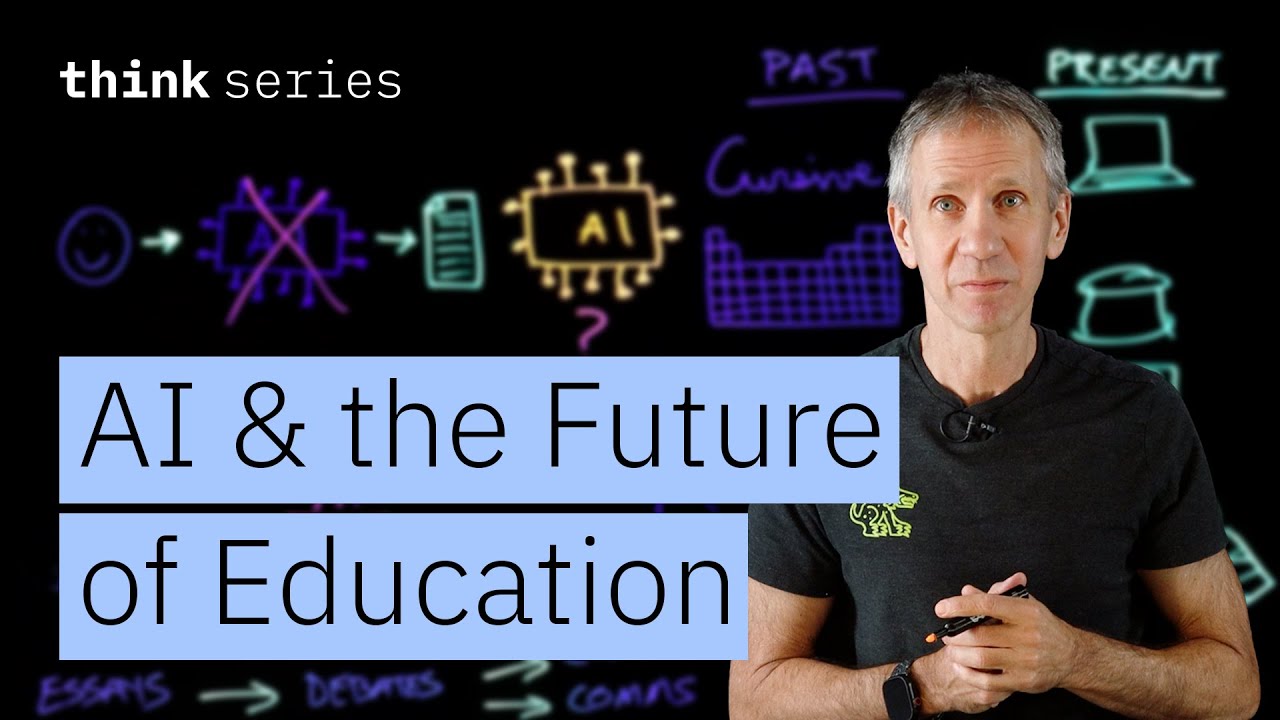
Crume contextualized the current challenge by examining historical shifts in educational priorities. He pointed to skills once deemed essential, like penmanship, cursive writing, and memorizing the entire periodic table, which have been superseded by technology, databases, and calculators. These skills were once proxies for discipline and intelligence, but today, they are largely irrelevant in a professional context dominated by computers and immediate access to information. The current AI revolution demands a similar, radical re-evaluation of what constitutes core knowledge. If an AI chatbot can instantly generate a coherent essay or solve complex arithmetic problems, educators waste scarce instructional time forcing students to practice tasks machines already perform better.
The immediate imperative, therefore, is to pivot toward skills that complement, rather than compete with, AI capabilities. Crume highlighted three primary areas of focus for the AI era: flexibility, creativity, and critical thinking. Flexibility and adaptability are essential because the pace of technological change guarantees that specific tools or platforms learned today will be obsolete tomorrow. Students must be trained to navigate ambiguity and rapidly integrate new technologies. Creativity, the ability to synthesize novel solutions and frame unique problems, remains a domain where human input is indispensable. But perhaps the most crucial skill, Crume emphasized, is critical thinking.
The elevation of critical thinking is not merely an academic exercise; it is a necessity driven by the inherent limitations of generative AI. While AI can produce sophisticated outputs, it often lacks context, accuracy, and ethical judgment. Crume noted that AI might "do some things, say some things, that might not even be true." Students must be equipped to serve as the ultimate arbiters of AI output, assessing its utility, veracity, and potential unintended consequences. This mandate requires moving away from testing what students know toward evaluating how they analyze, question, and apply that knowledge. Crume underscored this point: "Literally the critical skill is critical thinking."
Embracing AI in the classroom offers profound advantages that extend far beyond rote task automation. AI can deliver personalized, just-in-time education, acting as an "infinitely patient" tutor that adapts to individual learning speeds and styles, a resource typically available only to the most privileged students. This capability democratizes quality instruction, offering a powerful tool for promoting equity by addressing diverse learning disabilities and accessibility challenges. Furthermore, AI can serve as a highly efficient teaching assistant, automating mundane tasks like initial grading, grammatical editing, and lesson planning. This frees up human teachers to focus on the "big picture," providing the one-on-one mentorship and deep conceptual guidance that machines cannot replicate.