


AI Video

The SaaS Reckoning AI Drives Coding Costs to Zero

Jan 16 at 8:23 PM4 min read
The SaaS Reckoning AI Drives Coding Costs to Zero

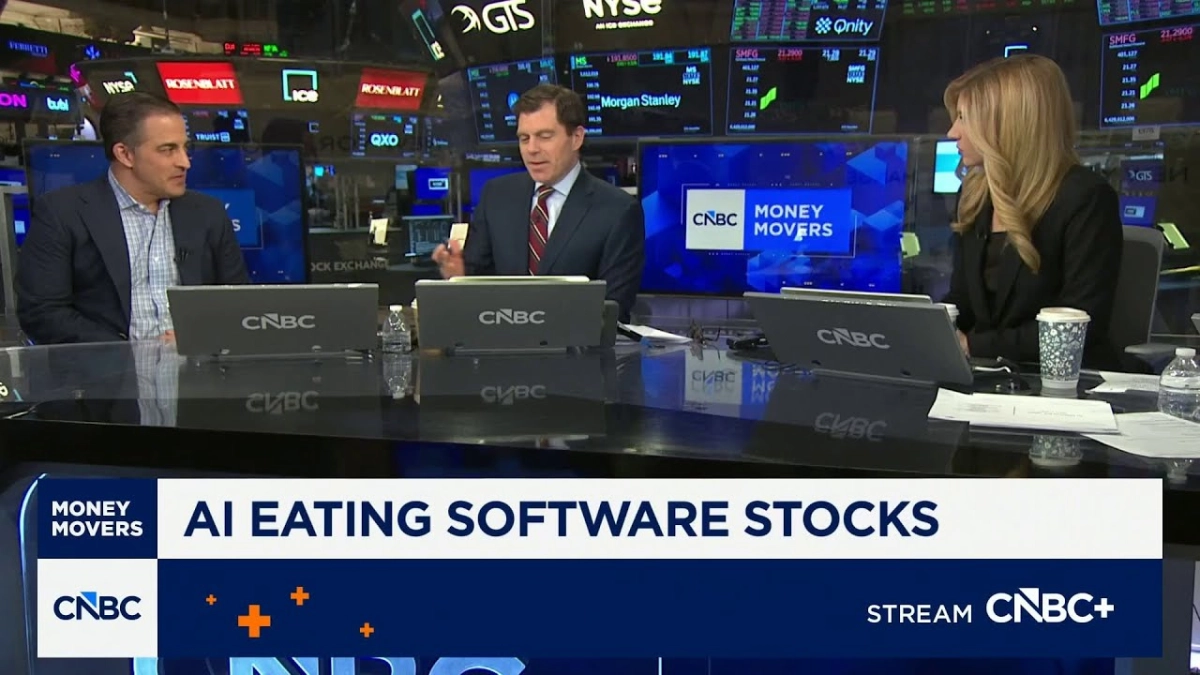
Ben Reitzes, Head of Technology Research at Melius Research, recently spoke on CNBC’s Money Movers about the profound and structural impact of generative AI on the enterprise software sector, arguing that the current market underperformance of SaaS stocks is not a temporary correction but a fundamental revaluation driven by impending disruption. Reitzes drew a stark historical parallel, suggesting that today’s software giants—Adobe, Salesforce, ServiceNow—face the same existential threat that the cloud presented to hardware makers like Dell and HP two decades ago. The market, he contends, is already pricing in this new reality, recognizing that the economics that sustained the decade-long SaaS boom are rapidly deteriorating.

Reitzes’ central thesis rests on a core economic prediction: “the marginal cost of coding is going to zero,” a shift that eliminates the proprietary advantage traditionally enjoyed by high-margin software vendors. This is not merely about efficiency gains; it is about the commoditization of the very labor that built the software empires of the 2010s. The ability to generate code, which once demanded highly compensated engineers and years of development, is becoming ubiquitous and cheap, fundamentally undermining the high revenue per employee and massive gross margins that defined the sector’s valuation premium.

The current pain points in the software industry are amplified by years of aggressive pricing and questionable financial engineering, according to Reitzes. He pointed out that since the pandemic, many software companies “raised prices since Covid 40 percent,” far outpacing inflation. This price gouging, coupled with the reliance on stock options to mask true costs and inflate free cash flow figures, created a fragile economic structure ripe for disruption. As customers now face budget constraints and search for efficiency, they are already pushing back against these inflated prices, making them highly receptive to new, AI-native solutions that promise lower operational expenditure and faster implementation.

This structural weakness is the opening for a new generation of startups. Reitzes argued that while incumbent companies are scrambling to bolt AI features onto existing platforms—like Microsoft’s Co-Pilot—the real winners will be the "AI-first, agent-first startups" that build from the ground up. These nimble competitors are unburdened by legacy codebases, high fixed costs, or the need to defend existing pricing models. When challenged on whether existing SaaS companies possess unique, specialized data moats that protect them, Reitzes was dismissive: “That’s nonsense. Whoever owns the data is the winner.” He elaborated that the ability to do an agent and the coding “will be a commodity.” The value shifts away from the application layer and toward the unique, proprietary data sets and the infrastructure that connects them.

The market’s recent behavior validates this skepticism toward legacy software. While the semiconductor index (SMH) has soared on the back of AI chip demand, the iShares Expanded Tech-Software ETF (IGV) has lagged significantly. This divergence suggests investors are recognizing that the capital required for the AI infrastructure build-out (GPUs, data centers) is flowing to hardware and underlying model providers, not necessarily to the traditional SaaS layer. Reitzes warned that for investors focusing solely on traditional valuation metrics like free cash flow, many software companies still appear deceptively cheap. However, these valuations often fail to properly account for the dilution caused by excessive stock options, masking a lower true return for shareholders.

The historical analogy Reitzes drew to the shift from on-premise hardware to cloud infrastructure provides a chilling forecast for the enterprise software incumbents. Just as companies that once scoffed at the security and viability of cloud computing found their stock prices languishing—Dell’s stock, for instance, “didn’t work for seven years and then had to go private”—today’s software companies risk being sidelined by a technological tsunami they are struggling to contain. The market is not waiting for five-year plans; it is discounting the disruption now.