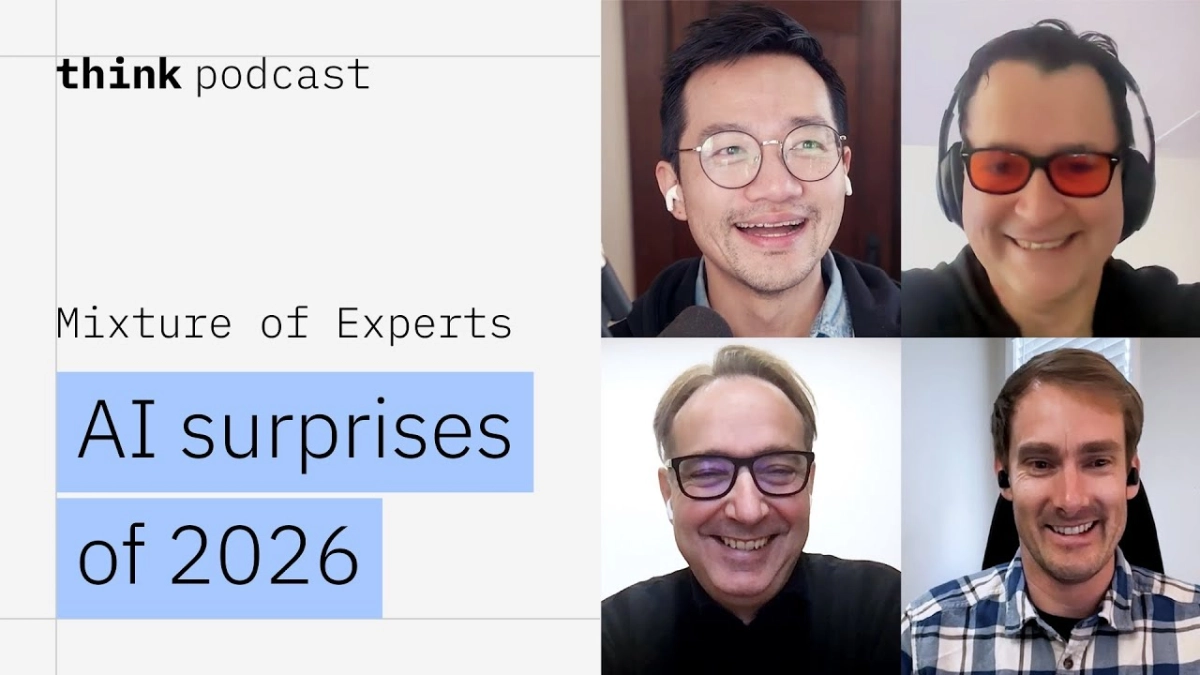
The cost of advanced artificial intelligence is now forcing a reckoning, even for the sector’s most ambitious players. This was the central tension explored in the latest Mixture of Experts podcast episode, where host Tim Hwang, alongside panelists Chris Hay, Gabe Goodhart, and Francesco Brenna, dissected the commercial and technological shifts reshaping enterprise AI adoption in 2026. The conversation focused sharply on three core developments: the inevitable monetization of consumer LLMs through advertising, the disruptive arrival of agentic coding platforms, and the strategic mandate for businesses to pivot from efficiency gains to innovation.
The most immediate controversy centered on OpenAI’s confirmed interest in deploying ads within the free tiers of ChatGPT. For many observers, this move felt like a betrayal of the grand, utopian vision of AGI, signaling a concession to the familiar, advertising-driven internet economy. However, the panelists quickly grounded this decision in pragmatic economics. Chris Hay summarized the reality bluntly: “The reality is, the inference costs a lot of money... if you’re going to give away that for free in the kind of lower tiers, then it’s going to come with ads, right? And that’s just a reality.” The immense computational expense required to serve hundreds of millions of weekly users simply necessitates a sustainable revenue model beyond the subscription tier.
The deeper concern, as articulated by Gabe Goodhart, is not the ads themselves, but the potential for the conversational interface to erode user trust. The challenge for OpenAI is maintaining the neutrality and utility of the AI’s responses when the economic incentive is to introduce bias toward advertisers. Goodhart noted that the optimistic principle stated by OpenAI, that generated content would not be influenced by ad profiles, living in parallel, is crucial. However, the history of the internet, from early search engines to modern social media, suggests that the lure of monetizing user data and influencing output is almost impossible for a two-sided market platform to resist.
Moving from commercial pressures to technological disruption, the discussion quickly turned to the breakout moment of Claude Code and the accelerating march toward agentic AI. Agentic systems, capable of complex, multi-step problem-solving without constant human intervention, represent the next major evolution beyond simple Large Language Model (LLM) assistance. Francesco Brenna noted that this shift is already redefining software development. “I think we really see the shift from this assisted AI to truly agentic AI coding,” he stated, emphasizing that this transition is moving quickly from experimental curiosity to a foundational change in how enterprise software is built.
The power of these new agentic platforms, particularly Claude Code, lies not in an exhaustive library of specialized tools, but in superior reasoning and context management. Hay pointed out the surprising simplicity of the underlying toolkit: fetch, file system, grep. The magic is in how the model orchestrates these few tools, loops through problems, and manages long-term memory, a capability that previously required complex, brittle chains built by developers. The realization that highly competent agents can be built with minimal, general-purpose tools rather than specialized microservices is a significant psychological and architectural reset for the developer ecosystem, creating a new wave of excitement reminiscent of the early days of ChatGPT itself.
This technological maturity aligns perfectly with the strategic pivot detailed in the IBM IBV’s “The enterprise in 2030” report. The report highlights that executives are increasingly moving their focus from efficiency to innovation as the primary driver for AI investment. While the first wave of AI adoption centered on resource optimization, cutting costs in back-office functions like finance and procurement, the next competitive advantage will be found in leveraging AI to create entirely new products, services, and business models. According to the report, 64% of surveyed executives believe competitive advantage will soon derive from innovation rather than optimization. Brenna stressed that efficiency gains are necessary to fund the transformation, but "the winners are really going to be those who are going to really focus on how can I ground all this LLM, the right LLM, into my data, right into my context, and how can I orchestrate those agentic workflows across their business process."
The practical realization of this shift requires standardization and abstraction, which brings the conversation to Hugging Face’s launch of Open Responses. This initiative aims to standardize the API surfaces for agentic systems, moving the complexity of the agentic loop (tool definitions, invocation requests, context management) from the client side to the server side. This standardization is crucial for ensuring that agents can reliably interact with diverse tools and environments, regardless of the underlying model. As Gabe Goodhart explained, this standardization helps the industry move past the early challenge of needing to babysit every interaction and allows developers to simply state the desired outcome, trusting the server-side infrastructure to handle the complex execution steps. This framework provides the necessary scaffolding for enterprises to confidently deploy complex, multi-modal, and multi-agent systems at scale, transforming the entire organization rather than just optimizing isolated functions. The convergence of powerful, affordable agentic models and the architectural standards to manage them suggests that the enterprise focus on innovation powered by AI is not just aspiration, but an imminent reality requiring urgent strategic engagement.




