The accelerating violence within Iran, marked by the regime's brutal crackdown on civilian protests, has become a stark, real-time case study in the intersection of totalitarian control and disruptive technology.
While the immediate crisis is humanitarian, the geopolitical implications—particularly concerning the role of satellite communication and military deterrence—are defining moments for global leaders in defense and technology.
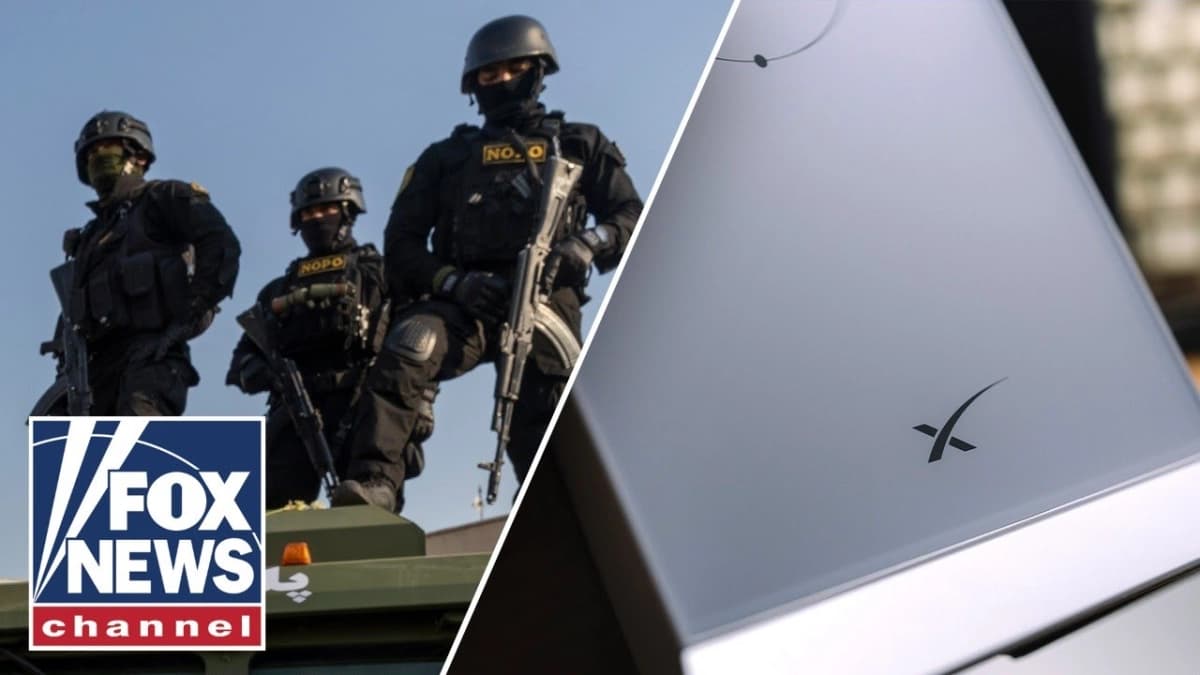
The recent Fox News segment analyzed this escalating situation, featuring reports from Chief Foreign Correspondent Trey Yingst and sharp commentary from former Army Special Operations Intelligence Analyst Brett Velicovich.
22,000 protestors MURDERED by the Iranian government
Harris Faulkner hosted the discussion, which centered on the horrifying scale of the civilian revolt and the Islamic regime's heavy-handed response, including the cutting off of public internet access to muzzle dissent and prevent images of the brutality from reaching the international community.
Initial reports suggested that between 12,000 and 22,000 protestors had been murdered by the Iranian government since the civil unrest began two weeks prior, figures that Brett Velicovich later underscored, stating, "This is no longer a protest crackdown. This is a massacre. This is a mass slaughter carried out by a regime that has completely forfeited any claim to legitimacy."
"Tiananmen Square on steroids"
This level of state violence, Velicovich argued, is "Tiananmen Square on steroids," demanding immediate and forceful international response.
Crucially, Elon Musk's Starlink satellite service has reportedly stepped in to provide free internet access to protestors. This move, while vital for enabling communication and sharing evidence of atrocities, has triggered a new, dangerous front: the regime executioners and Iranian authorities are reportedly conducting "door-to-door searches" to hunt down those utilizing the Starlink terminals. For founders and investors in the satellite and defense sectors, this scenario crystallizes the immediate dual-use challenge of low-earth orbit (LEO) constellations—they are both tools of humanitarian connection and targets for state suppression. The technological lifeline offered by Starlink has become a personal liability for those seeking digital freedom.
The political response from the U.S. administration, led by President Trump, has been uncompromising. Trump publicly vowed that those responsible for the killings—the mass murderers and butchers running Tehran—would "pay a big price" and cancelled all meetings with Iranian officials until the violence ceases. His social media post, urging "Iranian Patriots, KEEP PROTESTING - TAKE OVER YOUR INSTITUTIONS!!! Save the names of the killers and abusers," signaled a hard line that previous administrations had often avoided, creating a clear red line that, if crossed by further executions, would trigger "very strong action."
This threat of strong action, according to Velicovich, is essential leverage, not warmongering. He argued that geopolitical stability in the Middle East is not achieved through polite requests but through credible deterrence. The withdrawal of non-essential U.S. military personnel from bases in the region, such as Al Udeid in Qatar, is viewed as a necessary precaution given the Iranian regime's history of targeting American assets when sensing weakness. The analyst insisted that any effective strategy must directly undermine the regime's financial stability. "The regime survives off of this offshore oil cash flow. You disrupt that and everything changes. That's real deterrence," Velicovich asserted, pointing toward potential military or cyber strikes against IRGC-controlled export infrastructure—the IRGC being a murder apparatus—as a means of drying up the funds used to finance internal repression and regional proxy wars.
How can you stay silent on Iran?
"I used to be a Democrat. I stood by you guys because you promised us liberty, justice, diversity. This is not diversity. Your silence is complicit. How can you stay silent on Iran?" says an Iranian interviewed by Fox News. This sentiment, echoed by figures like former UN Ambassador Nikki Haley, who noted that "the silence from those who claim to care about human rights is truly deafening," highlights a profound political and moral disconnect.
The Iranian people are demanding freedom, and their struggle is now inextricably linked to the technologies and geopolitical strategies employed by global powers.
Editors Correction: The official death toll is now reported by various Human Rights groups at 25,400, as of January 14, 2026.