

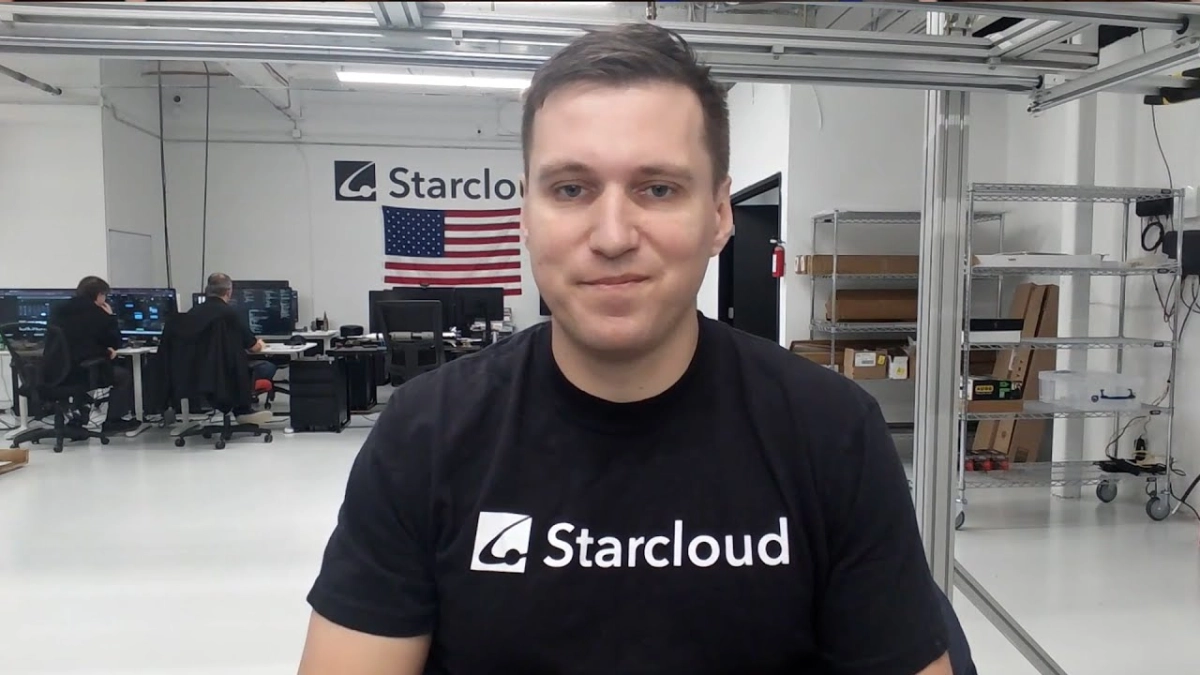
The race for AI dominance has officially left Earth’s atmosphere. Starcloud, the Nvidia-backed startup, recently achieved a historic milestone, successfully training and running a version of Google's Gemini Large Language Model (LLM), dubbed Gemma, in low Earth orbit (LEO). This feat, utilizing an advanced, high-powered Nvidia H100 GPU aboard the Starcloud One satellite, signals the immediate viability of space-based data centers and, critically, offers a potential solution to the terrestrial energy crisis currently fueled by soaring AI compute demands.
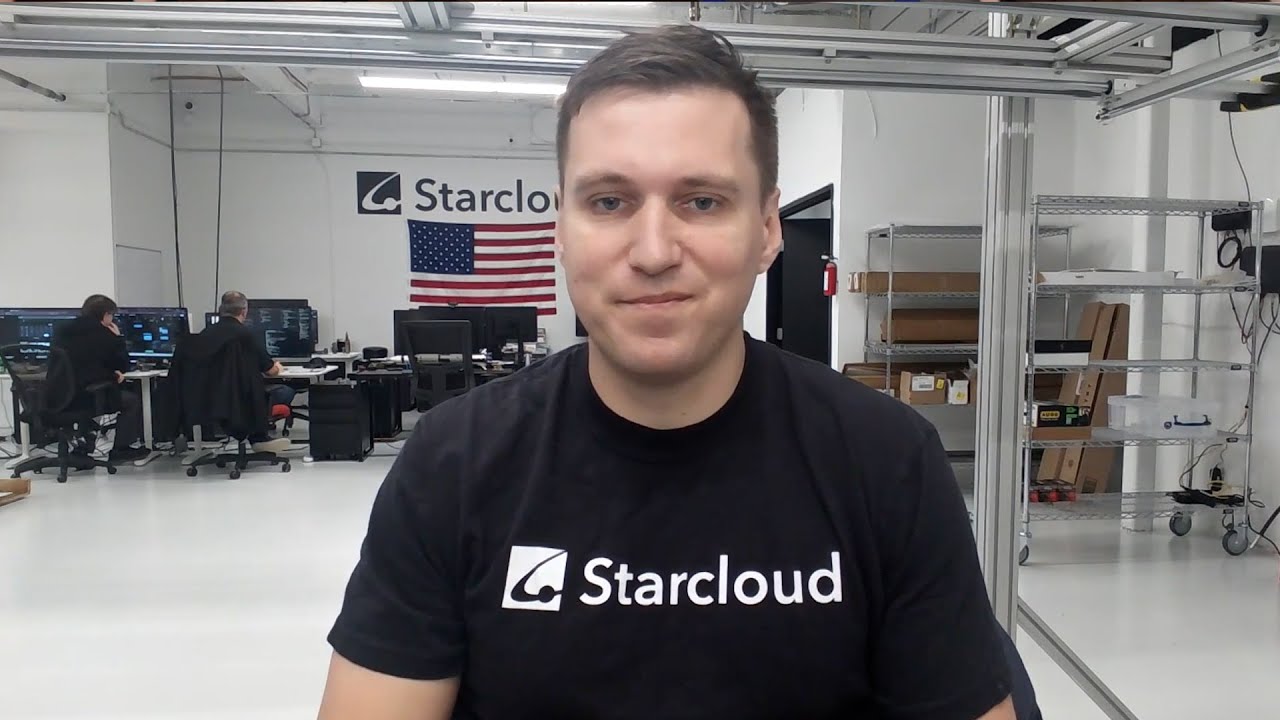
Philip Johnston, co-founder and CEO of Starcloud, spoke with CNBC’s Pia Singh about the company’s strategy of shifting massive computational workloads away from Earth. While the immediate use case involves providing low-latency inference and cloud compute services to other spacecraft, minimizing the time it takes to downlink massive datasets, the long-term vision is far more ambitious: relocating almost all high-power compute to space.
This shift is driven by an undeniable economic and environmental reality: the energy density required for training and running next-generation AI models is becoming unsustainable on Earth. Terrestrial data centers demand immense power, often straining local grids and requiring complex, expensive cooling infrastructure. In contrast, LEO offers a truly compelling alternative powered by solar energy. Johnston quantified this immense advantage, noting that Starcloud is aiming for an all-in energy cost that is "10x lower... well below 1 cent per kilowatt-hour, instead of... 5 to 10 cents per kilowatt-hour" seen in new energy projects in North America. This tenfold reduction, even accounting for the significant launch costs, is the fundamental economic lever enabling this extraterrestrial infrastructure.
The scale of this vision is staggering. Johnston detailed that Starcloud’s ultimate goal is to build a 5-gigawatt data center in orbit. Achieving this on Earth would necessitate constructing the equivalent of five nuclear power stations adjacent to one another, a logistical and regulatory nightmare. In space, however, the availability of energy is, as Johnston put it, "almost unlimited." The company projects that within a 10-to-20-year timeframe, they could be launching the equivalent of the entire current US power grid's capacity (approximately 400 gigawatts) into orbit annually. For founders and investors focused on scaling AI infrastructure, the prospect of decoupling compute growth from terrestrial energy constraints represents a paradigm shift in capital deployment and operational efficiency.
The successful launch and activation of the Starcloud One satellite, carrying hardware designed for ground-based data centers, was a moment of immense technical risk and excitement. Johnston admitted that the period immediately following separation was "very exciting and nerve-wracking," particularly given that roughly 50% of first spacecraft fail to establish contact with the ground station. The successful operation, however, validated years of intense engineering focused on hardening commercial hardware for space.