

The commitment is staggering, even by Silicon Valley standards: $1.4 trillion dedicated to AI infrastructure spend over the next eight years. This figure, recently disclosed by OpenAI, was meant to demonstrate serious ambition and foundational planning. Instead, as CNBC’s Deirdre Bosa reported, it has served to reignite serious concerns about a potential AI bubble, highlighting the immense pressure on OpenAI to sustain a compute-to-revenue ratio that defies the gravitational pull of market maturity.
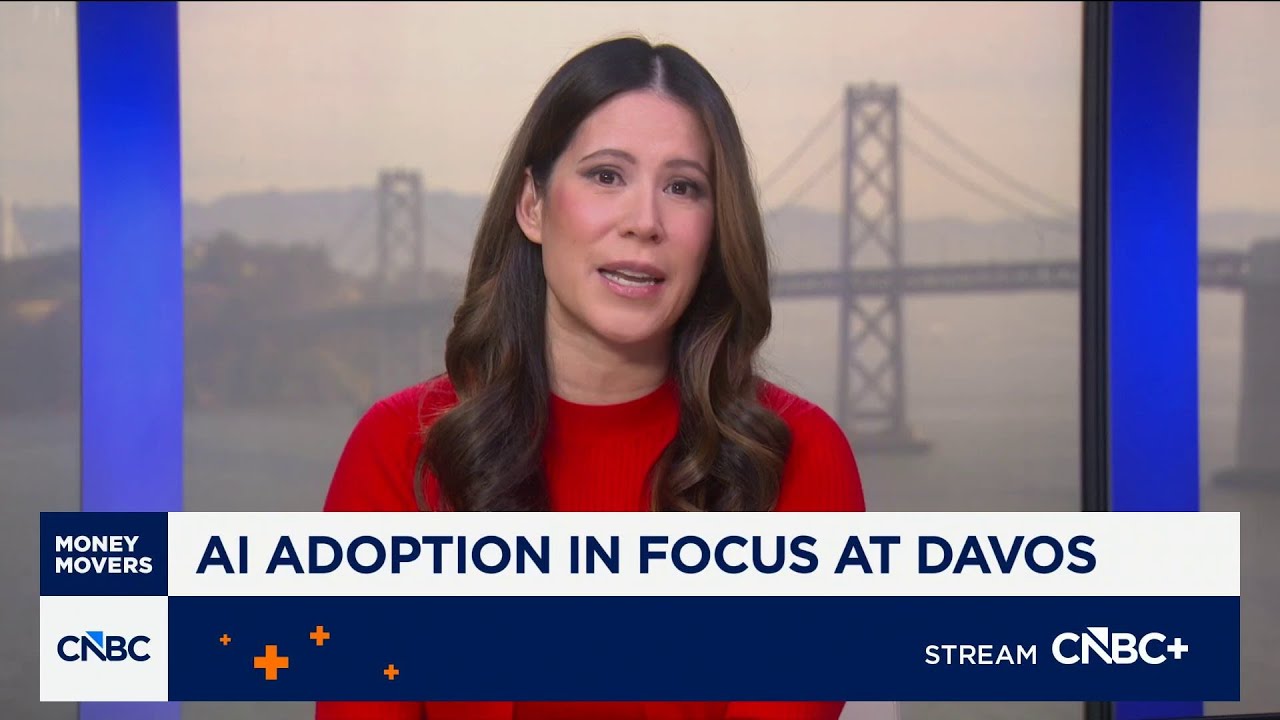
Deirdre Bosa spoke with David Faber on CNBC’s Tech Check about OpenAI’s financial trajectory and the risks inherent in the massive capital expenditures required to win the generative AI race, a topic that dominated the conversations at the World Economic Forum in Davos this year. The initial numbers look promising: OpenAI CFO Sarah Friar laid out a premise that revenue scales directly with compute usage. According to internal data, compute capacity grew roughly tenfold between 2023 and 2025 (ending in a projected 1.9 GW), and annualized revenue followed the same aggressive curve, moving from $2 billion to an expected $20 billion in the same period.
This perfect mathematical alignment between infrastructure investment and revenue generation is precisely what investors are betting on, but the future trajectory requires a leap of faith that goes far beyond typical growth expectations. Sam Altman, CEO of OpenAI, has publicly stated he expects the company to reach "hundreds of billions in revenue by 2030." Bosa connected this ambition to the required expenditure: "hundreds of billions in revenue by 2030 against $1.4 trillion in infrastructure commitments over the next eight years." To achieve that revenue target while offsetting that colossal spend, OpenAI would require "multiple doublings from an already large base, each doubling harder than the last."
This challenge is fundamentally rooted in the "law of large numbers," a concept that defines the reality for hyper-scaling companies. Once a company reaches a certain revenue plateau, maintaining exponential growth becomes geometrically impossible. Bosa offered a pertinent historical comparison: Amazon Web Services (AWS). AWS pioneered cloud computing, built the category, and enjoyed a nearly decade-long head start. It is a wildly successful and profitable business today, yet even the market leader is not immune to competitive pressure and maturation. Bosa pointed out that AWS’s latest quarterly growth rate was "slower than both Microsoft and Google," its two primary hyperscaler rivals.
OpenAI faces a similar, yet far more compressed and expensive, path. Unlike Amazon, which can rely on its massive retail and advertising businesses to absorb shocks, OpenAI lacks that diversified revenue base. It is chasing the same hyperscale outcome, only faster, more expensively, and with far less room for error. The necessity of sustaining this compute-to-revenue ratio under such massive financial stress means that any slowdown in user adoption or enterprise monetization immediately becomes an existential threat.