

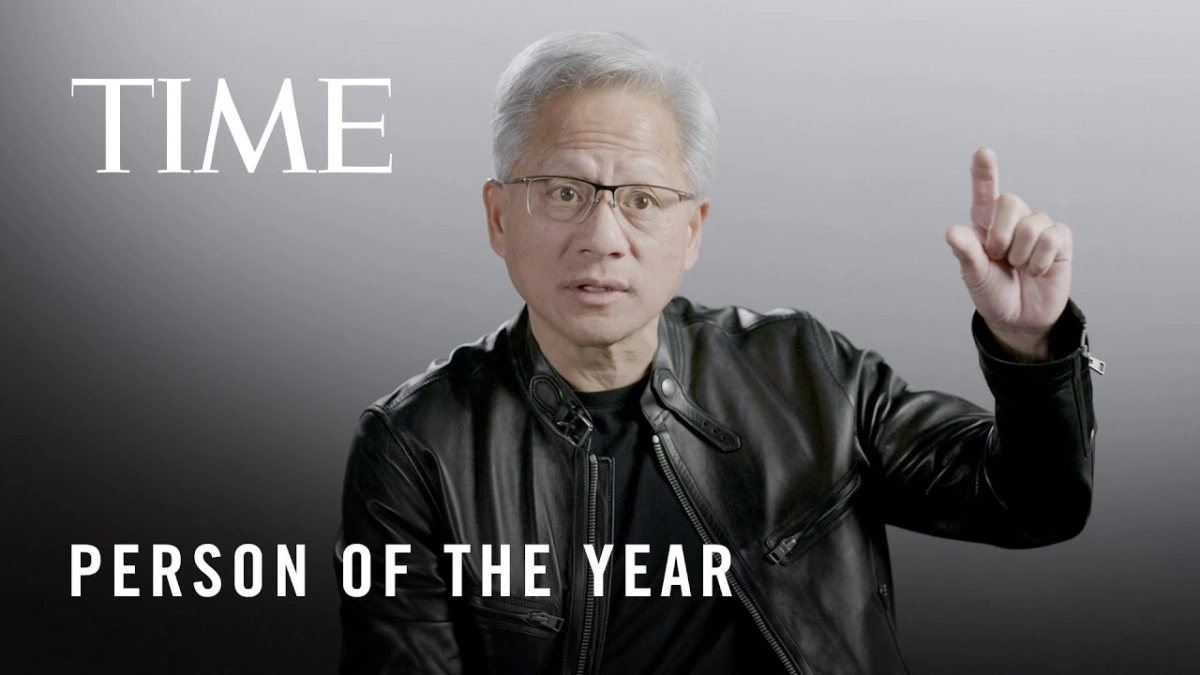
Jensen Huang, President and CEO of NVIDIA, recently spoke with venture capitalists Sarah Guo and Elad Gil on the "No Priors" podcast, providing sharp commentary on the state of artificial intelligence entering 2026. The wide-ranging discussion focused on the rapid advancements in reasoning models, the economic implications of AI on labor, the geopolitical dynamics of open source technology, and the structural shift toward accelerated computing. Huang’s perspective cut through the prevailing market anxieties, positing that far from being a bubble, the industry is undergoing a foundational re-architecture driven by compounding technological improvements.

One of the most encouraging surprises of the preceding year, according to Huang, was the rapid improvement in the fidelity and utility of AI outputs, particularly concerning "grounding" and "reasoning." This leap addressed one of the biggest skeptical responses to early AI models: their tendency toward hallucination and generating unreliable information. The industry has effectively addressed these issues by connecting models to search and routing requests based on confidence levels, significantly improving the quality and accuracy of answers across language, vision, robotics, and autonomous systems.
The plummeting cost of computation is transforming the economics of intelligence. This deflationary trend fuels explosive adoption across every sector.
Huang pointed out that this rapid technological advancement is translating directly into economic viability, particularly in inference. He expressed satisfaction, and even a degree of surprise, that tokens generated by reasoning models are now highly profitable. "I’m so pleased that these tokens are now profitable," Huang stated, noting that some AI-native companies are already achieving 90% gross margins. This profitability is driven by the speed at which inference token generation rates are accelerating, a pace Huang suggested is multiple exponentials faster than the historical benchmark of Moore’s Law. This accelerating cost reduction makes AI adoption inevitable and structurally sound, definitively refuting the "AI bubble" narrative that often accompanies periods of intense technological investment.
Huang framed the current AI acceleration not just as a technological shift, but as the establishment of a new global infrastructure. He categorized data centers as "AI factories," likening them to the transformative infrastructure projects of the past, such as power grids or the internet. These factories require vast physical resources, creating three new classes of industrial plants: chip fabs (like those built by TSMC), sophisticated supercomputer centers (like NVIDIA’s Grace Blackwell systems), and the AI factories themselves. This construction boom is generating an immense, immediate demand for skilled labor across the United States and globally. Huang noted that electricians, plumbers, and network engineers are seeing their paychecks double as they are paid to travel the country to build this new digital infrastructure.
