The technological race for generative AI superiority is quickly transforming from a sprint into a geopolitical marathon, characterized by strategic warnings from industry titans about the immediate threat posed by China’s accelerating global influence. This is not simply a competition for technical benchmarks, but a high-stakes battle over the architecture of the next global digital economy.
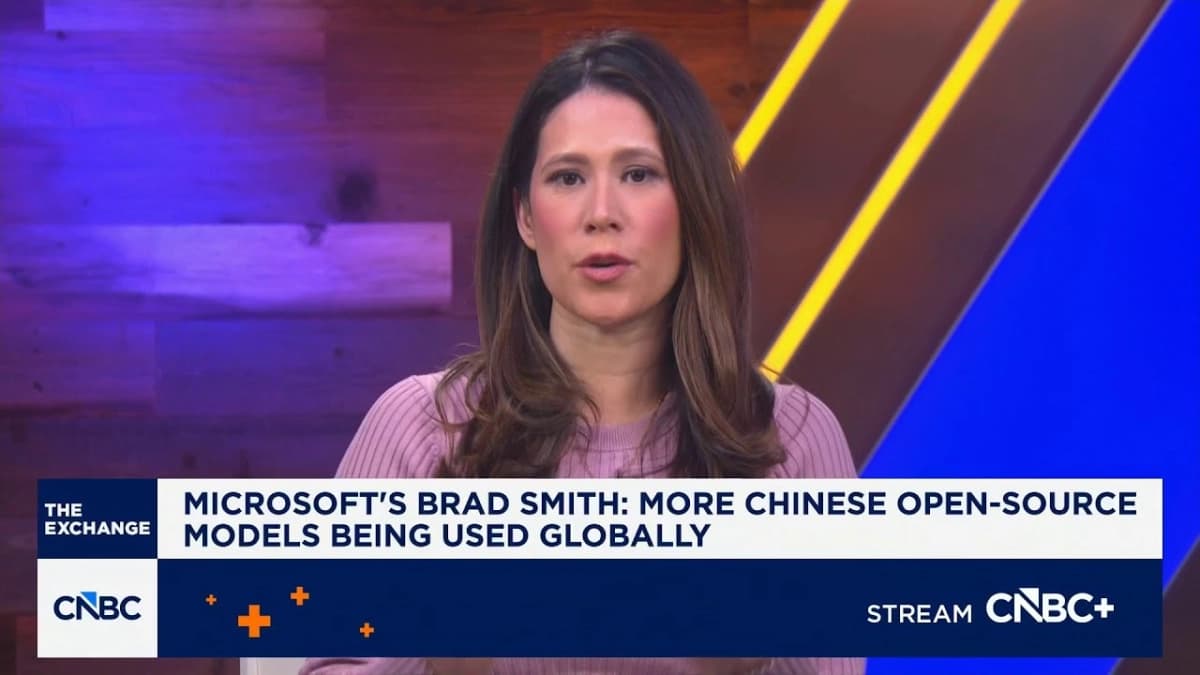
Microsoft President Brad Smith recently articulated a significant concern regarding the accelerating global adoption of Chinese open-source AI models, a message relayed in a conversation with CNBC's Deirdre Bosa. Smith’s commentary focuses on the critical need for the United States to maintain its pace in AI development, cautioning that if the US "slows down, the gap could close faster than anyone expects." This statement serves as a potent reminder to policy makers and industry leaders that the current US lead is neither guaranteed nor immune to rapid erosion.
Bosa highlighted a recent Microsoft report which puts concrete numbers around this geopolitical shift, showing that Chinese open-source models, such as DeepSeek, are gaining substantial traction outside of traditional Western markets. The data reveals stark adoption rates in regions often excluded from US technological spheres: 43% in Russia, 56% in Belarus, and 49% in Cuba. Even in North America, adoption of DeepSeek is estimated at 6 to 10%. This rapid, global dissemination of Chinese open-source technology demonstrates how Beijing is establishing parallel AI ecosystems, providing alternatives to Western-developed models and creating a vector for influence independent of US regulatory or commercial control. For founders building internationally, this means the competitive landscape is fragmenting rapidly along geopolitical lines, forcing difficult choices about model compatibility and regulatory adherence across different markets.
The public nature and timing of Smith’s warning are highly strategic. Bosa characterized the message as a "calculated move," noting that Big Tech is actively "weaponizing national security" to address domestic headwinds. The primary friction points for US hyperscalers today are not technical, but infrastructural—specifically, the regulatory hurdles, utility costs, and local opposition associated with massive AI data center build-outs. In this environment, Big Tech is leveraging the specter of Chinese technological parity to press US regulators and local governments for speed and flexibility. As Bosa observed, "governance becomes the new bottleneck in AI." The message to US policymakers is clear: slow down data center approvals or increase utility costs, and you risk compromising national security by ceding the global AI lead.
This focus on infrastructure and governance is perhaps the most salient insight for the startup ecosystem. The bottlenecks preventing rapid scaling are shifting away from pure R&D and toward resource acquisition—namely, power, land, and regulatory approval. The ability of a startup or major corporation to deploy infrastructure quickly in the US is now intrinsically linked to the perceived urgency of the geopolitical competition.
The dual reality of the US-China AI competition is further complicated by conflicting narratives emanating from Beijing. While Microsoft data confirms Chinese models are gaining global momentum, Chinese executives, including leaders from Alibaba, have recently been publicly downplaying their own domestic progress. This strategic understatement is likely intended to influence export control policies, specifically to ensure continued access to high-performance Nvidia chips, which remain the essential hardware bottleneck for advanced training and deployment. China’s reliance on US-controlled semiconductor technology persists, creating a critical vulnerability that the US continues to exploit through targeted export restrictions. This dynamic forces a complex calculus on both sides: the US must balance stifling China’s technical progress with inadvertently accelerating its reliance on its own open-source models, thereby granting it greater global autonomy. The tension between Chinese open-source global reach and their fundamental dependence on American hardware underscores the multifaceted nature of this technological rivalry.
The core takeaway for high-level tech insiders is that the AI race is not just about who builds the best foundational model, but who controls the infrastructure, the supply chain, and the global distribution channels. China is effectively using open-source models as a means of global adoption and standardization, while US Big Tech is using the threat of Chinese parity as leverage to overcome domestic bureaucratic friction. This is a game where every data center approval and every export restriction is a strategic move on the geopolitical chessboard.