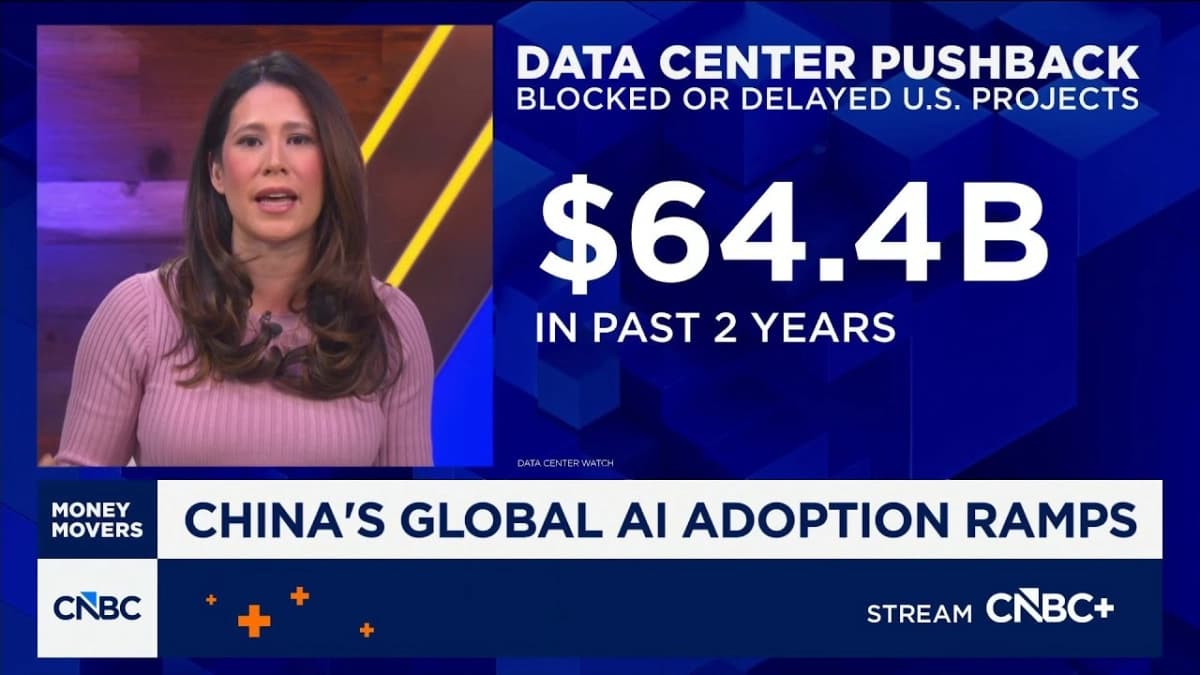
The growing adoption of Chinese open-source AI models globally is forcing a strategic reckoning in Washington, presenting US tech giants with a powerful, if opportunistic, geopolitical narrative to press for domestic regulatory relief. This was the central tension explored in a recent CNBC segment where Deirdre Bosa analyzed Microsoft President Brad Smith’s stark warning regarding China’s accelerating AI penetration, particularly in developing nations.
Microsoft President Brad Smith spoke with CNBC earlier this week about the shifting dynamics in the global AI race, emphasizing the unexpected speed at which Chinese open-source models are achieving international adoption, a trend that directly impacts US strategic necessity and domestic infrastructure policy. Smith highlighted a crucial inflection point, noting that models like DeepSeek are rapidly changing the competitive landscape.
The Microsoft executive did not mince words regarding the geopolitical implications of this spread. Smith stated: "DeepSeek really changed the game a year ago. Right now there are more Chinese open-source models being used, not surprisingly in China and Russia and Iran, but also increasingly across Africa." This assertion, backed by Microsoft's own internal analysis showing significant market share gains for Chinese models, frames the AI contest not merely as a commercial rivalry but as a battle for global technological influence, particularly among nations seeking alternatives to Western platforms.
This geopolitical framing is becoming Big Tech's primary lever against increasing local regulatory friction at home. For the largest US technology companies, the ability to build massive AI-ready data centers quickly is paramount, yet these projects are increasingly facing local pushback over utility costs, power consumption, and environmental impact. According to data cited by Bosa, "more than $64.4 billion worth of U.S. data center projects have been blocked or delayed in the past two years," a figure that has more than doubled in that short timeframe, coinciding directly with the generative AI build-out.
The strategic necessity of maintaining American leadership in AI, therefore, serves as a powerful argument for Big Tech executives to bypass the decentralized, state-by-state opposition that currently hampers their infrastructure expansion. Bosa noted that US Big Tech is talking up the risk of China closing the gap "to press for speed and flexibility" from federal policymakers. The argument is clear: regulatory delays and local resistance in the US directly translate into strategic gains for Beijing and its aligned nations.
The dual messaging strategy employed by major US tech companies is striking. They leverage the threat of Chinese acceleration to secure favorable conditions and speedier approvals in the US, while simultaneously, Chinese tech executives—like those at Alibaba—are reportedly downplaying their own domestic progress. This cautious messaging from Chinese firms is likely aimed at preserving their access to crucial US-made components, particularly advanced Nvidia chips, which remain essential for pushing the frontier of large language models, despite US export controls.
This dynamic creates a complex political and economic environment. The political risks surrounding data center construction—power consumption, water usage, and community impact—have always existed, but the AI era has magnified these concerns, transforming them into perceived national security vulnerabilities. The result is a highly pressurized environment where the narrative of "us versus them"—the US versus China—is being strategically deployed to influence policy at the highest levels, circumventing local regulatory bottlenecks in favor of federal acceleration. The race is less about raw innovation speed and more about who can clear the political and infrastructural path most efficiently.