

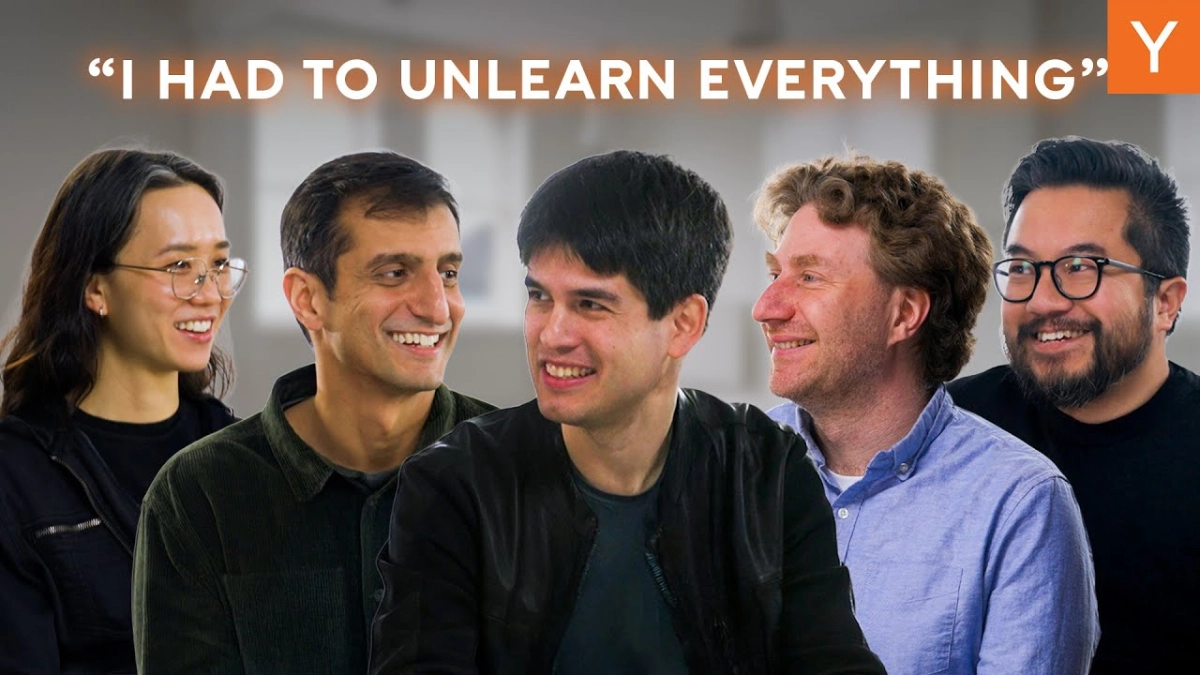
"It is hard as a larger company to reorient and rebuild your company to use AI well." This candid admission from Spenser Skates, co-founder and CEO of Amplitude, encapsulates the central challenge faced by established tech firms in the current AI revolution. During a recent Lightcone podcast, Skates, alongside Y Combinator partners Harj Tagger, Garry Tan, Diana Hu, and Jared Friedman, offered a compelling commentary on Amplitude’s decade-long journey from a YC startup to a public company, focusing particularly on its recent, often arduous, pivot towards becoming AI-native. The discussion illuminated not just the strategic shifts required, but also the profound personal and organizational unlearning necessary for leaders in a rapidly transforming industry.
Amplitude, a leading analytics platform used by giants like Doordash and Walmart, found itself at a critical juncture as the AI wave surged. Skates revealed an initial skepticism within Amplitude, a sentiment shared by many incumbents who viewed early AI applications with a wary eye, dismissing much of it as "grifting." The company, like others, faced external pressure from board members asking, "What's your AI strategy?" However, merely having a strategy proved insufficient. The real transformation began when Amplitude shifted from a top-down mandate to a bottom-up, experimental approach.
This pivot wasn't without its internal friction. Skates candidly spoke of the "frustrating" experience of being told by those outside the engineering and product teams to "do more of this AI thing" without a deep understanding of its capabilities or limitations. The turning point arrived in late 2024, when the transformative potential of AI on software engineering became undeniable. "No question, if you were using... Cursor, but then, you know, all these other amazing tools... it was very clear that you would be a lot more productive using these things," Skates affirmed, referencing the impact of AI-powered coding assistants. This marked a shift from skepticism to conviction, driven by tangible productivity gains.
To accelerate this transition, Amplitude brought in key "change agents", new engineering leadership like Wade Chambers and acquired Command AI, a YC company. These additions were instrumental in fostering a culture of experimentation and leveraging AI's capabilities from the ground up. This highlights a core insight: successful AI integration often requires not just new technology, but new talent and a willingness to embrace external expertise that challenges existing paradigms.
Skates drew a sharp distinction between building products in the traditional SaaS model and the emerging AI-native approach. "In SaaS, it's the best business model and the best product delivery system of all time. You go to your customers, you ask them what they want and what they're going to pay for, you prioritize that list and you start building it." This predictable, customer-driven cycle contrasts starkly with AI. AI capabilities are "jagged," meaning they excel in some areas while being "absolutely terrible" in others. This demands a "technology-first understanding of what is possible," rather than simply fulfilling explicit customer requests. Customers often cannot articulate what they want from AI, beyond a "faster horse."