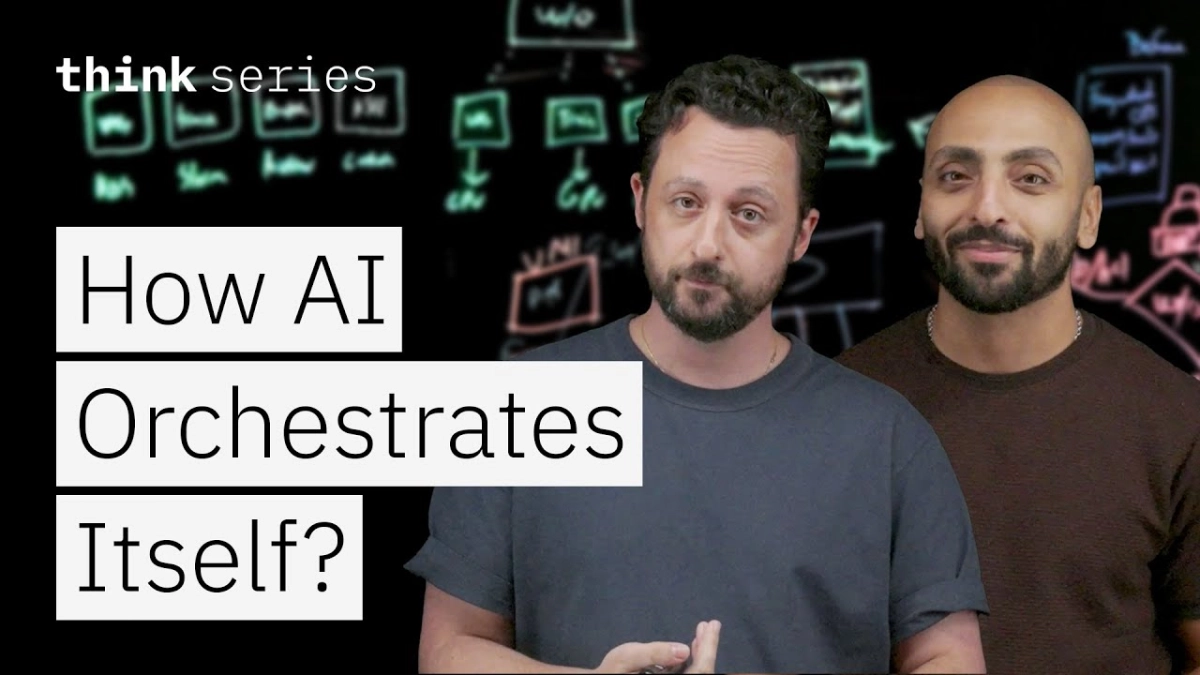
The sheer velocity of AI innovation demands an infrastructure that can adapt, not just scale. At IBM's TechXchange in Orlando, Solution Architect David Levy and Integration Engineer Raafat "Ray" Abaid illuminated the critical need for a paradigm shift in how AI and machine learning workloads are managed, moving beyond the traditional automation paradigms. Their discussion centered on flexible orchestration, a concept promising to streamline complex AI deployments and future-proof enterprise infrastructure.
Ray starkly illustrated the inefficiencies of manual application deployment across virtual machines. "Imagine you need to run application on a fleet of servers," he began, sketching multiple VMs. The process involves logging into each server, deploying the same application repeatedly, and then troubleshooting individually if issues arise. This "very manual process" is not merely time-consuming but inherently prone to human error, particularly in complex, distributed environments.
Workload orchestration emerges as the antidote to this operational friction. Levy emphasized that an orchestrator automates deployment, scaling, and resiliency, handling these critical functions "all automatically." This foundational shift eliminates human intervention, transforming what was once a crisis into "business as usual" when a server fails, as the orchestrator autonomously detects, re-provisions, and restores the workload to its desired state.
While Kubernetes is lauded as an "amazing tool" for managing containerized microservices, its design, optimized for long-running, stateless services, presents limitations for the dynamic nature of AI/ML workloads. Ray highlighted that a single Kubernetes deployment typically involves multiple YAML files—for config maps, secrets, storage, and the deployment itself—each requiring specific configuration. This overhead, while manageable for traditional applications, becomes a significant hurdle in the rapidly evolving AI landscape.
The conventional approach to AI operations often devolves into a fragmented nightmare. David outlined a scenario where different teams—web, training, batch, and ML inference—each rely on distinct toolsets: Kubernetes for web apps, Slurm for training, Airflow for batch pipelines, and custom SSH scripts for inference. This results in "four teams, four toolsets, and four totally different sets of expertise." Such disparate systems lead to complex namespaces, resource quotas, and a diagnostic headache when something inevitably breaks. "Good luck figuring out which system is the problem," he quipped, underscoring the operational burden.
Flexible orchestration offers a unified paradigm, consolidating these disparate operations into a single, cohesive platform. Instead of managing multiple clusters and specialized tools, organizations can leverage one workload orchestrator to manage web applications, ephemeral training jobs requiring GPUs, and scheduled inference services. This centralizes control and simplifies the operational stack dramatically.
This unified approach means data scientists can schedule their own training jobs in minutes, not days, without needing to file tickets or wait for DevOps approval. DevOps teams, in turn, can focus on a single, well-understood platform, streamlining troubleshooting with a unified set of logs. This translates to profound efficiency gains and reduced operational overhead.
The critical advantage lies in its adaptability. As AI breakthroughs continue to emerge—from transformer models eight years ago to GPT-level inference three years ago—flexible orchestration ensures that organizations don't need to "rebuild your infrastructure." Instead, they simply write a new job specification, defining the workload's resource requirements (CPU, GPU) and deployment strategy. This operational simplicity, without sacrificing capability, is paramount for navigating the unpredictable trajectory of AI innovation.
The traditional model of fragmented operations and specialized tools creates significant friction. Flexible orchestration unifies these disparate elements, fostering a more efficient and adaptable AI ecosystem.
Ultimately, the shift to flexible orchestration is not just about technical optimization; it's about enabling agility and resilience in an era defined by rapid technological change. It allows enterprises to harness the full potential of AI and ML without being encumbered by the complexities of their underlying infrastructure.