• StartupHub.ai
    StartupHub.aiAI Intelligence
Discover
  • Home
  • Search
  • Trending
  • News
Intelligence
  • Market Analysis
  • Comparison
  • Market Map
Workspace
  • Email Validator
  • Pricing
Company
  • About
  • Editorial
  • Terms
  • Privacy
  • v1.0.0
  1. Home
  2. News
  3. The Unseen Threat In Your Browser Why Ai Demands A Security Reckoning
Back to News
Ai video

The Unseen Threat in Your Browser: Why AI Demands a Security Reckoning

StartupHub.ai Staff
StartupHub.ai Staff
Dec 17, 2025 at 1:18 PM4 min read291
The Unseen Threat in Your Browser: Why AI Demands a Security Reckoning

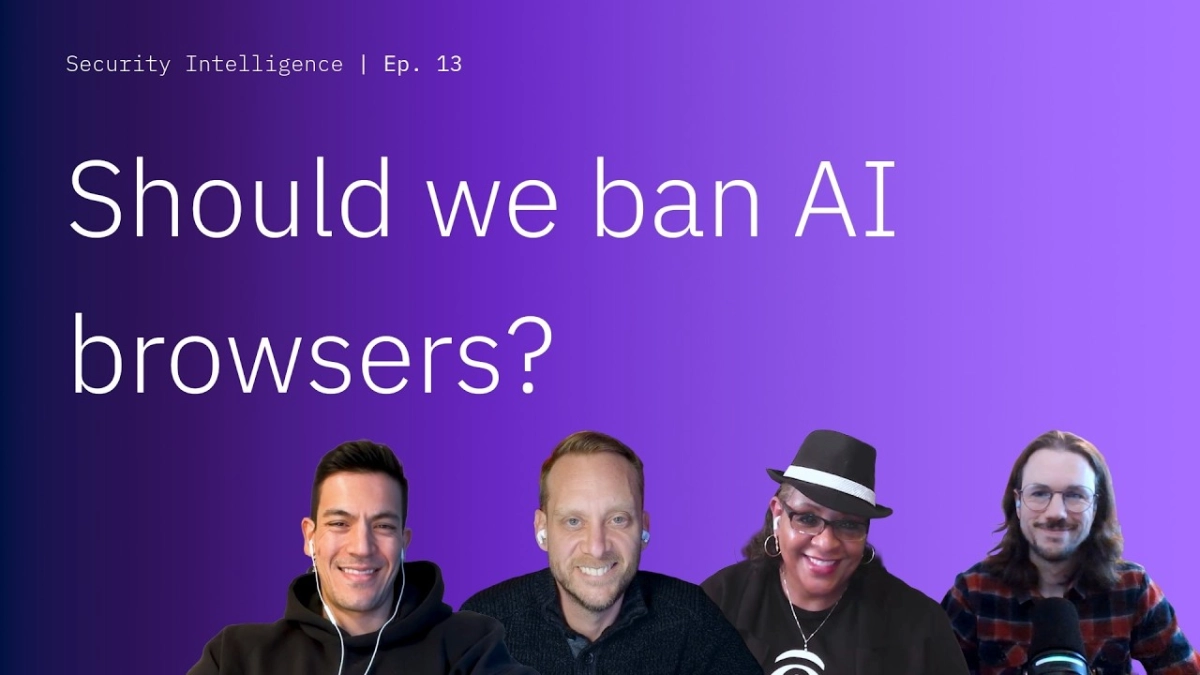
Gartner’s recent advisory, urging organizations to ban AI browsers from the workplace, has ignited a critical conversation within the cybersecurity community. This provocative stance, explored in a recent episode of IBM’s Security Intelligence podcast by host Matt Kosinski and panelists Austin Zeizel, Evelyn Anderson, and Ryan Anschutz, underscores a fundamental tension: the rapid innovation of AI against the lagging pace of its security frameworks. The core concern, as articulated by Kosinski, is that "sensitive personal and corporate data can end up with the AI services that power these things, and also that you have an AI agent right there in the browser who might have some access to corporate systems and maybe mess with some things they shouldn't or be weaponized by malicious actors."

This isn't merely theoretical. The panelists highlighted the immediate, tangible dangers, citing research from Star Labs detailing a zero-click exploit against Perplexity AI’s Copilot that could, with a simple email, wipe a user's Google Drive. "One malformed prompt and your entire Google Drive is gone," Ryan Anschutz starkly illustrated the immediate, catastrophic potential of weaponized AI browsers. This incident illuminates how AI-powered tools, designed for convenience, can inadvertently become potent vectors for attack, capable of executing complex automation without explicit user approval. The ability of these integrated AI agents to "read, write, click, delete" without accountability dramatically expands the "blast radius" of potential breaches, shifting the cybersecurity conversation from traditional phishing and malware to a new frontier of autonomous digital sabotage.


The underlying issue is the nascent state of AI security. Austin Zeizel characterized Gartner’s advisory not as alarmist, but "rather pragmatic." He elaborated, "Until vendors mature their security posture, we're going to see a lot of issues with AI browsers, and organizations should really enforce strict policies on AI browser use, especially in regulated sectors." This maturity gap means that features intended to enhance user experience often come with unforeseen security vulnerabilities, such as prompt injection and data exfiltration. The rapid deployment of these tools, without sufficient time for thorough security hardening and standardized testing, creates fertile ground for exploitation. Zeizel drew an analogy to early operating system updates, where users often wait for the "1.1 version" to iron out initial bugs and security flaws before widespread adoption. This cautious approach, he suggested, is even more critical for AI browsers given their inherent access to vast quantities of user data and system functionalities.

This challenge extends beyond individual products to the broader ecosystem of AI development and cybersecurity collaboration. Evelyn Anderson emphasized the critical need for a unified effort. "I think it's going to take a collaborative effort between multiple bodies to figure out what is the right approach," she stated, highlighting the current reactive stance. She noted that the cybersecurity community is still "scrambling, trying to figure out what should and shouldn't be in place," often resorting to "pulling rabbits out of a hat" rather than relying on established, proactive measures. This sentiment points to a significant void in governance and shared intelligence across the industry, with a lack of standardized frameworks for detecting misuse, notifying victims, or sharing vital threat intelligence between AI providers and defenders.

The discussion also touched upon the persistent nature of decades-old software flaws, as evidenced by MITRE’s 2025 CWE Top 25 list, where injection attacks and missing authorization continue to dominate. This suggests that even as new AI-specific vulnerabilities emerge, foundational security hygiene remains a critical, often overlooked, battleground. The concern is that AI tools, if not properly secured, could exacerbate these existing vulnerabilities, making them more potent and widespread. For instance, an AI browser with broad permissions and access to multiple social logins could turn a single credential compromise into a widespread data breach, amplifying the impact of what might have once been an isolated incident. Similarly, the convenience of social logins, while simplifying user experience, introduces a "single point of failure" that can have cascading effects across multiple online accounts if compromised. Ryan Anschutz aptly noted that attackers are increasingly targeting "account linking and recovery flows," exploiting the backdoors rather than the front.

Ultimately, the consensus among the experts was clear: the current approach to AI security is insufficient. Austin Zeizel stressed that defenders must "map this list to their technology stack, focus on automation, detection, and prioritizing education for their engineers and developers." He concluded that this list should be viewed as "a board-level strategic risk tool," underscoring that without a unified, proactive, and collaborative approach to secure-by-design principles, organizations are effectively handing adversaries a blueprint for exploitation. The integration of AI into core digital infrastructure demands not just technological advancement, but a parallel evolution in security practices, governance, and inter-organizational cooperation to safeguard against the expanding threat landscape.

#AI
#AI browser bans
#Artificial Intelligence
#Technology

AI Daily Digest

Get the most important AI news daily.

GoogleSequoiaOpenAIa16z
+40k readers