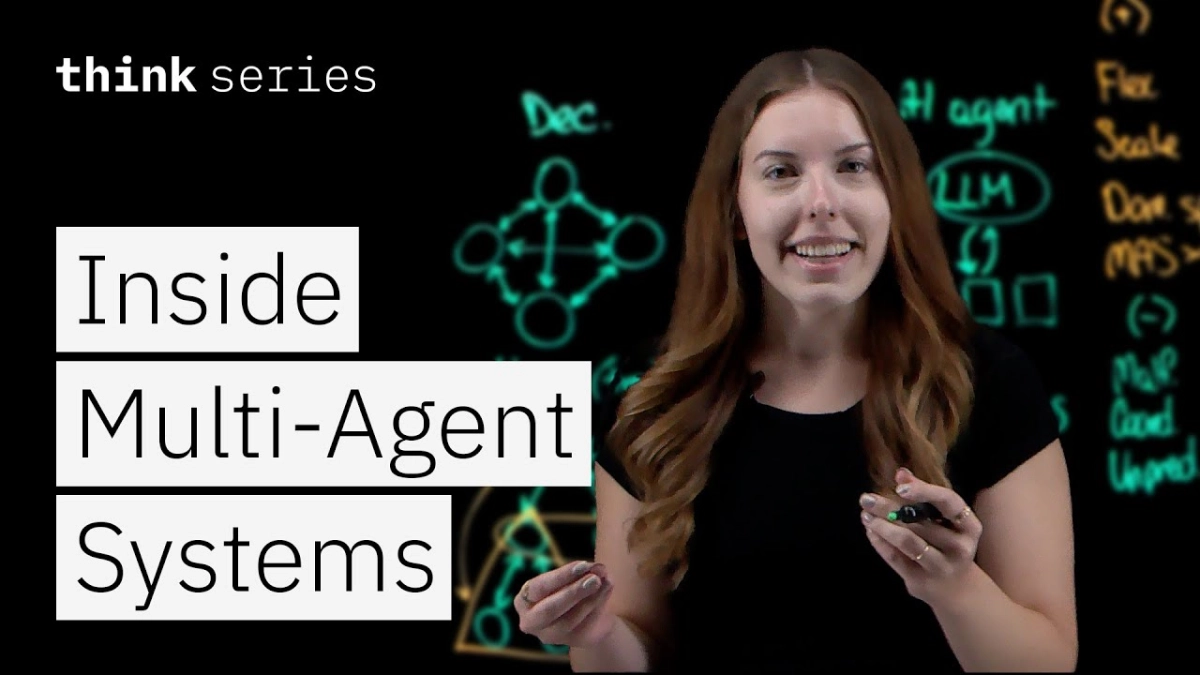
The notion that multiple, specialized AI agents can collectively outperform a single, monolithic system represents a significant shift in artificial intelligence development. Anna Gutowska, an AI Engineer at IBM, articulates this concept with clarity, illustrating how "many simple AI agents, each with a small job, coming together to solve big, complex problems." This paradigm, known as multi-agent systems, promises to unlock new levels of AI capability, moving beyond the limitations of individual large language models (LLMs) to tackle challenges requiring diverse expertise and adaptive collaboration.
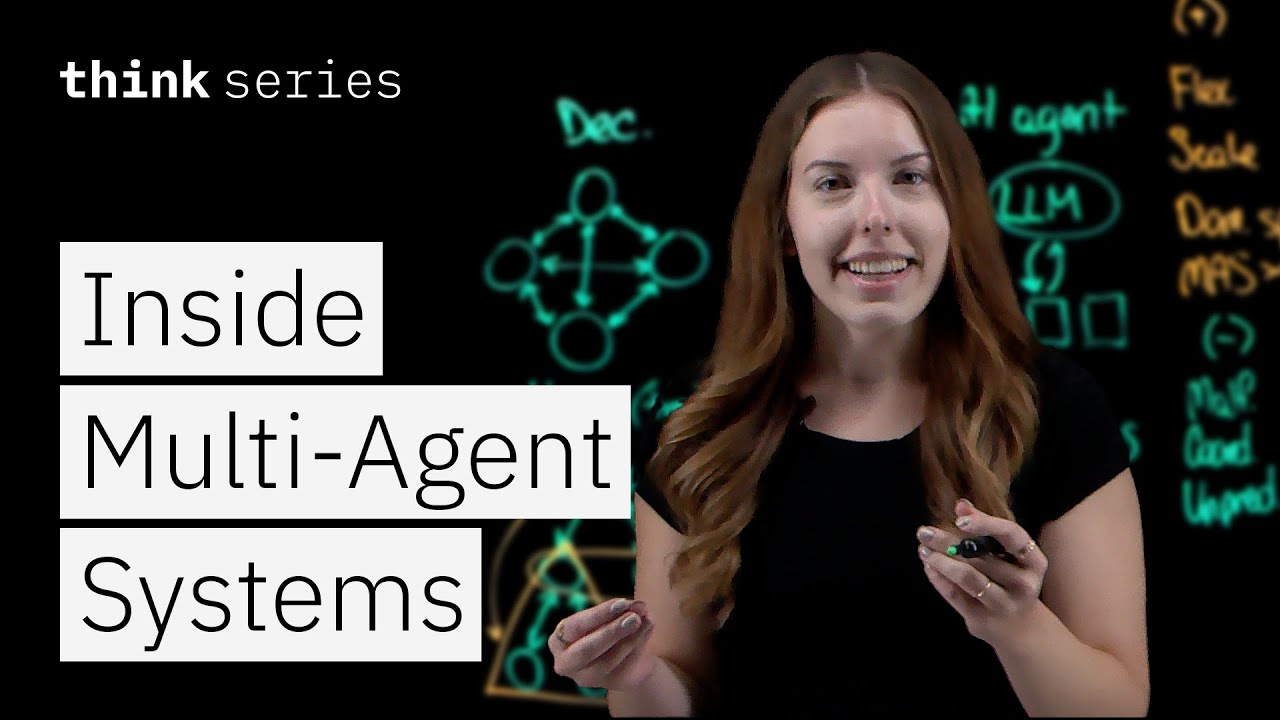
Anna Gutowska, in her explanatory video for IBM, delves into the fundamental mechanics and architectural considerations of multi-agent systems, outlining their advantages and inherent challenges. She clarifies that an individual AI agent is an "autonomous system that can perform tasks on behalf of another agent or another system by designing its workflow and using available tools." The efficacy of such an agent hinges on its underlying LLM, its available toolset, and a robust reasoning framework that dictates how it processes tool outputs to make decisions.
Multi-agent systems elevate this individual agent capability by enabling agents to remain autonomous while cooperating and coordinating within structured environments. These structures typically fall into two categories: decentralized networks and hierarchical systems. In a decentralized network, multiple AI agents communicate and share information with one another, each operating with an equal degree of authority. This peer-to-peer exchange fosters a collective decision-making process, akin to a collaborative brainstorming session where every participant contributes equally to the outcome.
Conversely, hierarchical structures organize agents in a tree-like fashion, with varying levels of autonomy and authority. A supervisor agent might hold decision-making power over several subordinate agents, which in turn manage their own worker agents. This top-down approach can be uniformly distributed, where agents at the same level share identical roles and authority, or dynamically distributed, where authority shifts based on an agent’s expertise or the situational context. This structured delegation allows for the breaking down of complex responsibilities, with higher levels coordinating and lower levels executing specific tasks.
The advantages of deploying multi-agent systems are compelling for founders and tech insiders alike. Foremost among these is flexibility. Such systems can readily adjust to dynamic environments by adding, removing, or adapting agents as needed, offering a resilience rarely found in single-agent architectures. This adaptability is critical in fast-evolving operational landscapes, from defense applications to complex supply chain management.