• StartupHub.ai
    StartupHub.aiAI Intelligence
Discover
  • Home
  • Search
  • Trending
  • News
Intelligence
  • Market Analysis
  • Comparison
  • Market Map
Workspace
  • Email Validator
  • Pricing
Company
  • About
  • Editorial
  • Terms
  • Privacy
  • v1.0.0
  1. Home
  2. News
  3. Superhuman Cto Loic Houssier On The Future Of Ai Native Email
Back to News
Ai video

Superhuman CTO Loïc Houssier on the Future of AI-Native Email

StartupHub.ai Staff
StartupHub.ai Staff
Dec 11, 2025 at 4:16 AM4 min read226
Superhuman CTO Loïc Houssier on the Future of AI-Native Email

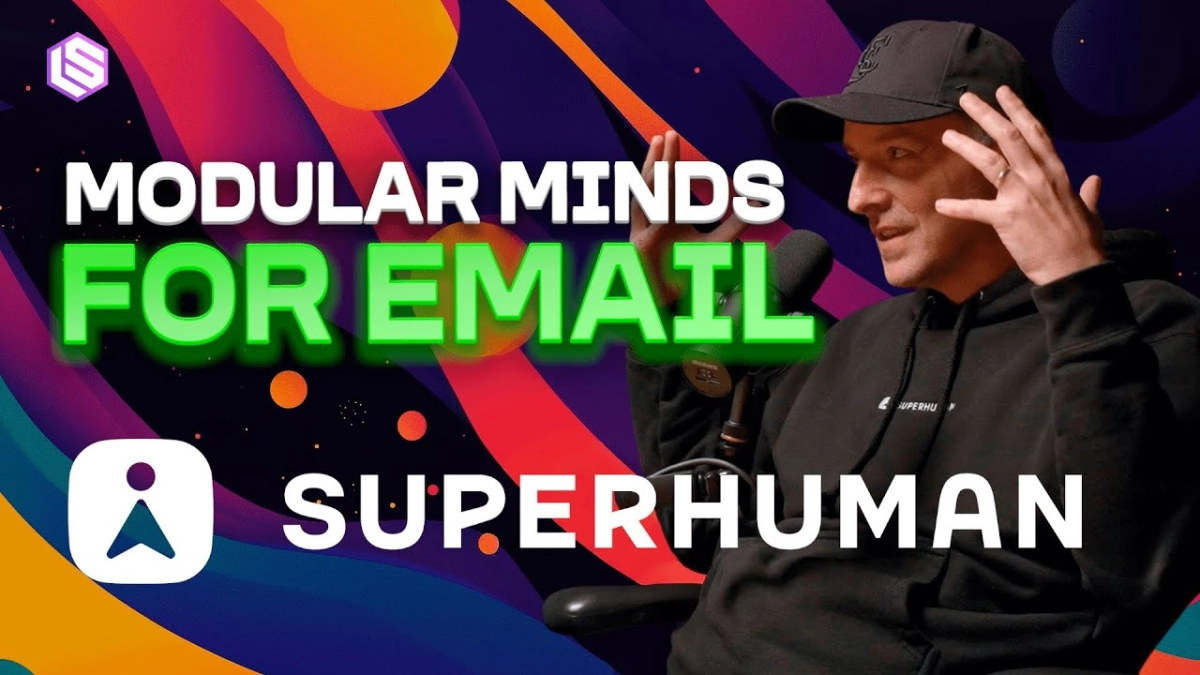
Loïc Houssier, CTO of Superhuman Mail, recently joined Alessio Fanelli and Swyx on the Latent Space podcast to discuss the profound shifts AI is bringing to the world of email and communication. Houssier, whose diverse career spans applied cryptography in France’s defense industry, optimizing nuclear submarine workflows, and selling his e-signature startup to Docusign, offers a unique perspective on the evolution of technology and user experience. His insights underscore a core belief: the inbox is poised to become the ultimate AI agent, transforming how we interact with information and each other.

Houssier immediately dives into a provocative question: "What's even the need to write?" He observes a generational shift where younger demographics prefer visual and auditory content over text, opting for TikTok videos summarizing articles rather than reading the articles themselves. This trend suggests a future where communication may become predominantly vocal, challenging the traditional paradigms of email. Superhuman's vision for AI-native email is rooted in this understanding, aiming to integrate AI seamlessly without adding latency or friction. The goal is to enhance productivity through features like auto-labels, smart summaries, follow-up nudges, and "Ask AI" search over an entire email history.

A core insight woven throughout Houssier's commentary is the distinction between designing "tools" versus "agents." Superhuman focuses on building specific tools that agents can leverage, rather than trying to create a single, all-encompassing AI. This approach helps combat "agent laziness" and ensures that the AI delivers precise, context-aware assistance. For instance, instead of asking an agent to draft an email that then requires human refinement, Superhuman aims for a system where the draft is "already ready," requiring only a single click to send. This meticulous focus on reducing cognitive load and maximizing efficiency is paramount. Houssier highlights how this philosophy extends to features like auto-detecting emails requiring a reply and proactively drafting follow-ups, or even finding specific information buried in years of correspondence, saving users precious time.


Houssier also touched upon his unique career journey, including a year working with nuclear submarines in a non-technical role. This experience, he explains, forced him to shed his "technical legitimacy" and ego, fostering a deep curiosity about how people work and how processes can be improved. This period of stepping back from pure tech to focus on process and human interaction profoundly shaped his approach to product development. He applies this empathetic understanding to Superhuman, striving to build AI features that genuinely assist users without getting "in your way."

Regarding the underlying infrastructure, Houssier explains Superhuman’s pragmatic approach to model selection, evaluating offerings from OpenAI, Anthropic, Gemini, and open models based on canonical queries and end-to-end evaluations. A critical test, dubbed Rahul Vohra's "what wood was my table?" query, exemplifies the need for highly specific and accurate historical data retrieval. Superhuman prioritizes quality and reliability, acknowledging that while large language models are powerful, they are not universally adept at all tasks, especially those involving precise date reasoning or complex data aggregation. To address this, they employ a hybrid search strategy, combining semantic search with deep, paginated searches across extensive email histories stored locally on devices for speed and offline functionality. "Everything needs to be local," Houssier asserts, emphasizing the critical importance of sub-100ms response times for a truly superhuman user experience.

The conversation also delved into the economics of AI, where Houssier notes a shift from thinking in terms of "price-per-million tokens" to "price-per-trillion tokens," indicating the massive scale of inference. Superhuman leverages Baseten's "box" pricing model over per-token pricing to manage costs predictably while maximizing computational efficiency. This strategic infrastructure choice supports their ambitious vision of the inbox evolving into a powerful AI Executive Assistant, capable of auto-drafting replies in a user's voice, scheduling on their behalf, and acting as the ultimate private data source, especially when integrated with other platforms like Grammarly and Coda, as envisioned post-acquisition. Houssier concludes by highlighting the evolving AI-dev culture within Superhuman, where rapid tool adoption and tracking AI usage on pull requests have significantly boosted engineering productivity.

#AI
#Artificial Intelligence
#Technology
#The Future of

AI Daily Digest

Get the most important AI news daily.

GoogleSequoiaOpenAIa16z
+40k readers