

“This is the beginning of a future where most new data centers are being built in space.” So declared Philip Johnston, Co-founder and CEO of Starcloud, following his company’s historic launch of a satellite carrying an NVIDIA H100 GPU into orbit. This bold statement, delivered during an interview with Aaron Epstein, General Partner at Y Combinator, at Starcloud’s Redmond, Washington headquarters, encapsulates the ambitious vision driving the startup: to revolutionize AI compute by relocating data centers to outer space. The discussion, which also featured co-founders Ezra Feilden and Adi Oltean, laid bare the profound implications of this endeavor for the future of artificial intelligence and global infrastructure.
Starcloud’s pioneering move addresses a looming crisis in terrestrial data centers: their insatiable demand for energy, land, and, critically, fresh water for cooling. As AI models grow exponentially, so does the environmental footprint of the compute infrastructure supporting them. Ezra Feilden highlighted this, stating, “We're seeing an absolute tidal wave of demand for energy…primarily for data centers.” Terrestrial data centers consume vast amounts of fresh water through evaporation to dissipate heat, a practice becoming unsustainable in many regions. In space, Starcloud envisions a solution that leverages constant solar energy and the cold vacuum of deep space for passive radiative cooling. This innovative approach promises zero fresh water usage and significantly lower carbon emissions, offering a pathway to almost indefinite scalability unconstrained by Earth's finite resources.
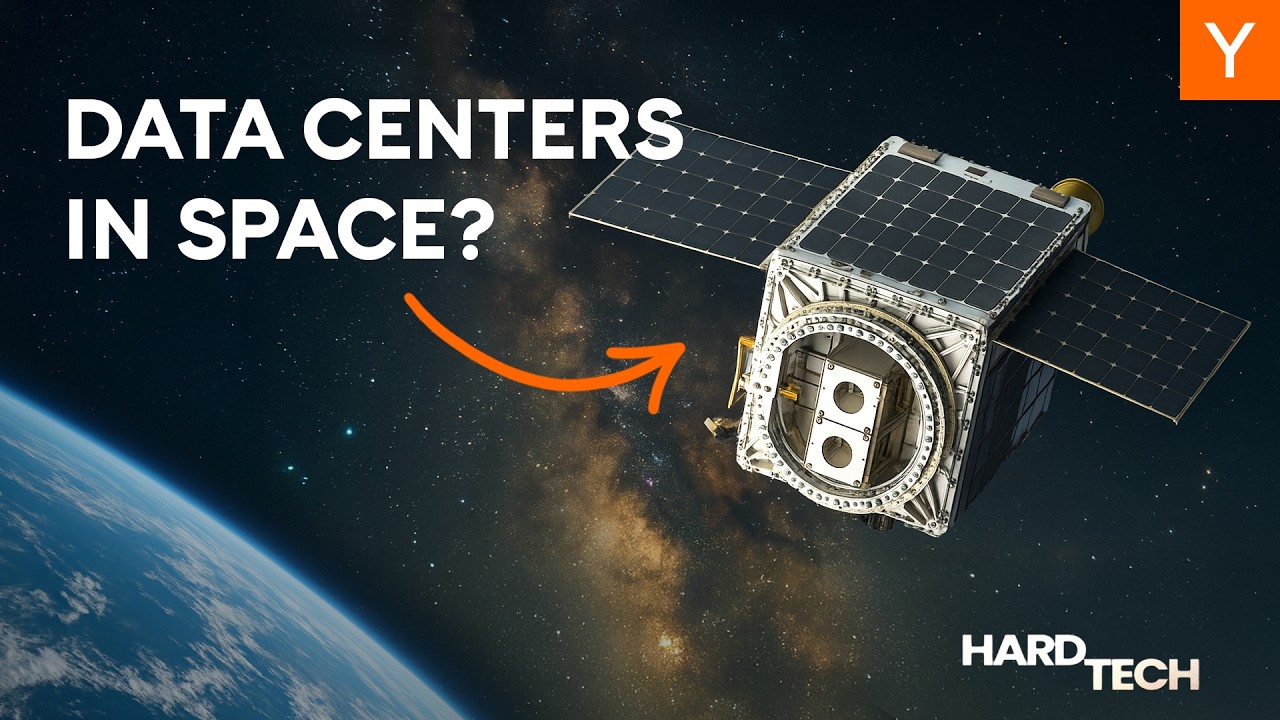
The immediate objective of Starcloud’s recent launch was not to establish a fully operational orbital data center, but rather to validate the core technological premise. Philip Johnston clarified, "The purpose of this is really to prove that our thermal management and radiation shielding techniques allow us to operate the state-of-the-art in space." Successfully deploying an NVIDIA H100 GPU, a powerful, data-center-grade component, into the harsh radiation environment of space and ensuring its stable operation is a critical first step. Adi Oltean, the Chief Engineer, elaborated on the intricate engineering involved in enabling these chips to function reliably in such extreme conditions. Their initial satellite, a 60-kilogram unit the size of a small fridge, serves as a crucial prototype, demonstrating that Earth-bound hardware can indeed thrive beyond the planet’s protective atmosphere.
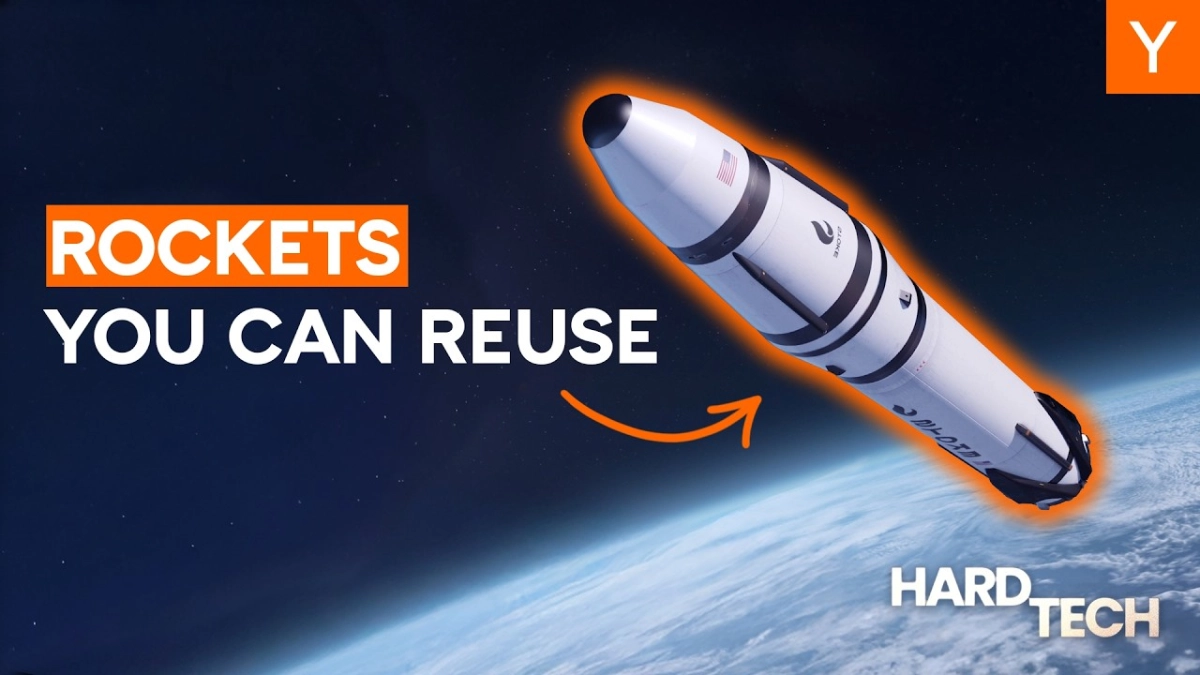
The long-term vision extends far beyond a single satellite. Starcloud aims to construct massive orbital data centers, potentially full 40-megawatt installations that are 100 tons in weight, capable of rivaling the world's largest terrestrial facilities. These colossal structures would harness uninterrupted solar power and radiate heat directly into deep space, eliminating the need for vast land tracts, complex grid connections, and freshwater cooling systems. Such a paradigm shift could dramatically reduce the operational costs of AI compute, making it more accessible and sustainable. The feasibility of this grand scale is underpinned by the rapidly decreasing costs of space launch, driven by innovations from companies like SpaceX and Stoke Space. This reduction in launch expenses is a key enabler, transforming what was once a theoretical possibility into a tangible business opportunity.
Despite the inherent technical challenges, Starcloud’s founders exhibit a clear-eyed understanding of the risks and rewards. Philip Johnston articulated their philosophy: "It's easier to build a hard company than it is to build an easy company. There's one hard thing, which is, can we operate data centers in space cheaply? If we can do that, everything else is easier." This perspective suggests a strategic acceptance of high technical risk in pursuit of a fundamentally transformative solution, betting that overcoming this singular, monumental hurdle will unlock a cascade of easier successes across market adoption, talent acquisition, and fundraising. Their complementary backgrounds, Johnston's software and theoretical physics, Oltean's two decades in data centers and SpaceX, and Feilden's expertise in satellite design, provide a robust foundation for tackling such a multi-faceted challenge.