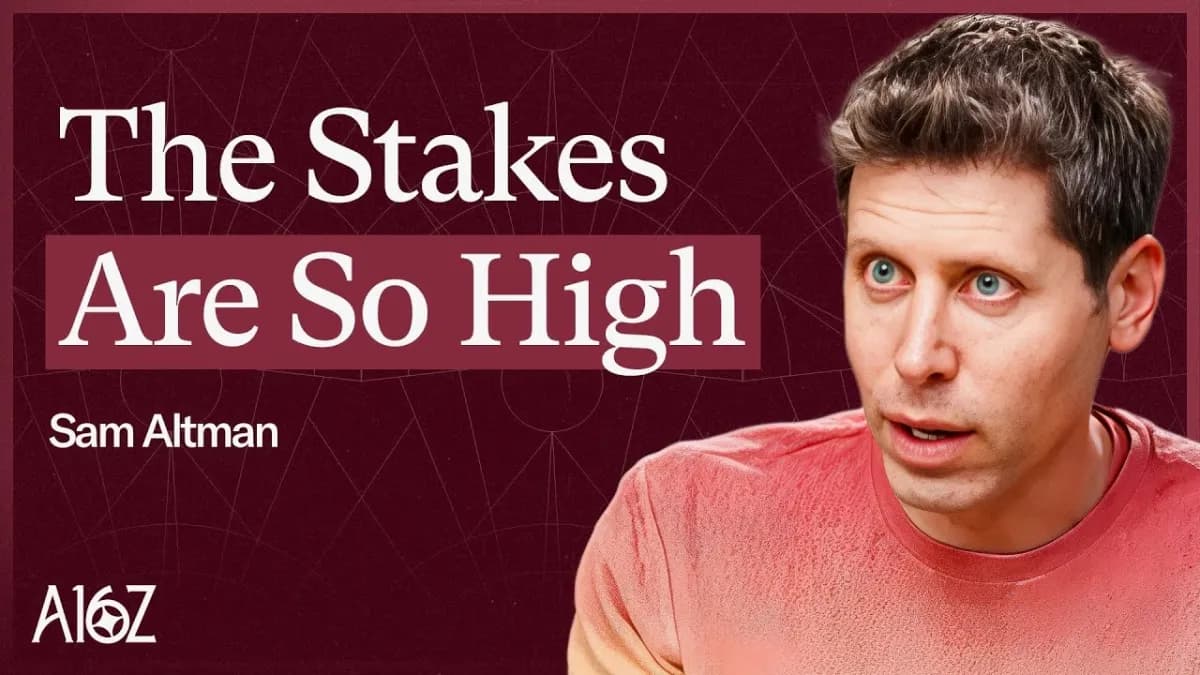
OpenAI CEO Sam Altman, in a recent a16z podcast interview with Ben Horowitz and Erik Torenberg, revealed a candid evolution of his thinking on the future of artificial intelligence, particularly regarding vertical integration, the strategic release of frontier models, and the transformative potential of AI as a scientific engine. Altman, a figure often perceived as a visionary, confessed a significant shift in his long-held beliefs, acknowledging the "terrifying" scale of AI development necessitates a departure from traditional tech industry models.
Early in the discussion, Altman outlined OpenAI’s multifaceted structure, describing it as a "combination of four companies" encompassing consumer technology, mega-scale infrastructure, a research lab, and new hardware ventures. The core mission, he reiterated, is to build AGI and make it "very useful to people," envisioning a future where individuals have their own personal AI subscriptions. This ambitious goal, however, demands an unprecedented level of infrastructural investment, leading Altman to a pivotal realization. He admitted to previously being "always against vertical integration," but now concedes, "I now think I was just wrong about that." The sheer complexity and interconnectedness of developing advanced AI models, operating the vast computational resources required, and integrating them into user-facing products necessitates a tightly controlled, end-to-end approach, much like Apple's successful strategy with the iPhone.
One of the most striking insights from Altman concerned the strategic release of powerful, albeit unfinished, models like Sora. Far from being a mere product launch, Sora's public debut was framed as a deliberate act of "societal co-evolution." Altman emphasized that the world needs to "contend with incredible video models that can deepfake anyone" long before they are fully mature, allowing for collective adaptation and the development of necessary safeguards. This proactive approach aims to bridge the "capability overhang" – the gap between what AI can do and public perception – ensuring society can grapple with the ethical, social, and economic implications in real-time, rather than being caught off guard by a "big bang" singularity. He also underscored the intrinsic value of creating "cool products" that foster "fun, joy, and delight" along the way, recognizing that human engagement is crucial for this co-evolution.
Altman expressed profound excitement about the advent of "AI scientists." He views the ability of AI to independently conduct scientific research and make novel discoveries as a "real change to the world." While acknowledging that current models are only showing "little, little examples" of this, such as GPT-5 making minor mathematical or biological breakthroughs, he believes this capability will accelerate dramatically. He anticipates that within "two years," AI models will be undertaking "bigger chunks of science and making important discoveries." This acceleration of scientific progress, he argues, is the single most impactful factor for improving humanity's quality of life, far outweighing concerns about AI-induced job displacement or other societal shifts.
Reflecting on the rapid advancements in deep learning, Altman confessed a sense of continuous surprise. He recalled believing that the discovery of scaling laws for language models was a "giant secret" they were unlikely to repeat, only to witness "breakthrough after breakthrough." The "capability overhang" is so immense, he noted, that even the original ChatGPT now feels primitive. This relentless progress underscores the need for constant re-evaluation and adaptation, not just for technology developers but for society at large.
OpenAI's extensive network of partnerships with chip manufacturers like AMD and Nvidia, and infrastructure providers like Oracle, reflects the immense computational demands of their mission. This aggressive infrastructure bet is crucial, as Altman explained, to avoid "painful decisions" about allocating limited GPU resources between research and product development. He highlighted the need for a collaborative industry effort, from "electrons to model distribution," to support the scale required for AGI. He also shared a personal reflection on his journey, admitting that his prior experience as an investor made him "not naturally someone to run a company," but his current role has provided invaluable lessons in operationalizing complex agreements and managing a rapidly expanding enterprise.