Reflection AI CEO Navigates Open Intelligence, Geopolitics, and the AI Funding Frenzy

Oct 9, 2025 at 3:47 PM3 min read
Reflection AI CEO:

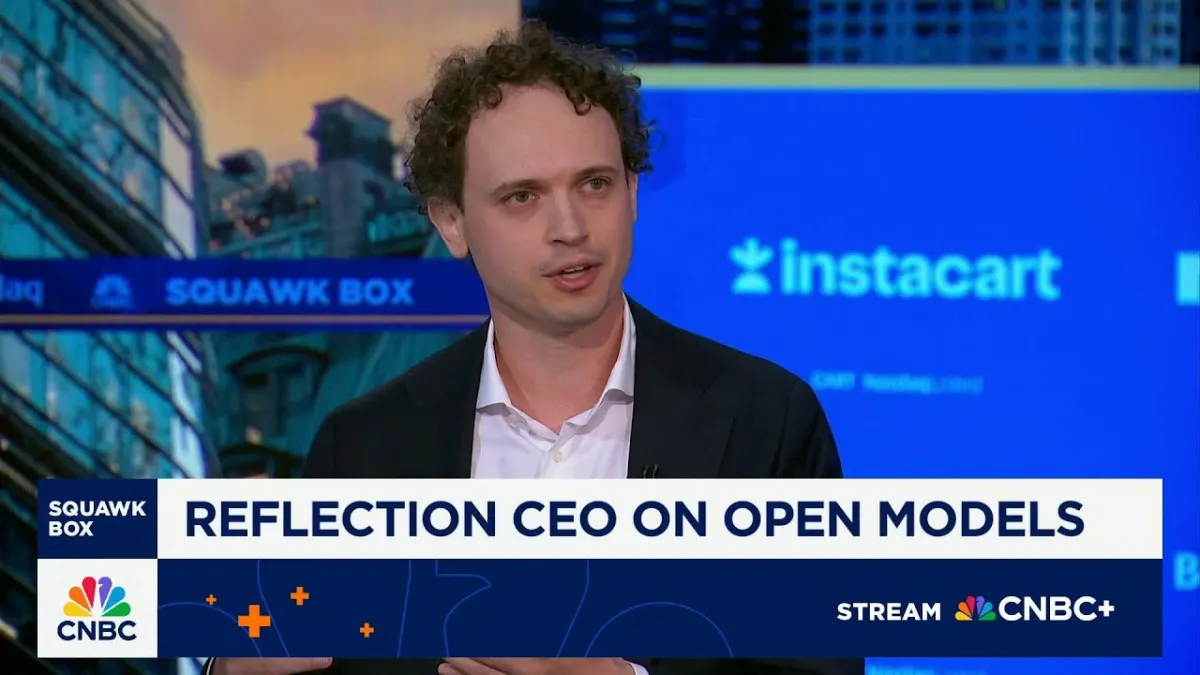
Misha Laskin, co-founder and CEO of Reflection AI, recently painted a vivid picture of the artificial intelligence landscape, describing it as a "modern-day Sputnik moment." His insights, shared during an interview on CNBC's Squawk Box, offered a strategic perspective on the AI ecosystem following Reflection AI's substantial $2 billion Series B funding round. The conversation, which also touched upon Nvidia CEO Jensen Huang's views, delved into the intricacies of AI investment, the imperative of open intelligence, and the geopolitical dimensions of the unfolding AI tech race.

Laskin spoke with Andrew Ross Sorkin on CNBC, immediately following a segment featuring Nvidia CEO Jensen Huang. The discussion provided a high-level overview of Reflection AI's recent funding success, the prevailing concerns regarding circular investments within the AI sector, and the company's core mission to build a frontier open intelligence platform for a more inclusive AI ecosystem.

Jensen Huang, earlier in the broadcast, articulated the foundational elements of AI, stating, "AI is energy, AI is chips, the models, and the applications." This holistic perspective underscores Nvidia's pervasive influence across the entire AI stack, naturally positioning the chip giant as a key investor in burgeoning AI startups. The significant capital inflows, such as Reflection AI's recent raise, are directly linked to the immense computational demands of developing cutting-edge AI. Laskin confirmed this, noting, "you need some minimum amount of capital to train these things at all." This reality explains the prevalence of large fundraises and the often-debated 'circular' nature of investments, where hardware providers like Nvidia invest in model developers who subsequently become significant purchasers of their chips.

Reflection AI's strategic thrust is centered on fostering an "open intelligence" paradigm. Laskin emphasized a vision where "we want to see a thriving AI ecosystem... anyone have access to intelligence to be able to build on it, not just a concentration of a small handful of companies." This ambition aims to democratize access to advanced AI capabilities, preventing the centralization of intelligence in the hands of a few tech behemoths. While akin to open-source, Laskin clarified that open intelligence still necessitates substantial capital investment for model training, distinguishing it from purely community-driven open-source projects.

The geopolitical undercurrents of the AI race were a significant theme. Laskin starkly declared, "we are living through a modern-day Sputnik moment," referencing the historical Soviet satellite launch as a pivotal wake-up call for the United States. He contended that the US has fallen notably behind on the open-weight AI frontier, with formidable open models increasingly emerging from China. This competitive dynamic mandates a robust domestic response.

A key differentiator for Reflection AI, as Laskin elaborated, is its focus on the "data provenance" of its open models. This addresses a critical concern for enterprises and sovereign states, who are often reluctant to adopt AI solutions if the origin and integrity of the training data are opaque. Reflection AI positions itself as a compliant and reliable provider, offering the transparency and trustworthiness necessary for broad adoption in sensitive sectors.

Laskin views Reflection AI not merely as another entrant, but as potentially "the last frontier lab, the last generational company of this paradigm." He acknowledged the successes of companies like OpenAI in consumer applications and Anthropic in cloud APIs. Reflection AI aims to move up what Laskin termed "Maslow's hierarchy of AI markets," targeting large enterprise and sovereign clients with its open intelligence solutions. This strategic focus highlights the company's ambition to lead in the domain of trustworthy, accessible AI on a global scale, striving to ensure the US can export rather than import this critical technology.