## Sequoia's Stewards: Conviction Over Consensus in Venture Capital
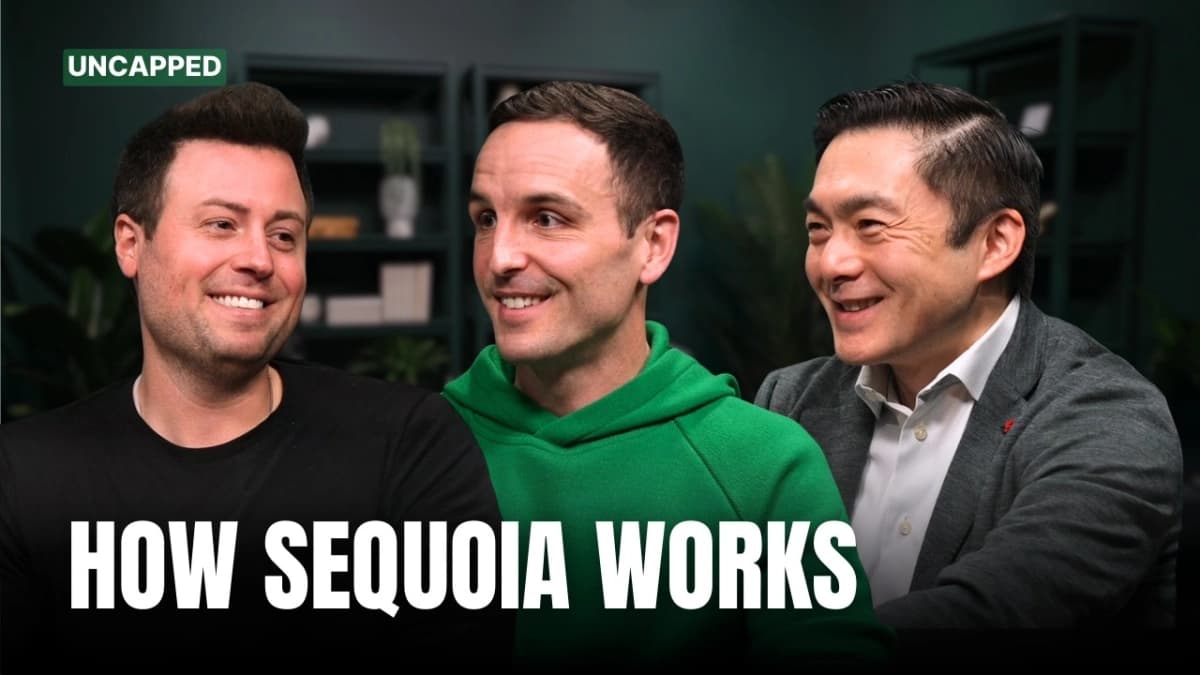
"Consensus doesn’t matter, conviction does." This powerful statement, uttered by Pat Grady, one of Sequoia Capital's new co-stewards, encapsulates a core tenet of their investment philosophy. In a recent conversation with Jack Altman on the Uncapped podcast, Grady and his fellow co-steward, Alfred Lin, offered a rare glimpse into the inner workings of one of venture capital’s most storied firms. They delved into how Sequoia identifies and cultivates outliers, the importance of mid-funnel decisions, and the courage required to navigate the often-unpredictable landscape of venture investing.
Lin, who joined Sequoia in 2010 and has led investments in transformative companies like Airbnb and DoorDash, spoke with Altman about their initial mindset as stewards of the firm. "We're more excited than we've ever been," Lin stated, reflecting on their new roles. This enthusiasm stems from a deep-seated belief in the team and the firm's enduring principles, particularly its focus on identifying and backing companies that define their categories.
A central theme of the discussion revolved around Sequoia's approach to identifying "outliers"—companies that defy conventional wisdom and possess the potential for exponential growth. Grady, a partner at Sequoia for nearly two decades, highlighted their strategy for managing the deluge of information inherent in venture capital. "We want to be able to see the right companies," he explained, emphasizing the need for a discerning approach to sourcing. This involves not just volume, but also a qualitative assessment of the talent and potential within each startup.
The conversation then shifted to the crucial aspect of "picking winners with conviction." Grady elaborated on their internal process, stating, "Consensus doesn’t matter, conviction does." This underscores their willingness to deviate from the herd mentality, a trait often necessary to capture truly transformative opportunities. They invest significant time in understanding the foundational elements of a company, from its product and market to its team and long-term vision.
Lin further emphasized the importance of "mid-funnel decisions," suggesting that these are often the most critical junctures in the investment lifecycle. These are the moments when a firm must decide whether to double down on a promising company or cut its losses, a process that requires both rigorous analysis and unwavering conviction. The two fears that lead to bad decisions, according to the partners, are the fear of missing out (FOMO) and the fear of being wrong, both of which can cloud judgment and lead to suboptimal outcomes.
The interview also touched upon the concept of "stewardship" within Sequoia. For Lin and Grady, this means more than just managing investments; it involves actively supporting founders and helping their portfolio companies navigate challenges. "To do this business well, you need courage," Grady remarked, highlighting the bravery required to make bold decisions and stand by them, even in the face of uncertainty.
Their approach is guided by a framework that includes five key stages: see, pick, win, help, and harvest. This structured yet adaptable process allows them to maintain focus and discipline throughout the investment journey. They also discussed the impact of great engineers, recognizing their pivotal role in building category-defining companies.
When asked about their proudest board seats, both Lin and Grady highlighted instances where they were able to provide significant value beyond capital, helping companies scale and overcome critical inflection points. They also discussed the importance of a "proprietary map of talent," enabling them to identify and connect with exceptional individuals who can drive innovation.
Ultimately, the conversation with Lin and Grady painted a picture of Sequoia as a firm that values deep conviction, rigorous analysis, and a long-term commitment to its founders. Their approach, which prioritizes fundamental strengths and unwavering belief over consensus, has undoubtedly been a key driver of their enduring success in the venture capital world.