
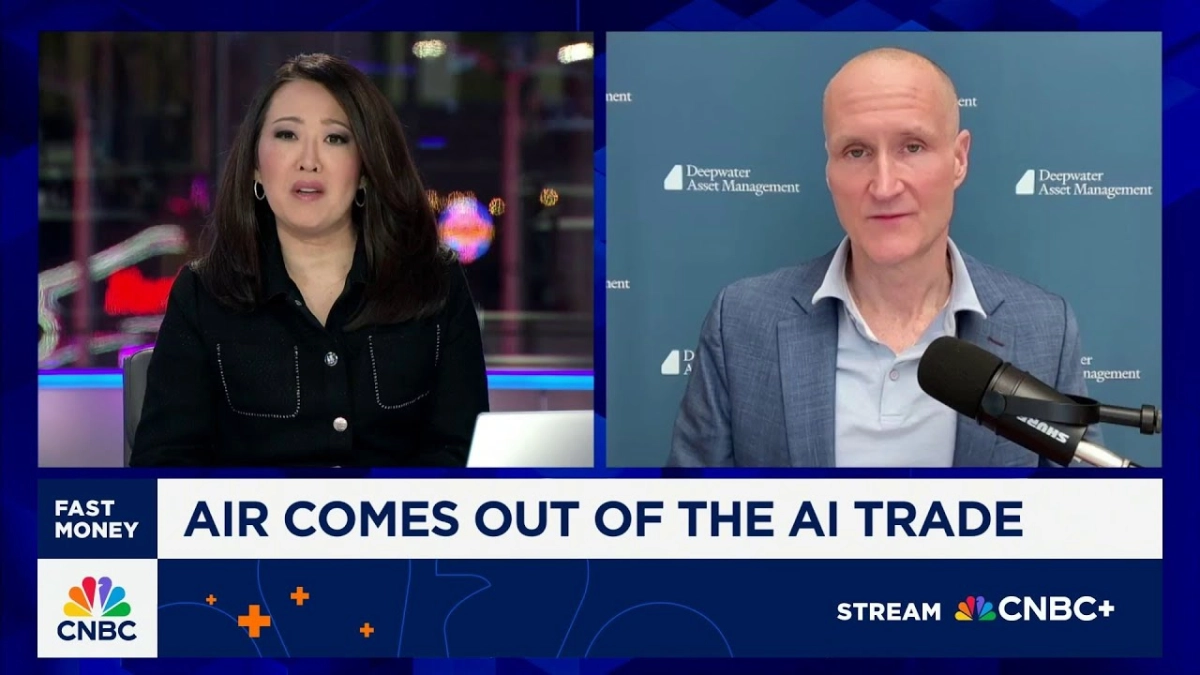
Deepwater Asset Management Managing Partner Gene Munster recently offered a discerning perspective on the trajectory of Oracle's stock within the burgeoning artificial intelligence sector, suggesting it will likely underperform its large-cap AI peers by 2026. This assessment, delivered during a "Fast Money" segment on CNBC, delved into the intricacies of investor sentiment, capacity constraints, and the looming question of AI commoditization, providing a crucial lens for founders, venture capitalists, and AI professionals navigating this dynamic landscape. Munster spoke with the CNBC hosts about Oracle's recent stock slide and the broader implications for the AI trade, highlighting a nuanced view beyond the prevailing hype.
Munster attributes Oracle's anticipated underperformance not to a lack of ambition or impressive backlog, but rather to an inevitable collision with capacity limitations. Despite reporting a substantial $63 billion increase in its backlog, an indication of robust demand for its AI infrastructure, Munster posits, "The reality is they're probably going to fall somewhere a little bit below. My sense is it's probably going to be capacity, is going to be the kind of the governing factor." This insight underscores a critical challenge for many infrastructure-heavy AI players: the physical limits of scaling. Even with soaring demand, the ability to procure and deploy the necessary hardware, particularly advanced GPUs, can bottleneck growth, making it difficult to meet ambitious targets and, consequently, temper investor expectations.
The market’s reaction to Oracle's recent capital expenditure figures, which were 42% above expectations, further illustrates a broader investor fatigue within the AI space. Instead of being met with enthusiasm, this significant investment was perceived with skepticism, leading to a stock slide. Munster notes that investors are "exhausted, reaction to good news is skepticism," and confidence that capital expenditure will translate into profitable growth is fading. This sentiment suggests a market that has perhaps over-indexed on future potential, now seeking tangible, immediate returns on investment rather than continued promises of long-term upside.
This fatigue, however, is not necessarily a negative sign for the underlying fundamentals of AI. Munster, somewhat counter-intuitively, expressed a desire for a deeper market correction, or "a thrashing," in AI stocks, suggesting it would create a much-needed bottom for investors. Such an event would allow for a reset of valuations, aligning them more closely with sustainable growth trajectories rather than speculative exuberance.
Yet, Munster believes such a significant market flush is unlikely to materialize in the short term. He argues that the market remains fundamentally positive, with optimism surrounding AI continuing to drive interest. The conversation, he predicts, will soon pivot back to December and January earnings, where investors will seek positive positioning. "The conversations going to shift back to what to expect, what we're going to hear on the December earnings," he stated, indicating that market participants will still look for reasons to buy into the AI narrative.
The discussion also touched upon the critical question of AI commoditization, particularly concerning token pricing. While some, like Sam Altman, have spoken of a 10x annual decline in pricing, hinting at a race to the bottom, Munster offers a more nuanced perspective. He differentiates between various aspects of AI, noting that while hardware depreciates, the value of "good tokens" will likely remain robust. This aligns with the "Jevons paradox," where decreasing prices lead to increased usage, ultimately expanding the market rather than diminishing profitability for all players.
Munster's perspective indicates that not all segments of the AI value chain will face the same commoditization pressures. While foundational models and raw compute power might see price erosion, specialized applications, proprietary data, and unique intellectual property built atop these layers could maintain significant pricing power. If companies like OpenAI continue to double revenue over the next few years, as Sam Altman suggests, it signals a market that is far from fully commoditized.