

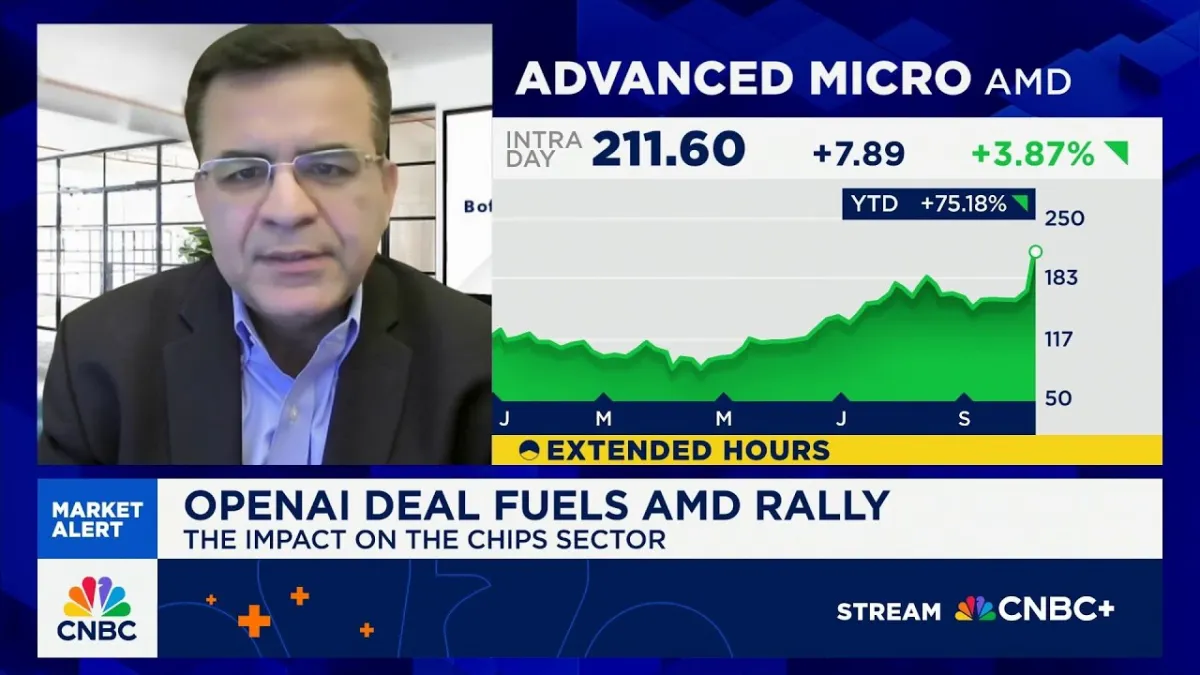
OpenAI is "eating computing power like Pac-Man," a vivid analogy offered by Vivek Arya, Senior Semiconductor Analyst at Bank of America Securities, during a recent interview on CNBC’s ‘Squawk Box.’ Arya's commentary underscored the insatiable demand for computational resources driven by generative artificial intelligence, a demand so profound that it is reshaping the semiconductor industry and inspiring a revised, bullish outlook for key players like Advanced Micro Devices (AMD). He spoke with the CNBC host about why Bank of America raised its price target on AMD to $250, up from $200, highlighting the profound implications of OpenAI's rapid expansion and its ripple effects across the chip sector.
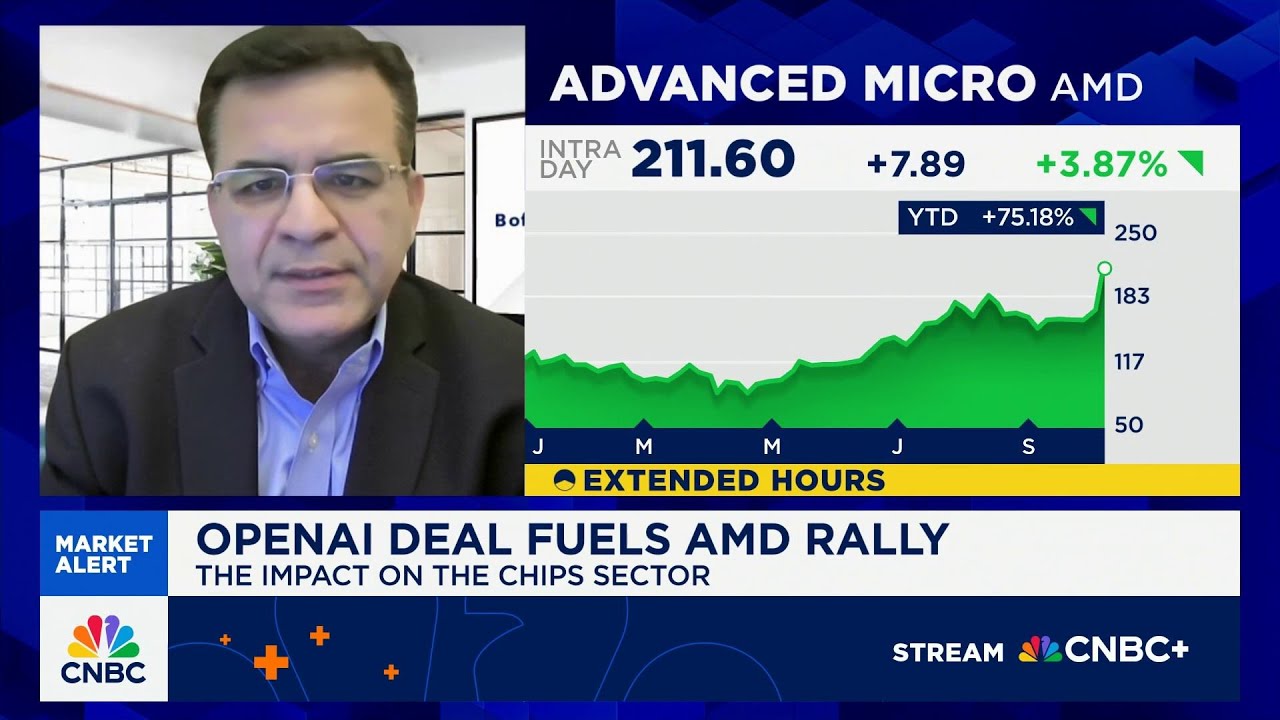
Arya emphasized the sheer velocity of OpenAI’s user acquisition, noting their ascent to 800 million weekly active users, with projections to reach a billion by year-end. This remarkable growth occurred within three years of the company's formation, a stark contrast to the eight years it took Facebook to achieve the same milestone. Each of these users, Arya pointed out, is "consuming tremendous amount of tokens and computing capacity," creating an unprecedented need for robust infrastructure. This exponential consumption mandates a massive build-out of data center capabilities, a task OpenAI is undertaking with the assistance of cloud service providers and, crucially, leading semiconductor companies.
The analyst’s core insight extends beyond OpenAI's direct partnerships, however. He argues that the AI industry is not a monolithic entity dominated by a single player or a closed ecosystem. Instead, "OpenAI is going to be one of the many ecosystems that develops in this AI industry." This perspective is critical, as it suggests a diversified and expansive demand landscape. Giants such as Meta, Amazon, and Google are concurrently developing their own AI capabilities and forming new "neo-clouds," each requiring significant investment in AI-specific hardware. This broad participation from multiple large-scale players mitigates concerns about potential "circularity" in financing or over-reliance on a single entity's success. The sheer scale of collective investment ensures a sustained demand for semiconductors.
The interviewer probed whether OpenAI's aggressive deal-making might inadvertently make it harder for other companies to secure the necessary compute power. Arya, however, dismissed this notion, reframing the fundamental constraint within the industry. "The constraint in this industry is not going to be chips," he asserted. Instead, the real bottlenecks are emerging in "power" and the extensive "build-out of data centers." This shift in perspective is vital for understanding the long-term investment landscape. While chips remain foundational, the sheer energy requirements and physical infrastructure needed to support this burgeoning AI compute demand are becoming the primary limiting factors.
He further elaborated that public companies, many of which are competing with OpenAI, are exceptionally well-positioned to fund these massive infrastructure deployments. Their capital expenditure (CapEx) intensity, while increasing from 10-15% to approximately 25%, remains well within their operational cash flow capabilities, which often exceed 30%. This robust financial health enables these corporations to independently fund their AI ambitions, rather than being solely dependent on external financing or the specific deals struck by a single industry leader. The financial strength of these incumbents ensures that the demand for AI infrastructure will continue to grow organically and robustly.