

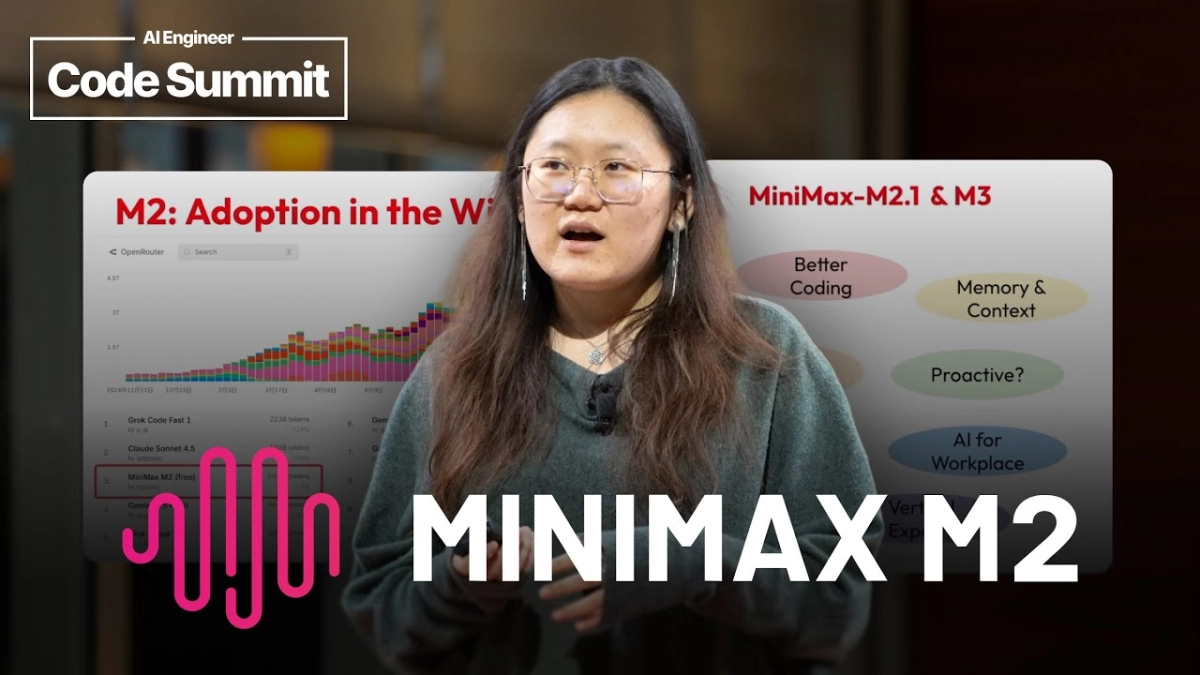
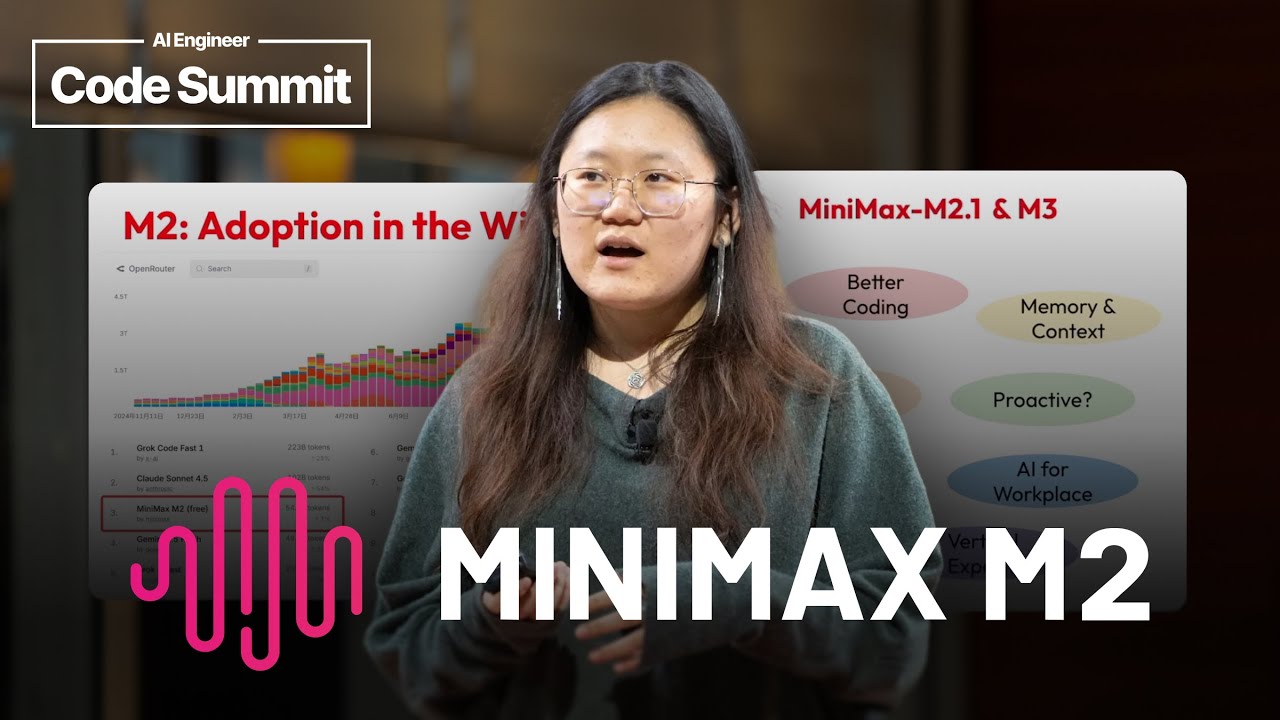
The true measure of an AI model's utility isn't just its benchmark scores, but its seamless integration into the messy, dynamic reality of human workflows. This philosophy underpins MiniMax M2, the latest AI model unveiled by Senior Researcher Olive Song at the AI Engineer Code Summit. Song’s presentation highlighted MiniMax’s distinctive approach as both a leading independent model lab and an application developer, a duality that deeply informs the design and training of M2, particularly its agentic capabilities tailored for coding and workplace tasks.
MiniMax operates uniquely in the AI landscape, simultaneously building foundational models and creating AI-native applications. This integrated strategy provides invaluable "first-hand experience" directly from in-house developers, ensuring that models like M2 are engineered to address the practical needs of the developer community. This direct feedback loop is a crucial differentiator, allowing MiniMax to build models that are not merely theoretically powerful but genuinely useful and efficient in real-world scenarios.
The MiniMax M2 model, characterized as "open-weight, coding-first, best-in-class," boasts approximately 10 billion activated parameters. Its agentic-by-design architecture focuses explicitly on coding and general workplace tasks, prioritizing speed, cost-efficiency, and scalability. These attributes are not abstract ideals but are rigorously pursued through a sophisticated training regimen designed to mirror and enhance developer experiences.
Initial performance metrics indicate M2’s competitive edge. It ranks highly across various intelligence and agentic benchmarks. Critically, its early adoption in the wild demonstrates genuine utility: M2 achieved the most downloads in its first week and climbed to the top three in token usage on OpenRouter. Olive Song pragmatically noted that "numbers don't tell everything," emphasizing that true success lies in community adoption and practical efficacy, not just theoretical superiority. This rapid real-world uptake validates M2’s developer-centric design.
The model’s robust behavior stems from its unique training methodology, which shapes its capabilities for developers. For coding and development experience, M2 leverages "scaled environments and experts." This involves training on over 100,000 real GitHub repositories, issues, and tests, supporting a multitude of programming languages including JS, TS, HTML, CSS, Python, Java, Go, C++, Kotlin, and Rust. A high-concurrency infrastructure, with more than 5,000 sandboxes, enables tens of thousands of concurrent training instances, allowing the model to learn from vast and diverse coding contexts.