


• StartupHub.ai
    StartupHub.aiAI Intelligence
Discover
  • Home
  • Search
  • Trending
  • News
Intelligence
  • Market Analysis
  • Comparison
  • Market Map Maker
    New
Workspace
  • Email Validator
  • Pricing
Company
  • About
  • Editorial
  • Terms
  • Privacy
  1. Home
  2. AI News
  3. Metas 2 Billion Agent Bet Manus Acquisition Validates AI Revenue Pivot
  1. Home
  2. AI News
  3. AI Video
  4. Meta’s $2 Billion Agent Bet: Manus Acquisition Validates AI Revenue Pivot
Ai video

Meta’s $2 Billion Agent Bet: Manus Acquisition Validates AI Revenue Pivot

Startuphub.ai Staff
Startuphub.ai Staff
Dec 31, 2025 at 1:14 PM4 min read
Meta’s $2 Billion Agent Bet: Manus Acquisition Validates AI Revenue Pivot

The reported $2 billion acquisition of Singapore-based AI agent startup Manus by Meta Platforms resulted in an immediate $18 billion surge in Meta’s market capitalization, effectively paying for itself nine times over in a single trading session. This dramatic market reaction highlights the intense focus investors now place on demonstrable, near-term monetization strategies within the generative AI sector, moving beyond generalized large language models and toward autonomous agents capable of complex business execution. For Meta, long scrutinized for its massive, protracted investments in the Reality Labs metaverse project, the Manus deal serves as a crucial validation that the company can translate its foundational AI research into profitable, scalable products that integrate seamlessly across its core platforms.

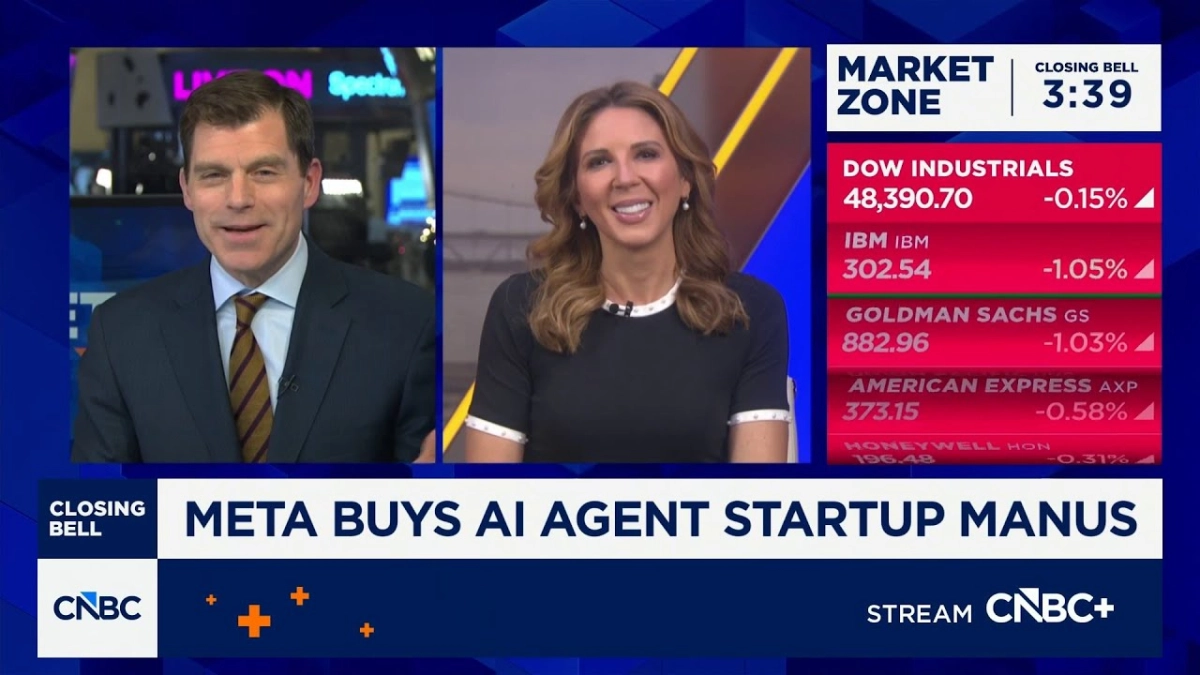
CNBC’s MacKenzie Sigalos reported on the strategic implications of the Manus acquisition, detailing Meta’s push to demonstrate a tangible AI payoff beyond its historical reliance on ad targeting, and analyzing the intensifying global competition for superior general-purpose AI agent technology. This move is not merely about acquiring talent; it is about securing a direct revenue stream by offering sophisticated automation tools to the millions of businesses already utilizing Meta's ecosystem via Instagram, WhatsApp, and Facebook. The agents developed by Manus are distinct from simple chatbots, possessing the capacity for advanced, multi-step operations previously requiring human intervention or specialized software integration.


The core value proposition of Manus lies in its ability to execute complex tasks like market research, coding, and data analysis. As Sigalos noted, these are "the kind of tools that let small businesses punch above their weight." This capability aligns perfectly with Meta’s existing, highly profitable business product line, which already generates approximately $10 billion annually. By embedding powerful, general-purpose agents directly into these commercial interfaces, Meta stands to capture a significant portion of the burgeoning enterprise automation market, providing a compelling subscription service layered on top of its advertising backbone. The acquisition statement itself emphasized that the purchase is "aimed at accelerating AI innovation for businesses," signaling a clear intent to leverage these agents for commercial scale immediately.

The competitive landscape surrounding Manus was highly charged, adding geopolitical flavor to the financial transaction. Manus "went viral this spring when it launched. People were calling it China’s next DeepSeek moment," MacKenzie Sigalos explained, underscoring the intense geopolitical and commercial scrutiny surrounding advanced AI development outside of Silicon Valley. This context suggests that Meta’s acquisition was not just opportunistic but defensive, securing a valuable asset that had already demonstrated world-class capability and attracted significant international attention, thus mitigating the risk of a foreign rival gaining a strategic edge.

The market’s immediate endorsement reversed recent trading patterns that had questioned the security of US AI leadership. Those bearish trades have now completely reversed. This reversal underscores a critical insight for founders and venture capitalists: true competitive advantage in the AI race increasingly rests on the ability to develop practical, deployable agents that move beyond academic benchmarks and into real-world business productivity. Manus provided Meta with an accelerated path to market in this critical segment.

For Meta insiders, the acquisition echoes previous, high-stakes bets that defined the company’s trajectory. The comparison being drawn by financial analysts is significant, calling the deal a strategic win, "saying it has the makings of another Instagram or WhatsApp style home run." These earlier acquisitions were crucial in securing Meta’s dominance in social communication and content sharing; Manus represents a similar foundational move, securing a core technology necessary for future dominance in the utility layer of the internet.

Mark Zuckerberg’s decision to move aggressively on Manus, despite ongoing shareholder pressure regarding Reality Labs spending, is facilitated by his structural control over the company. With 60% voting control, he maintains the autonomy to pursue these long-term, capital-intensive strategic pivots without needing immediate external consensus. This concentrated control allows Meta to execute multi-billion dollar acquisitions quickly, ensuring that critical AI assets are secured before competitors can react. The Manus acquisition demonstrates Zuckerberg's commitment to ensuring that Meta secures a dominant position in the agent economy, transforming the company from a platform that sells attention into a platform that sells productivity. The integration of general-purpose AI agents across Meta’s sprawling user base provides a pathway to massive scale and diversification away from purely advertising-based revenue, confirming that the company views AI agents not as a luxury, but as the next fundamental layer of its business infrastructure.

#AI
#Artificial Intelligence
#Meta buys Manus
#Technology

AI Daily Digest

Get the most important AI news daily.

GoogleSequoiaOpenAIa16z
+40k readers

