

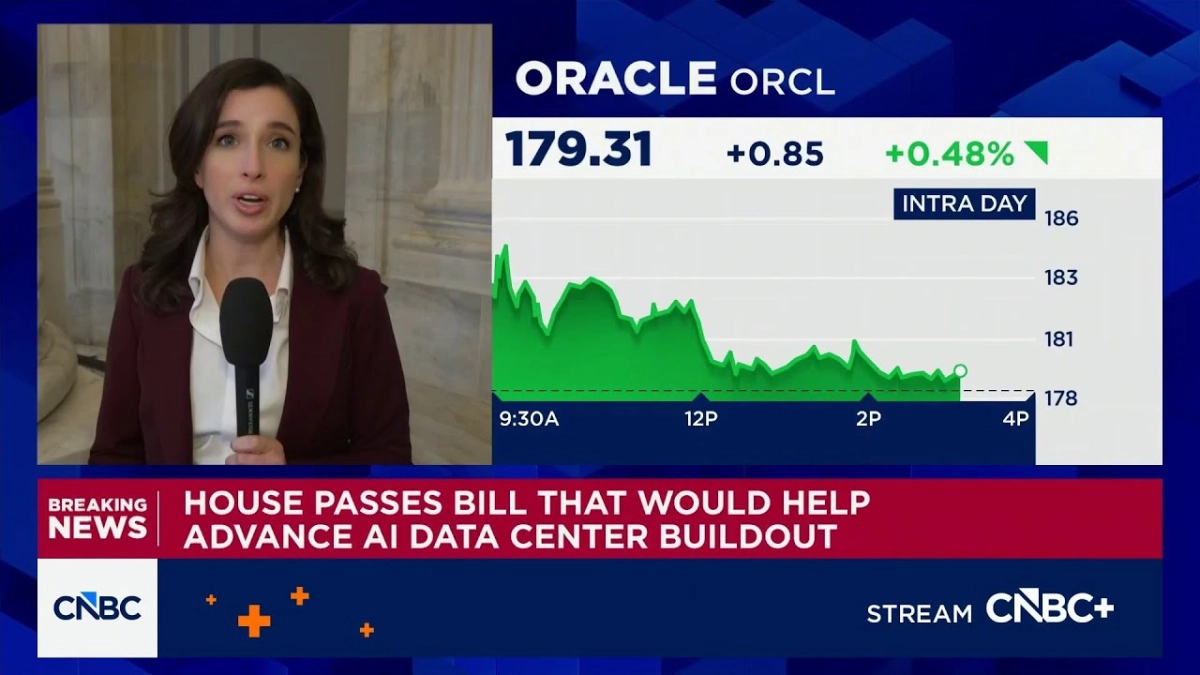
The U.S. House of Representatives has advanced a critical piece of legislation, passing a bill designed to streamline federal permitting processes for artificial intelligence data centers and their associated energy infrastructure. This move, reported by CNBC’s Emily Wilkins in an update to anchor Scott Wapner, signals a significant governmental acknowledgment of the physical infrastructure demands underpinning the burgeoning AI industry. The bill aims to accelerate the construction of data centers and the necessary transmission lines, addressing a core bottleneck in the sector's rapid expansion.
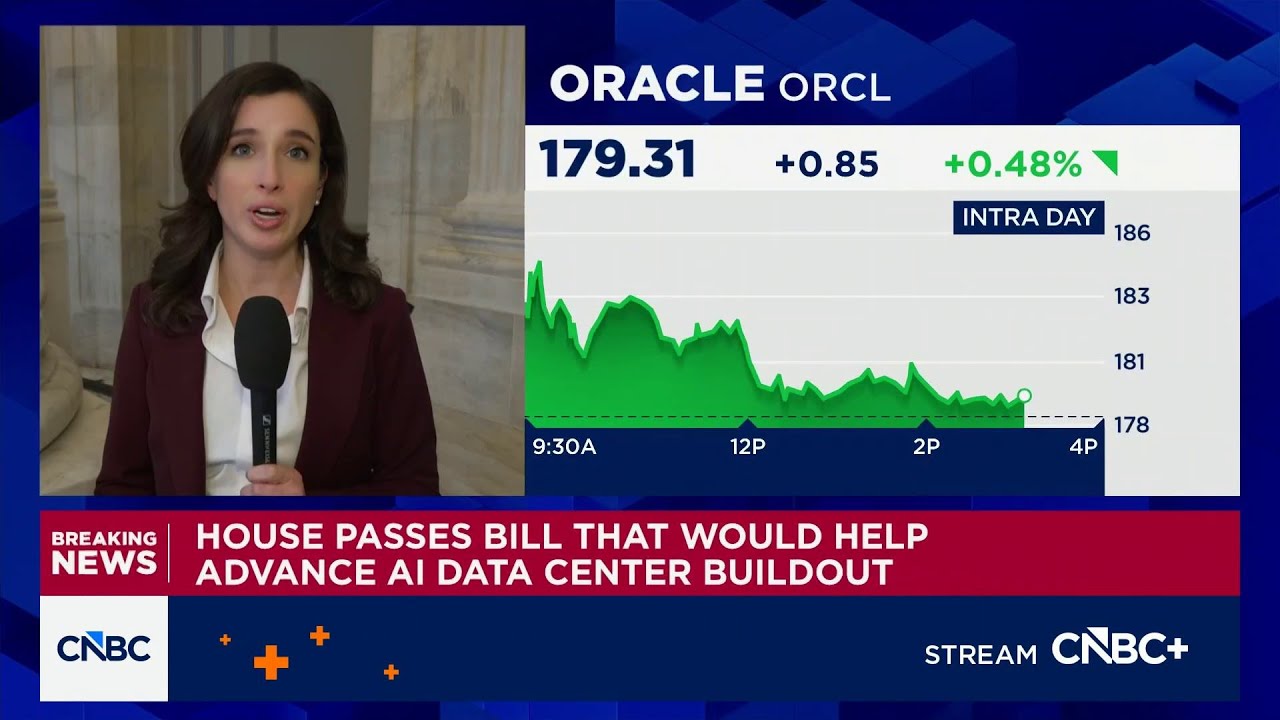
Emily Wilkins, reporting from Capitol Hill, provided real-time insights into the legislative action. She explained that the bill passed with notable bipartisan support, with approximately "11 Democrats cross[ing] the aisle and vot[ing] with Republicans." This consensus points to a shared understanding across the political spectrum regarding the strategic importance of AI development and the need to remove bureaucratic hurdles impeding its progress.
The legislative push is not a spontaneous development but rather the culmination of concerted efforts by major players in the tech industry. Companies such as Meta, OpenAI, Google, and Micron have "all lobbied for" this type of permitting reform, recognizing that the current regulatory environment can significantly delay crucial infrastructure projects. Their collective advocacy underscores the industry’s proactive engagement with policymakers to foster an environment conducive to technological advancement.
One immediate insight from this development is the explicit recognition by Congress that the future of AI is intrinsically tied to robust physical infrastructure. While much of the public discourse around AI focuses on algorithms, models, and applications, the reality is that these sophisticated systems require immense computational power, housed in vast data centers. These facilities, in turn, demand substantial energy and reliable transmission networks. The bill directly confronts this reality, seeking to "help speed up data centers, the building of data centers, as well as the building of transmission lines." This legislative action pivots the conversation from purely digital innovation to the tangible, physical requirements of the AI era.
Another crucial insight gleaned from the House’s action is the growing bipartisan consensus on the strategic imperative of AI. In an era often characterized by deep political divisions, the ability of lawmakers to unite behind legislation that supports AI infrastructure is remarkable. This broad support suggests that the economic and national security implications of AI are resonating strongly in Washington, transcending traditional party lines. Such unity could pave the way for further legislative initiatives aimed at bolstering American leadership in AI.