
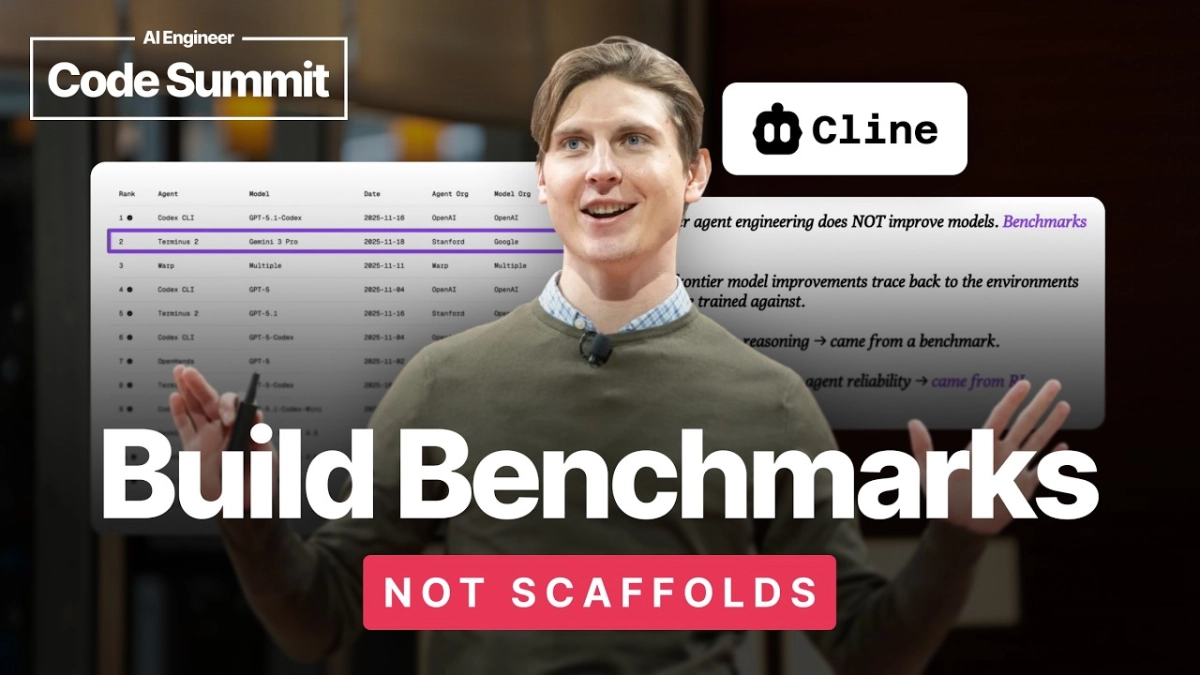
"Most of what’s written about AI agents sounds great in theory — until you try to make them work in production." This blunt assessment, delivered by Nik Pash, Head of AI at Cline, cuts through the prevailing optimism surrounding AI coding agents. Pash spoke with a representative from the AI industry, likely an interviewer or moderator at an unspecified event, to dissect the practical challenges and hard-won lessons learned from attempting to deploy these sophisticated tools at scale. The core of his message centers on a critical re-evaluation of what truly drives progress in this domain, moving beyond theoretical elegance to tangible, real-world effectiveness.
The seductive allure of complex architectural patterns like multi-agent orchestration, Retrieval Augmented Generation (RAG), and prompt stacking, Pash argues, often collapses under the weight of practical constraints. These sophisticated frameworks, while intellectually stimulating, frequently optimize for the wrong metrics. They can create an illusion of capability, but fail when confronted with the messy, unpredictable realities of production environments. Pash contends that the focus needs to shift from elaborate scaffolding to fundamental evaluation and environmental design.