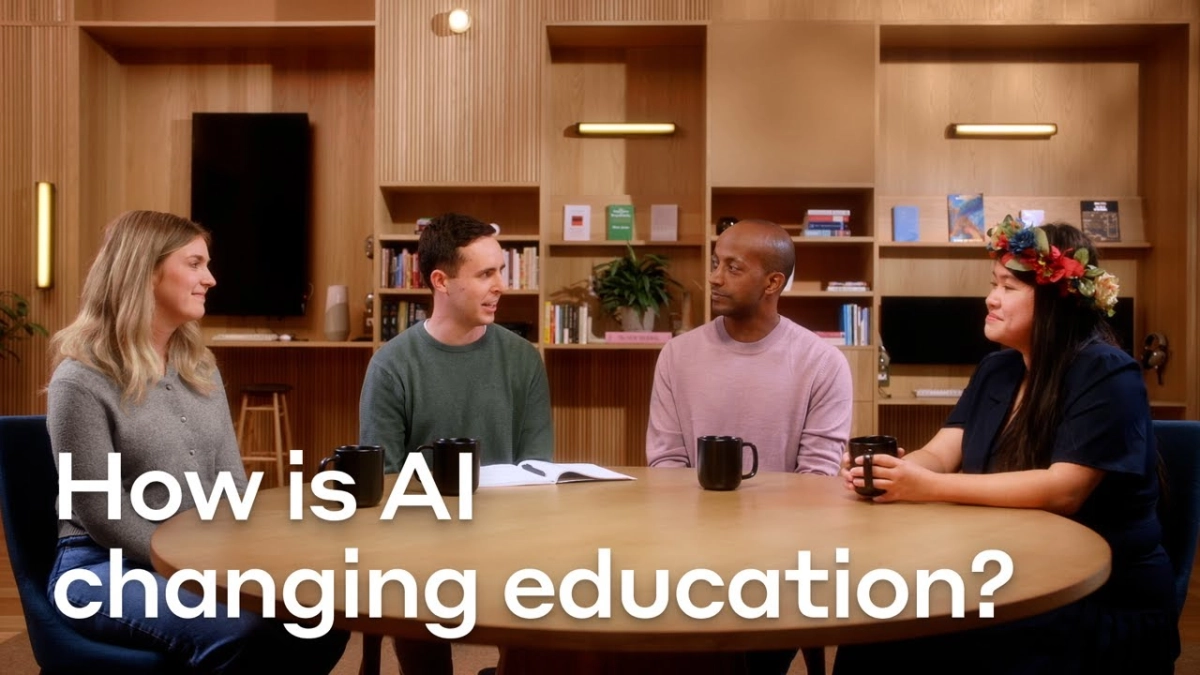
Artificial intelligence is not merely changing education; it is acting as a "forcing function that makes everyone deal with it now," as Maggie Vo, Head of Anthropic’s Ministry of Education, succinctly put it. This sentiment encapsulates the urgent yet nuanced conversation unfolding among the Anthropic team about AI’s profound impact on learning. In a recent video discussion, Vo, alongside Drew Bent (Education Lead, Beneficial Deployments), Zoe Ludwig (Manager, Ministry of Education), and Ephraim Tekle (Education Product Lead, Claude Apps), shared their professional and deeply personal perspectives on the transformative potential and inherent risks of integrating AI into educational systems. Their collective experience, spanning from high school math teaching to academic research and parenting, underscored the complexity of this technological shift.
The core tension in AI’s role in education lies in its dual nature: a tool of immense potential and significant peril. Drew Bent articulated this perfectly, stating that education is "the perfect example" where AI presents "massive benefits" but also "a lot of concerns." On one hand, AI promises to democratize access to high-quality learning, personalize tutoring, and alleviate teacher burnout by automating administrative tasks. On the other, it invites existential questions about the very nature of learning, posing risks like increased cheating and the potential for AI to replace, rather than augment, human thought. This dilemma forms the bedrock of Anthropic’s approach, emphasizing careful study of both the "light and shade" of AI systems.