

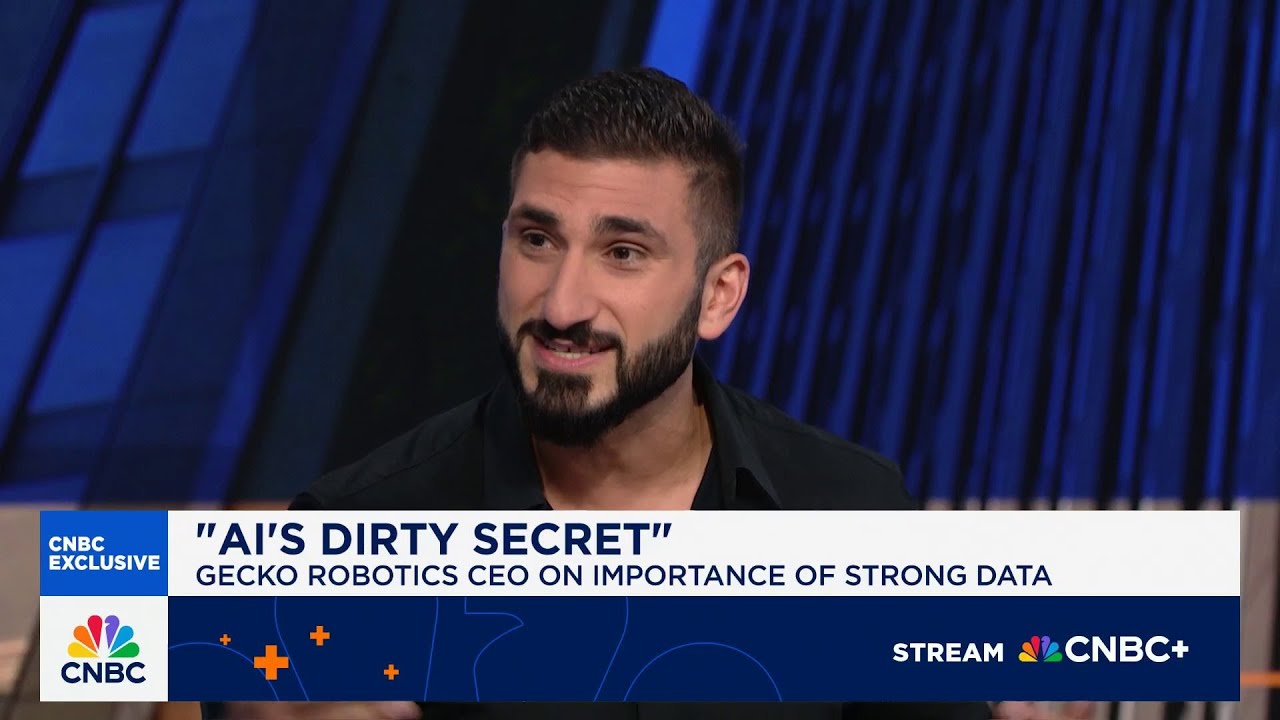
The true engine of artificial intelligence, particularly within the vast and complex industrial landscape, is not just sophisticated algorithms but the quality and accessibility of data itself. This pivotal insight formed the core of the discussion between Jake Loosararian, Co-Founder and CEO of Gecko Robotics, and Scott Wapner on CNBC's "Closing Bell Overtime." Loosararian, whose company recently achieved unicorn status and was recognized on CNBC's Disruptor 50 list, articulated the essence of his Fortune piece, "AI's dirty secret: without data, it's just math tricks," emphasizing that AI's transformative potential remains untapped without foundational data.
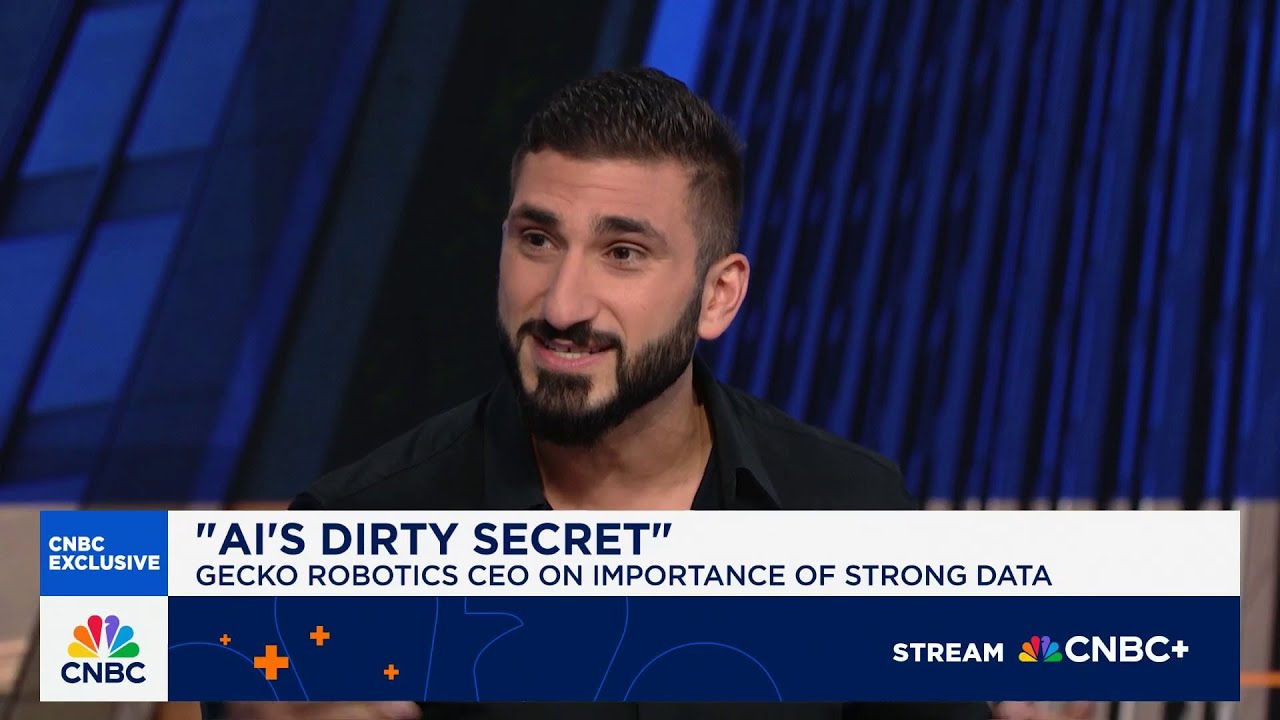
Loosararian spoke with Wapner about the critical role data plays in sectors like energy, manufacturing, defense, and public infrastructure. He highlighted a fundamental bottleneck: "If you don't have great data sets, especially in these sectors like energy, manufacturing, defense, public infrastructure, it just is impossible to be able to use your incredible algorithms to create efficiencies." This isn't merely about having data, but about having *great* data, comprehensive, accurate, and actionable information that can truly fuel AI's capabilities. Without it, even the most advanced algorithms are like high-performance engines without fuel.
Gecko Robotics directly addresses this challenge. The company deploys specialized robots, including wall-climbing units, walking dog robots, and drones, equipped with fixed sensors to collect granular data on infrastructure integrity, vibration, and temperature. This process effectively translates physical "atoms into bits," creating digital twins of real-world assets.
This detailed data collection is crucial for unlocking efficiencies. Loosararian noted a widespread frustration among industrial CEOs: "We're getting sold a bill of goods... the return is not there, the ROI is just like not practical." These leaders are seeking tangible improvements in areas like heat rates, kilowatt output, and the reduction of costly, dangerous forced outages and explosions. Gecko's promise is clear: "You give us 1x in terms of the data sets that you already have, we'll give you 10x by sending wall-climbing robots and walking dog robots and drones and fixed sensors that are looking at vibration and temperature and the integrity of the metal that's running all these things." This exponential increase in data volume and quality directly enables predictive maintenance and operational optimizations previously unattainable.
Loosararian firmly asserted that "those that win the data race are going to win the AI race." He likened advanced AI algorithms to "Ferrari-like algorithms" that "you cannot drive... if you don't have any fuel to put inside of them, and that is the data." This underscores the strategic imperative for companies to prioritize data acquisition and management. The physical world, which Loosararian described as "forgotten about by Silicon Valley," is now ripe for digital transformation. The ability to "decode the real world" is not just an opportunity for efficiency; it is a competitive differentiator. As companies like Gecko demonstrate the profound impact of data-driven AI, the lines between winners and losers in industrial innovation will become increasingly distinct.