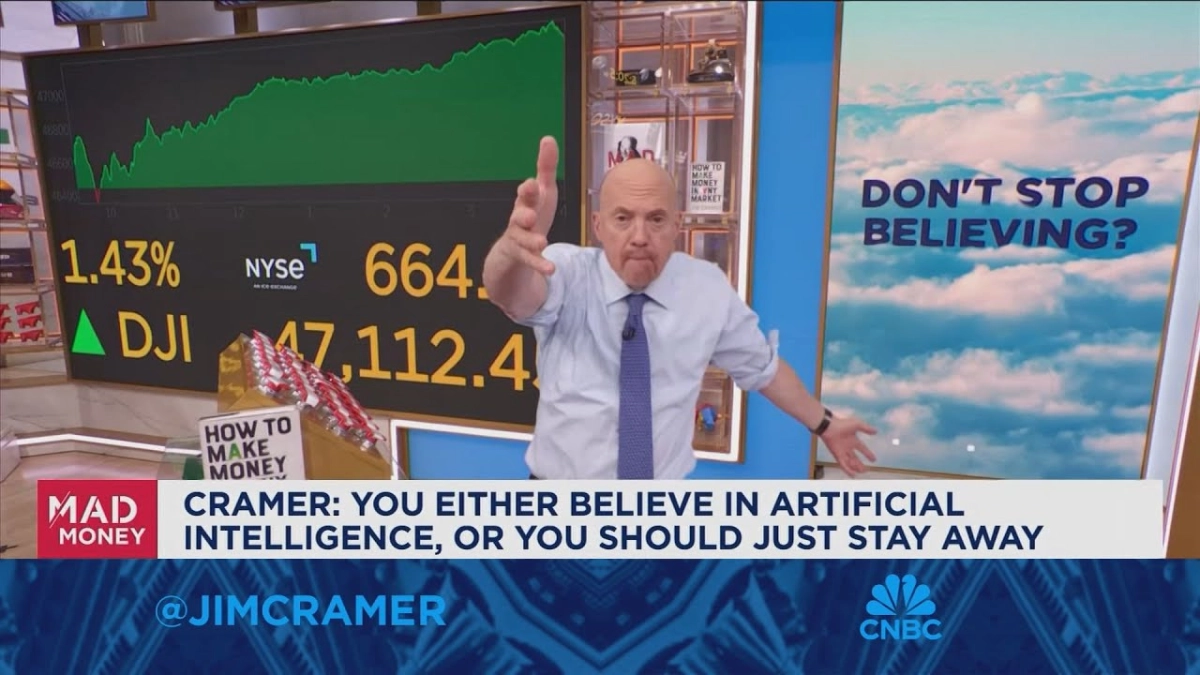
“You either believe or you don’t believe. It is as simple as that.” With this emphatic declaration, Jim Cramer, host of CNBC’s *Mad Money*, laid bare his bullish stance on the burgeoning artificial intelligence sector, directly addressing the skepticism surrounding the colossal investments made by tech giants. His commentary, following the significant announcement of a strategic partnership between OpenAI and Advanced Micro Devices (AMD), underscored a profound shift in the technological landscape, one he firmly believes heralds the Fourth Industrial Revolution.
Cramer's segment served as a direct response to the news that OpenAI would be deploying six gigawatts of AMD’s GPUs, a move that sent AMD's stock soaring by nearly 24% in a single session. This development, coming hot on the heels of a previous ten-gigawatt deal between OpenAI and NVIDIA, highlights a critical inflection point in the AI race. Cramer spoke with a palpable conviction, drawing parallels between the current AI boom and previous industrial transformations, while robustly defending the strategic rationale behind the hyperscalers' aggressive spending.
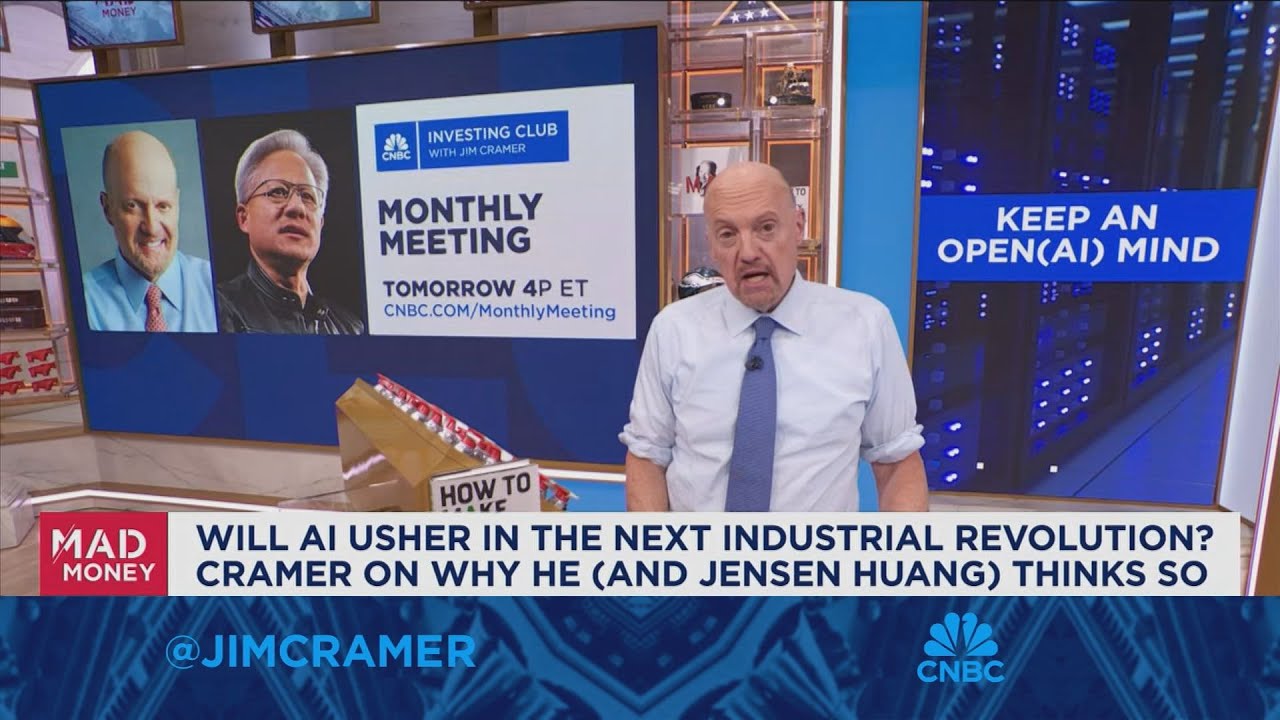
The core of Cramer’s argument rests on the idea that artificial intelligence is not merely an incremental technological advancement but a fundamental reshaping of industry and society. He recalled a conversation with NVIDIA CEO Jensen Huang in 2018, where Huang first articulated the vision of AI ushering in the Fourth Industrial Revolution. Cramer initially considered this "a little bit hyperbolic," but now, witnessing the current pace of innovation and investment, he is a firm believer. He outlined the preceding revolutions: the steam engine and machine production, electricity and mass production, and the digital era encompassing automated production, electronics, telecommunications, and the personal computer. Now, we stand at the precipice of an era defined by "artificial intelligence and machines that reason."
This perspective is crucial for understanding why Cramer dismisses the "countless AI skeptics" who draw comparisons to the dot-com bubble of 2000. These critics, he argues, see the massive capital outlays as reckless spending, transactions based on "alchemy," or "lazy Susan deals" where money is merely circulated without genuine value creation. Cramer takes strong exception to this narrative. He asserts that the current wave of investment is fundamentally different, driven by legitimate demand and genuine technological breakthroughs.
The OpenAI-AMD partnership is a testament to this demand. OpenAI’s co-founder and president, Greg Brockman, openly stated the company's need for "all the computing power he could get his hands on," finding AMD's product "excellent." This isn't a speculative venture; it's a necessity. The deal, which includes OpenAI receiving warrants for up to 160 million shares of AMD common stock as the GPUs are deployed, could be worth "tens of billions of dollars" to AMD, signifying a substantial, long-term commitment. The market's immediate positive reaction, with other data center players like Dell, ARM, Marvell, and Micron also seeing gains, further validates the broad-based belief in AI's transformative power.