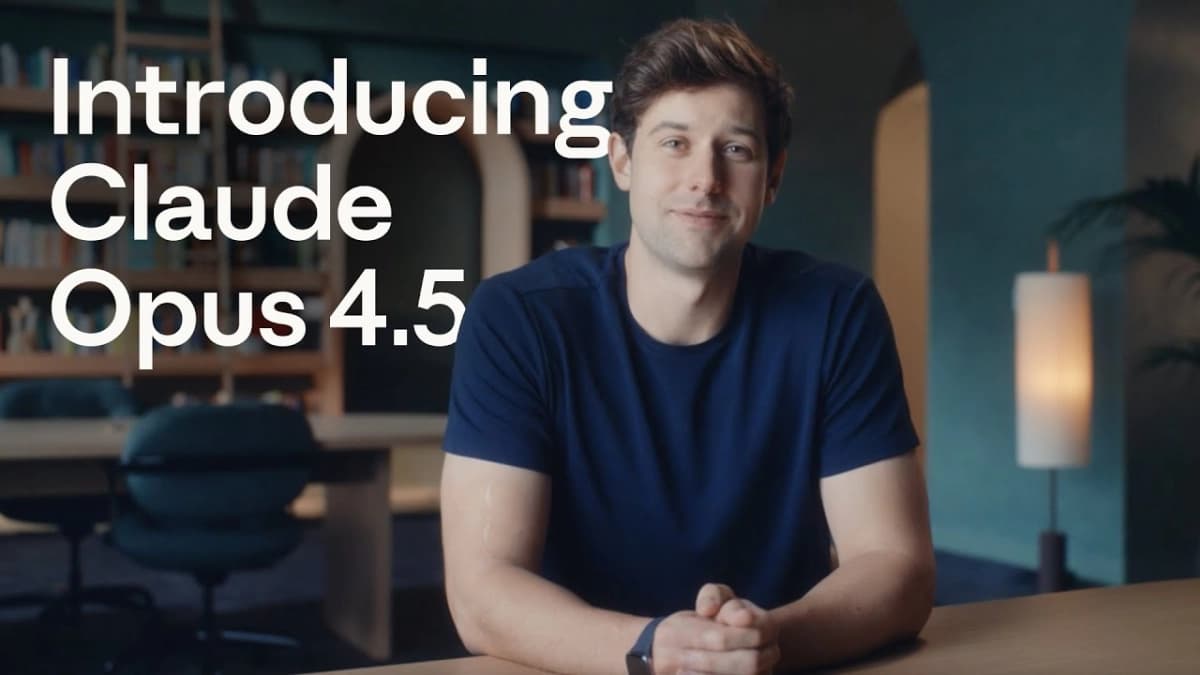
Claude Opus 4.5, Anthropic's latest flagship model, is presented not just as an advancement but as a paradigm shift in artificial intelligence, claiming supremacy in critical domains from complex software development to sophisticated agentic operations. This release, detailed by Anthropic engineer and researcher Sholto Douglas, positions Opus 4.5 as a pivotal tool for enterprises navigating the accelerating demands of digital transformation and advanced automation. Douglas, in a direct announcement, highlighted the model's enhanced cognitive abilities and its immediate availability, signaling a new era for AI integration across major cloud platforms.
The core of Opus 4.5's purported superiority lies in its unprecedented proficiency across a spectrum of technical tasks. Douglas asserts, "Claude Opus 4.5 is our best model yet." He further elaborates that "It's the best in the world at coding, agentic tasks and everyday work like spreadsheets." This claim is not merely about speed or volume but about the quality and accuracy of its output, suggesting a level of reliability that could fundamentally alter workflows for developers and business analysts alike. For founders and VCs, this translates into potential for significantly accelerated product development cycles and reduced operational overhead, offering a compelling return on investment for companies leveraging such advanced AI.
A critical insight into Opus 4.5's design is its capacity for metacognition, or the ability to "know when to think before acting, so that it makes the right change." This deliberative capability is a significant leap beyond reactive AI systems. It implies a reduced likelihood of erroneous or inefficient actions, leading to fewer wasted resources and more precise outcomes. For AI professionals and defense analysts, this feature speaks to the model's potential in high-stakes environments where accuracy and strategic foresight are paramount, hinting at more robust and trustworthy autonomous systems.
This enhanced cognitive efficiency directly contributes to a reduced need for human intervention. Douglas noted, "My time between interventions keeps getting longer," a testament to the model's increased autonomy and self-correction. He further illustrated this with a compelling anecdote: "I keep seeing colleagues say it solved a bug that Sonnet never could have found." This direct comparison to an earlier Anthropic model underscores the magnitude of Opus 4.5's improvement, particularly in debugging and problem-solving, which are often the most time-consuming aspects of software engineering.
The model's performance was further substantiated by its results on a challenging benchmark. Anthropic subjected Opus 4.5 to a "two-hour intensive engineering task," a real-world scenario designed to test comprehensive problem-solving abilities. The outcome was stark: "the model scored higher than any human ever has." This is not just an impressive statistic but a profound indicator of AI surpassing human capability in complex, time-bound technical challenges. Such a performance benchmark will undoubtedly resonate with tech insiders, suggesting that AI is moving beyond augmentation to outright leadership in specific intellectual domains.
Beyond its prowess in coding and agentic reasoning, Opus 4.5 also boasts significant improvements in other critical areas. Douglas highlighted its enhanced capabilities in "front end" development and its marked superiority in "vision." These advancements make it "a lot better at using computers," implying a more intuitive and versatile interaction with digital interfaces and visual data. This broad improvement across different modalities enhances its utility as a comprehensive digital assistant, capable of handling a wider array of tasks without specialized human guidance.
The strategic decision to make Opus 4.5 available "today" on "every major cloud platform" underscores Anthropic's ambition for rapid, widespread adoption. This accessibility removes significant barriers for enterprises looking to integrate state-of-the-art AI into their existing infrastructure, democratizing access to capabilities that were previously nascent or proprietary. For startup ecosystem leaders and VCs, this widespread availability means a lower barrier to entry for innovative applications built on Opus 4.5, potentially fueling a new wave of AI-driven products and services across industries.