

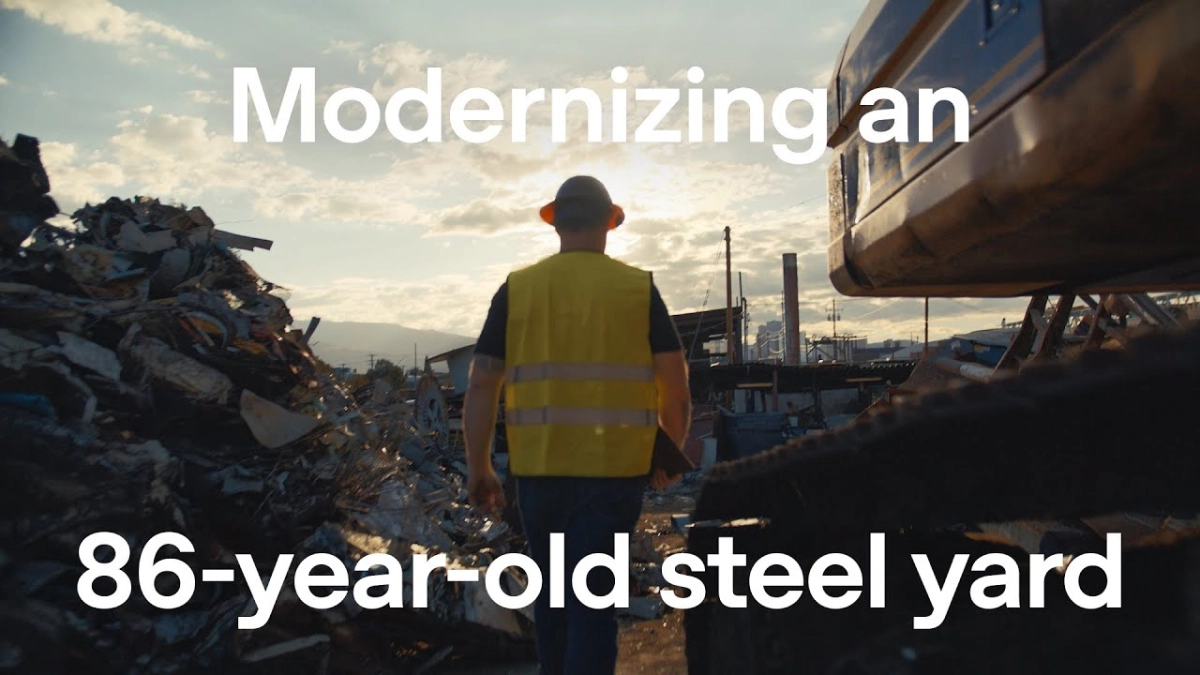
The notion that artificial intelligence is exclusively the domain of Silicon Valley startups or multinational corporations is increasingly being challenged by real-world applications in industries far removed from tech campuses. A compelling narrative emerges from Reno Salvage, an 86-year-old steel yard in Nevada, where manager Richard Lane has deployed OpenAI’s ChatGPT not as a futuristic experiment, but as an indispensable tool for operational efficiency, problem-solving, and workforce development. This case study offers a potent glimpse into the practical, immediate value AI can deliver to legacy businesses grappling with modernization.
Richard Lane, the pragmatic manager of Reno Salvage, showcased in a recent video how an establishment rooted in tradition is strategically leveraging advanced AI. His commentary illuminated the tangible benefits of integrating ChatGPT into the daily grind of a physically demanding, often complex operation, revealing a powerful model for small and medium-sized enterprises (SMEs) looking to bridge the chasm between legacy processes and contemporary demands.
The steel yard, with its long history, had naturally accumulated a host of antiquated practices. For decades, the business ran on paper and memory, a system the office staff candidly described as "a little cringeworthy." Such manual processes, while familiar, inherently lead to inefficiencies. Richard recognized the imperative to evolve, stating, "With so many antiquated processes, there's always time lost." This constant drain on productivity, compounded by the sheer volume of tasks and information, presented a significant hurdle to growth and competitive advantage.
One of the most immediate impacts of ChatGPT was in streamlining complex administrative tasks. Richard recounted the daunting prospect of creating a comprehensive part numbering system for the yard's vast inventory. An undertaking he estimated would have taken weeks and made him "go cross-eyed," ChatGPT generated a system of over a thousand unique part numbers with remarkable speed and clarity. This ability to rapidly structure and organize information, previously a bottleneck, transformed a burdensome project into a quickly executable task, freeing up valuable human capital for more critical functions.
Beyond administrative improvements, ChatGPT proved invaluable in real-time technical troubleshooting. When faced with an issue on his plasma table, a critical piece of machinery, Richard turned to the AI for guidance. His direct query, "Could you advise what the problem might be?" and his subsequent self-identification, "I'm a steelworker, not an IT guy," perfectly encapsulated the challenge many skilled trades face: deep domain expertise in their craft, but limited specialized knowledge in complex machine diagnostics or software layers. ChatGPT's immediate, actionable advice—"open up your drawing file and check what layers you actually have"—underscored its capacity to democratize expert knowledge, making specialized IT support instantly accessible on the shop floor.
This democratized access to information extends to customer service and sales. Richard highlighted the diversity of his clientele, noting, "Customers from all different industries walk through my door. There is no way that I can know all the answers." Yet, with ChatGPT, he can quickly access and process vast amounts of information, enabling him to respond to varied inquiries with speed and accuracy. This significantly enhances customer experience and operational agility, as the time taken to fulfill an order, for instance, can be reduced to mere seconds, as demonstrated by an employee inputting a customer's request.
Perhaps one of the most compelling applications of ChatGPT at Reno Salvage is its role in mentorship and workforce development. In a small company, managers like Richard wear "a lot of hats: the maintenance guy, the sales guy, the mentor." The burden of knowledge transfer, especially for complex skills, can be immense. Richard illustrated this by assisting a younger employee studying for a pilot's license. He explained that he would "actually tell it to act as a teacher" to help the employee grasp intricate details like FAA requirements. This demonstrates AI's potential as a scalable, personalized tutor, enabling continuous learning and skill development without overtaxing human mentors.
The integration of ChatGPT at Reno Salvage is a testament to AI's transformative potential beyond high-tech sectors. It illustrates how foundational AI models can serve as a potent force multiplier, augmenting human capabilities, streamlining operations, and fostering a culture of continuous learning in traditional industries. This isn't about replacing human workers, but empowering them, making an 86-year-old business not just survive, but thrive with renewed efficiency and adaptability.



