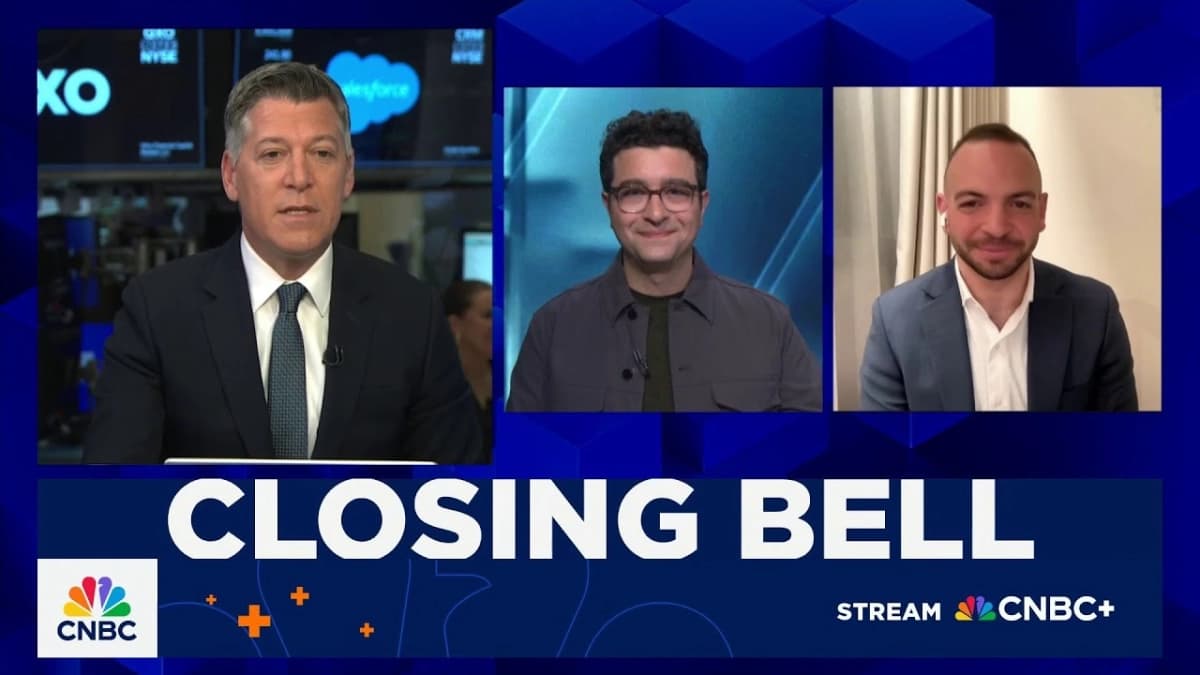
The strategic divergence in artificial intelligence investment among tech giants took center stage on CNBC's Closing Bell, where Big Technology founder Alex Kantrowitz and CNBC Tech Reporter Steve Kovach debated Apple's seemingly conservative approach to the AI race. The discussion, moderated by Scott Wapner, dissected Apple's strategy, particularly its challenges with what appears to be minimal spending compared to its peers, and the broader implications for competition and technological independence in the rapidly evolving AI landscape.
While companies like Amazon, Alphabet, Microsoft, and Meta are pouring tens of billions into capital expenditures for massive data centers and high-end Nvidia chips, Apple is charting a different course, one characterized by internal innovation and strategic partnerships rather than a direct, head-on capital-intensive race. Steve Kovach highlighted that Apple is indeed increasing its operating expenditures for AI research and development, noting that its Q4 2024 operating expenditures were up 11% year-over-year, with a projected 20% jump in Q1 2025. This surge, however, is being channeled differently. "Apple Intelligence runs on the same chips that power MacBook and Mac computers," Kovach explained, allowing them to do it for "hundreds of dollars per chip instead of tens of thousands of dollars per chip." This approach underscores Apple's long-standing commitment to vertical integration, leveraging its proprietary silicon to achieve significant AI capabilities without the exorbitant hardware costs burdening its competitors.
Despite Apple's robust financial position—sitting on an estimated $200 billion in cash—Alex Kantrowitz voiced significant concerns regarding this strategy, arguing that a comparatively lower capital expenditure on AI infrastructure and a reliance on external partners could prove to be a long-term liability. Kantrowitz contended that if Apple's strategy is to avoid developing powerful AI internally and instead "just buy our AI from Google, you're really trusting your destiny when it comes to AI to a different company." This, he suggested, is not a wise move, especially when competitors like Microsoft are aggressively pursuing advanced AI capabilities independently, having recently restructured its relationship with OpenAI to gain more autonomy. For founders and VCs, this raises a critical question: how much control are companies willing to cede for the sake of cost efficiency and speed to market in the AI domain?
Apple’s current capital expenditure for Q4 stood at a mere $3.24 billion, dwarfed by Amazon's $35.1 billion or Alphabet's $24 billion. This stark contrast in spending highlights not just differing strategies but also fundamental business models.
Kovach further elaborated on Apple's pragmatic stance, pointing out that the current AI landscape has yet to produce widely adopted, transformative consumer products beyond initial generative AI offerings. "There's no one but really ChatGPT and OpenAI that has created an AI product that tens or hundreds of millions of people want to use every day," he asserted. This perspective suggests Apple may be deliberately exercising patience, allowing the nascent AI market to mature and clearer product paths to emerge before committing to hyper-scale investments. This strategy aligns with their historical approach of refining existing technologies and integrating them seamlessly into their ecosystem, rather than being first to market with unproven, capital-intensive ventures. The company's profitable services business, fueled by partnerships like the one with Google for search, provides substantial margins, enabling this strategic R&D spend without the immediate pressure for massive, speculative capital outlays.
This deliberate approach contrasts sharply with the broader trend among other tech giants, many of whom are heavily leveraging debt to fund their AI ambitions. Kantrowitz described this as "dangerous," noting that Silicon Valley is "chasing this dream of building this powerful AI technology." He emphasized that the financial movements, particularly the borrowing, associated with this pursuit raise "very legitimate questions... about whether all this spending and now borrowing is going to pay off." For defense/AI analysts and tech insiders, this debt-fueled race is a significant risk factor, potentially creating a bubble if the anticipated returns from "super intelligence" or Artificial General Intelligence (AGI) do not materialize as quickly or as profitably as projected. The pursuit of powerful, general-purpose AI is seen by some as a marketing term, masking the current reality of large language models that, while capable, are far from achieving true human-like intelligence.
Ultimately, the debate boils down to two distinct philosophies: one prioritizing rapid, aggressive investment and internal control over foundational AI, even if it means incurring significant debt, and another favoring a more measured, capital-efficient approach built on proprietary hardware and strategic partnerships, awaiting clearer market signals for mass-scale product development. The coming years will reveal which strategy proves more prescient in the race for AI dominance.